
[DISCLAIMER: A copy of Vessel of Hatred was provided for free by the publisher.]
Diablo 4 is a game that’s somewhat contentious to talk about. People level a lot of criticisms against the way it’s been designed and monetised, and I generally agree with a lot of those. However, this usually leads to people just calling it a massive disappointment, or even just not very good. That’s a sentiment I simply don’t agree with. The Platformers Podcast spent four hours doing a deep dive on it, going into the full breadth of the campaign and why we felt that it was quite strong. We all enjoyed it, and that was always the experience I took away from Diablo 4. I still think it’s absolutely a great game and worth playing, even if you just play through the campaign once and call it a day.

Well, I was given the opportunity to try out a review build for the upcoming Vessel of Hatred expansion. I was a little hesitant going into this, as I felt that the ending of the base campaign was stronger if time was allowed to pass and a direct follow-up act didn’t happen right away. The consequences and uncertainty that the story left off on seemed like they should linger for a while, and the major antagonist we face going forward instead be left to take a back seat until Diablo 5 or similarly. I worried that it might end up spoiling how the ending lands. While I’ll go into more of that later, I can say that the expansion doesn’t invalidate things or spoil the tone of the original ending. They managed to thread that needle well, and the writing quality remains very good in the expansion, even if it simply doesn’t have the run time needed to develop everything quite as well. The highs aren’t quite as high.
But that’s just the story aspects. As to the rest… well, frankly? Vessel of Hatred isn’t likely to change anyone’s pre-existing sentiments about Diablo 4. If you already enjoy the game, then this is more of the same things that likely drew you in originally. If you didn’t care for the game, then this is not a Reaper of Souls situation; Diablo 4 is not being overhauled from the ground up with this one. It’s also safe to say that Diablo 4 really didn’t need the kind of instrinsic and fundamental overhaul to its structure that was needed for Reaper of Souls to make Diablo 3 an actually good game, though. Even the staunchest critics of Diablo 4 would likely accept that as truth.
Still, this is something I want to open with, because the fundamental reality is that Vessel of Hatred is more of the same. And when I say more of the same, I mean it’s more of everything Diablo 4. There’s a new campaign Act that bolts on a hefty section to the existing story, with the same level of writing, presentation, and cinematic quality that the base game brought to the table. Seriously, the opening cinematic is an all-timer, right up there with the opening cinematic of Lilith’s summoning (and no less gruesomely twisted). There’s a hefty new area of the map with the same amount of content as any of the others, complete with a renown bar to fill out and rewards to collect. There’s a new class with the same amount of customisation and buildcraft potential, as well as a new skill, passives, and legendary/unique gear for every existing class. And there’s a number of other systemic additions that supplement the existing ones nicely.

So all of that is a worthwhile addition, at least in my eyes. Where it’s more questionable are the less glamourous and divisive aspects of Diablo 4, all of which are also still here in Vessel of Hatred. There’s a new Season, featuring a new overpriced season pass that gives nothing to free players for 70% of the reward tiers. Seriously, Blizzard, every other season pass in existence splits the tracks into free and premium, so this just feels awful to pay attention to as a new player and doesn’t engender the desire to purchase. The seasonal content itself is pretty limited as well; that can be somewhat forgiven though, as much of the new content is primarily added in the expansion itself. Still, it continues the trend of Diablo 4’s seasonal additions as a live service game falling short of genre contemporaries like Path of Exile, and thus doesn’t really encourage repeat playthroughs for those who aren’t already thoroughly invested in playing the game.
The endgame experience also doesn’t change too much at a glance. I will say that the main reason I’m labelling this piece as impressions and not a full review is because I simply didn’t get the opportunity to properly dive into the endgame, either alone or with a group. Most of the existing events and loops of what you do after beating the campaign are still in place, having been extended to also work in the new Nahantu region. The Tree still demands blood, the Helltide still rises, and the dungeons still have Nightmare modes.
Perhaps the biggest new endgame feature is the Dark Citadel, which is effectively a group raid in the style of Destiny (or a World of Warcraft dungeon). The mechanics for these bosses are apparently more involved and require more coordination and effort than your standard Diablo fair, which I think is a welcome addition conceptually, but I still need to experience it for myself. If I do a full review, that’s probably what I’ll be aiming to do. But as to how it will hold your attention in the long run, that’s something I still cannot say.
So let’s talk about some of the other aspects that might grab your attention.
Spirits Be With You
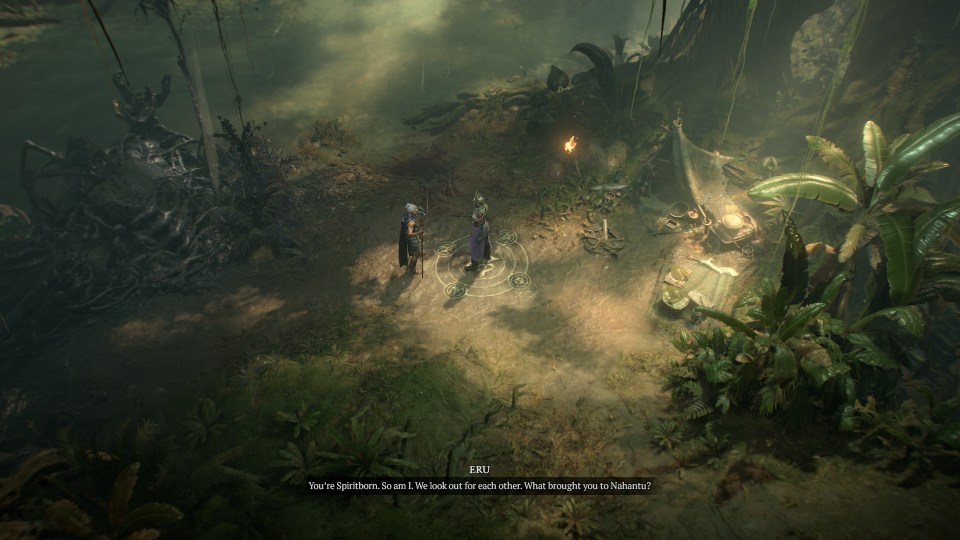
The Spiritborn is the newest addition to the roster of Diablo 4 classes. If I were to quickly describe it, it’s the Diablo 3 Monk if they were also a Witch Doctor. They channel animal spirits to empower their abilities and call upon their aspects, but all their basic skills are three-hit combos that do bonus effects on the third strike. I played through the Vessel of Hatred campaign with this class to get a feel for it, and very quickly came to enjoy it (I predominantly played a ranged Rogue in the base game). There’s a very good chance that I’ll end up playing it again once the full release occurs, as I’d like to experiment with the other animal spirits a little more.
Each of the skills aligns with one of the four different animals they call upon, each working to a different theme. Gorilla is focused on big melee hits and defensive options; Jaguar is rapid melee strikes; Eagle is high mobility and crits; and Centipede is all about poison and damage over time. I very quickly fell into a predominantly Centipede playstyle and build choice, and by the sounds of it, I was definitely not the only one from among other reviewers. It felt very powerful once the later skills got rolling, with the ability to execute enemies outright when their poison builds up high enough and to spread those dots to huge groups effortlessly. Couple that with a few Gorilla skills, and I ended up being really durable, outlasting enemies and making them regret trying to mess with me.
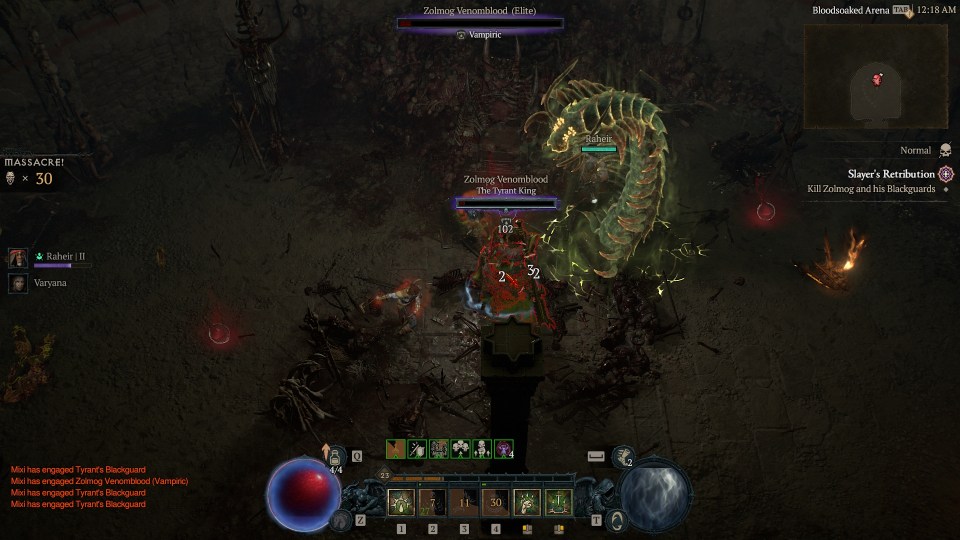
This new class is also very thematically tied to both the new chapter of the story, and the new region. Spiritborn hail from the Nahantu region, and one of the first major new characters is likewise a Spiritborn who will be present through much of your journey. Whether you’re playing the class or not, they’re front and centre here in Vessel of Hatred, and you’ll get a good sense of the sort of spirits and powers they’re working with as the tale progresses. Spirits, in general, are a cornerstone of the story; in particular, there are frequent invocations of the name Akarat, a fairly important lore figure in the Diablo universe. In short, the Spiritborn is very much the correct choice for inclusion in this expansion. They weren’t just picked as a means of doing something new; this is a thematically coherent choice for the story that Vessel of Hatred tells.
It does help that they’re a pretty enjoyable class to play, though. I’ve still not explored the full extent of their buildcraft, having only really dabbled in two of the four class trees heavily, but the various legendary aspects and uniques I discovered made for some interesting possibilities. Towards the end of my playthrough, I happened upon a combo that created a fear aura around my character for about seven seconds at a time on an eleven second cooldown; anything short of bosses or ranged enemies was therefore unable to keep me from getting in their face and dunking their life bars in poison.
Perhaps the biggest issue I have with the Spiritborn is relatively minor: they are so tied into the Nahantu region that this ended up extending into the gameplay as well. By that, I mean that every dungeon in Nahantu unlocks an Aspect for the Spiritborn, and not for most other classes. If you want to get the aspects needed to build them up properly, you’re going to be spending a lot of time in the new region’s dungeons, and likewise won’t have as much need to do so as anything not a Spiritborn. This is an oversight that I hope Blizzard changes at some point, as it would be much better if the aspect rewards were shuffled around to be spread more evenly across the map.
It’s A Jungle Out There
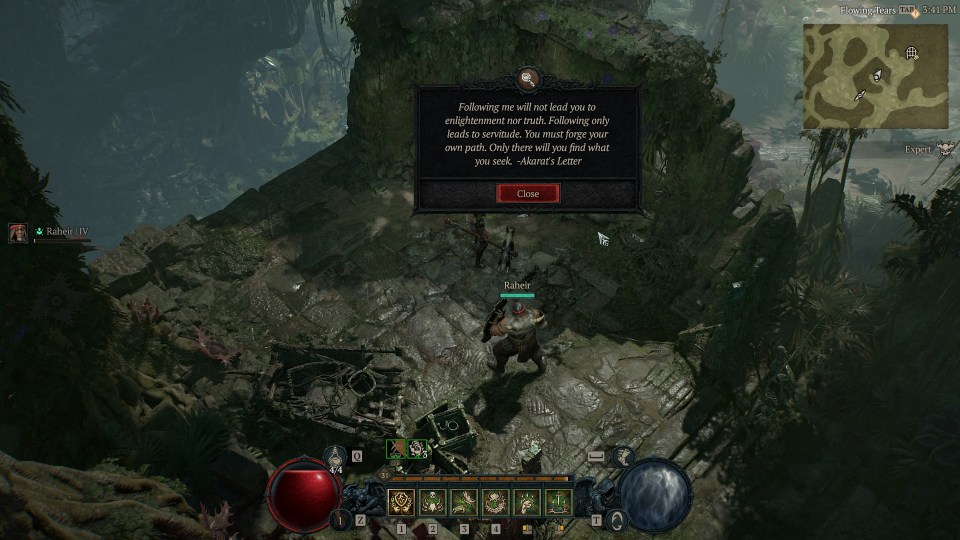
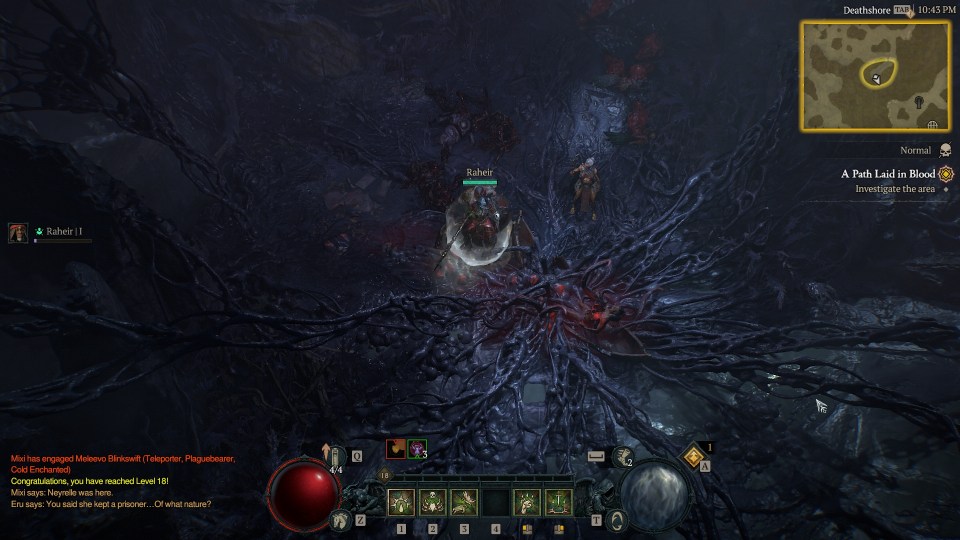
Speaking of Nahantu, the newest region to grace Diablo 4 is definitely a high point in their map and world design thus far. It’s probably second only to Hawezar’s weird swamp witch vibe in terms of what I personally like. The region itself is quite varied, being predominantly a jungle but having large areas that shift to other biomes on the edges. It’s a pretty place to explore, and the variety makes for a much better time as I was chipping away at the side content offered there. In particular, the areas where the new Hollow enemy types infest tend to be hideously overrun, with enough sickening tar-like corruption seeping through them to make the Zerg’s creep blush.
Having featured in Diablo 2’s third act, much of the familiar areas from that game have been redesigned in the high quality of Diablo 4’s presentation. The city of Kurast serves as a major city hub in the heart of the zone and will likely become your hub during the expansion’s campaign. It’s also the home of the new Kurast Undercity dungeon, which has a timer that you need to manage as you navigate it and aim for better rewards from the quite intricate final boss. Of course, the later areas of Diablo 2’s third act also appear; it wouldn’t be much of a Mephisto-themed expansion without revisiting Travincal and the Durance of Hate, after all.
Kurast isn’t the only hub in Nahantu that you’ll be visiting a lot, though. It’s also the location of The Den, the base of operations for the mercenaries you’ll be recruiting. There are four in total, each filling a different sort of niche both in their skills and their story. They aren’t quite as outspoken as their Diablo 3 counterparts — no quotable Templar exclamations here, for better and for worse — but they’re still interesting characters nonetheless. Sadly, they didn’t seem to get a lot of further development or exploration aside from the occasional piece of banter at the Den and their initial recruiting quest. That might just be because I didn’t get them high enough rank to experience it, though; I just wouldn’t set your expectations too high on that front.
Mechanically, you select which mercenary accompanies you, and then can tweak their skillset as you build rapport with them. This is generally split into two branching trees, with a few points of variance between them to let you better select how they complement you. In addition, you can bring a second mercenary along as reinforcement; this has you selecting one of both your skills and theirs, which then triggers them to run in and aid you on its cast. It doesn’t take too long to fill out their skill tree, at which point additional levels of rapport will increase the options you can select from as barter in the Den. Much like the previous Diablo entries, the mercenaries here do the job of supporting you, but don’t completely overshadow you or change your playstyle up too dramatically. It’s good to have them, but I ultimately didn’t find much to say about the system or these quests.
Nahantu ended up being a pretty solid region to include, and I do look forward to exploring more and filling out more of the map and side content when the full release occurs. For those curious, it does feature a renown progression bar like all the other zones, so you’ll want to check it out at least a little to get the skill points if nothing else. It does not feature Altars of Lilith, however; there’s a new collectible in the region called the Tenets of Akarat, but these don’t reward the same permanent stat increases that Lilith’s did, so seeking them out didn’t feel nearly as mandatory. That’s both a blessing and a curse, I suppose, as I was therefore not really getting that much from them when I did find them. The discovery is the reward, I suppose.
While that should serve as a decent snippet of what I thought of most of the new additions in Vessel of Hatred, the major focus of this expansion is the new campaign. In the review build, I was able to select this campaign as my starting point and get straight to it with a new character; I don’t know if this will still be the case for the release version, but I would imagine it is. Otherwise, it will slot in almost immediately at the conclusion of the base campaign. I was generally keeping my difficulty setting as high as I could unlock through Vessel of Hatred, lowering it on occasion to speed up progress but generally finding that it all worked well. By the end of the new campaign, I was level 58, just shy of the new maximum (as paragon levels have been separated from your overall level now).
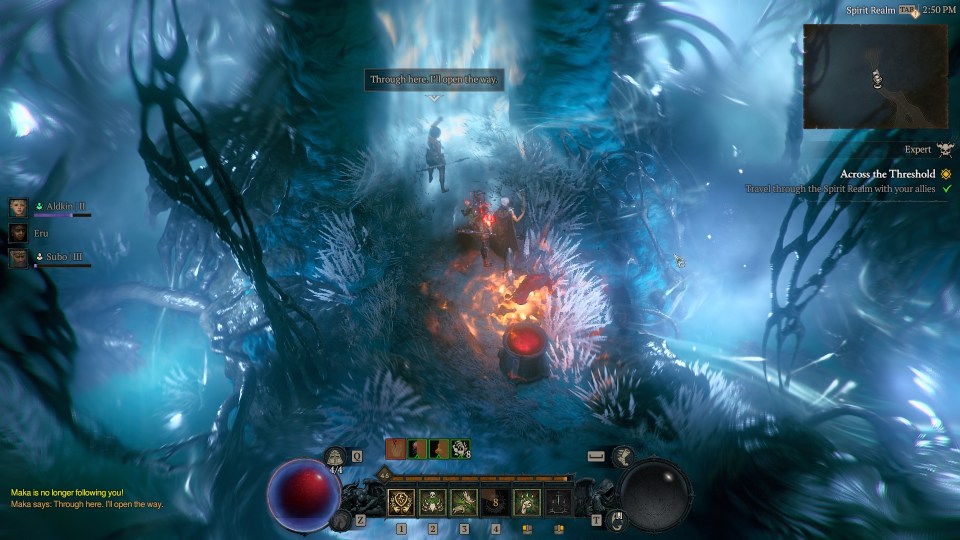
That wasn’t just me running through the main campaign though. It also included a little bit of the new seasonal events, unlocking all the mercenaries, and dabbling in both new and old content just to get a feel for my Spiritborn. The combination of all these factors — new class, new area, and a mix of new and old content — saw me breeze through the levelling in no time at all, and I genuinely had a good time doing so. Diablo 4’s combat is punchy and satisfying, and the buildcraft was varied enough that I was constantly finding new ways to tweak my experience as more aspects or uniques became available. It’s still a gameplay loop that I find effortless to sink into and chip away at for a while; but I know it’s also a gameplay loop that I will gradually get my fill of and put aside for a while.
To reiterate: Vessel of Hatred is definitely more Diablo 4, in all the best and worst ways that statement entails. What that means inevitably differs for each player, and you probably know ahead of time where you’ll land on this. But if you weren’t previously sold on the game, or else kind of glossed over the base D4 campaign on your initial playthrough? I’d still encourage checking it out, even if you only end up going through the story once. The new campaign did a very good job of reminding me why I like the writing of Diablo 4, if nothing else.
Durance of Hate
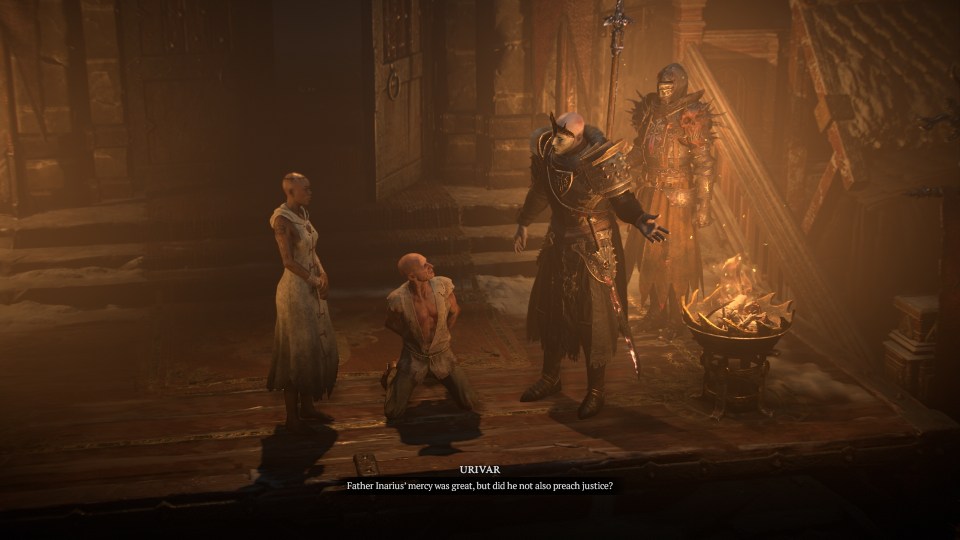
Vessel of Hatred kicks off not long after the conclusion of the base Diablo 4 campaign. The threat of Lilith has been contained, but Mephisto’s soulstone is at large, and it is not holding the Prime Evil at bay. Neyrelle, our friend and ally, has run off in the hopes of sealing this evil more successfully than had been done in the past; a difficult task at the best of times, and one made all the harder by Mephisto doing his utmost to make sure it doesn’t happen. While this sounds like the setup of an epic chase and a large showdown, that’s not exactly what happens.
Instead, the story that follows is deeply personal and human. We, the Wanderer, are an all-powerful slayer of demons. That is the gameplay loop of Diablo, and that has been the story experience as well. But we are a blunt instrument — the sledgehammer of the toolkit that our allies comprise — and there is only so much we can do outside of slaying whatever stands in our way. But that’s also not what is called for in this circumstance. We are trying to save Neyrelle from a demon we cannot simply slay; after all, to do so would instead be an admission that we have lost and Neyrelle is gone.
There’s a lot of very solid writing beats and well-written moments throughout the campaign that hearken to this notion, exploring what it means to be a hero in the Diablo universe. The lore and history of the setting (and specifically the Nahantu region) is likewise explored, and the characters within it have to grapple with the growing corruption of the Lord of Hatred that eats away at the very earth. And while there’s a lot to say on these topics, I think it’s better that I direct you to the preview written by my friend and Platformers co-host Will Borger, as he is a far better writer than I at conveying what’s on offer here.

What I can say is that there’s a lot to like in the Vessel of Hatred campaign, and the writing continues to be delivered at a remarkably high quality that nonetheless goes underappreciated. Where it falters, then, is simply that these ideas don’t really have the time to be fully explored in the campaign’s runtime. There’s too many topics and too many characters to cover, and some end up getting cut short before they have a chance to prove to be much of anything. A minor antagonist is introduced early and looks to be a big part of what follows, but then he appears for three scenes before being killed in a somewhat lacklustre boss fight.
Still, the main thrust of the campaign is delivered well and manages to do what it needs to without overstaying its welcome. When Vessel of Hatred is good, it’s very good. But it is definitely fighting a battle against its length, and as such ends up feeling like a setup for a bigger payoff to follow; a middle chapter, if you will. The events to come look like they could be very substantial, and so it remains to be seen just how much we’re going to see and experience in Diablo 4’s lifespan. But in the end, this just leaves Vessel of Hatred feeling pretty solid, but lacking the highest highs of the base game.
It is very much just more Diablo 4, in all the best and worst ways. But writing absolutely falls into that “best” category.
No Need For Hatred
So with all this to keep in mind, the quality of Vessel of Hatred and whether you believe it to be worthwhile or not is entirely up to what you think of the base Diablo 4. Personally, I really loved Diablo 4… as a campaign. As a live service game, there was enough questionable aspects to dissuade me from wanting to play too heavily, and I largely got my fill of the game during that initial campaign playthrough and by dabbling in the endgame for a time after. I know that the reception to Diablo 4 was met with some contention, and I don’t believe all of it is justified, but much of the ongoing aspects are. This could have been a great game if it was just intended to be played a few times, and not for all time. Alas, that’s the changing nature of the triple A game development and how the industry operates nowadays, and so Diablo 4 suffered for it.
Which really is a shame. Because, again, I love Diablo 4’s campaign. And while I don’t think Vessel of Hatred quite hits that same high, it does enough in all the right ways to remind me why I loved Diablo 4 in the first place. It’s not going to change your mind or completely shift perceptions of the game, but I would hope it can at least encourage those dissuaded by negativity to take a look at it.

 Delfeir vs. the Backlog