Writing’s been slow again, compounded by the usual suspects but also by a keyboard malfunction. This necessitated a new one: a Logitech G512 with brown tactile switches since I enjoy blasting people over Discord with my fast typing. Nothing special, but it does the job and it’s holding up so far. The malfunction happened while I was about halfway through writing this, though! That stalled me even further, but it also let me add new games to the list in the interim. If some of these entries seem like they were written separately, that’s why.
I’m still in between a bunch of articles and projects, but still have plenty of games played and things to talk about in general. Some of these will get a full piece eventually, should I manage to actually pull something together that I’m satisfied with. But until then, here’s what I’ve been playing for the last while.
The usual drill: two or three paragraphs tops (Future Delfeir here just to laugh at that statement…), focused more on quantity and general impressions than anything too detailed. It’s also not a completely exhaustive list, but mostly just the highlights and things that are worth talking about. Trust me, I won’t be short of things to talk about… this one clocks in at about six thousand words, so be warned. ‘ere we go!
Subnautica: Below Zero (PC)
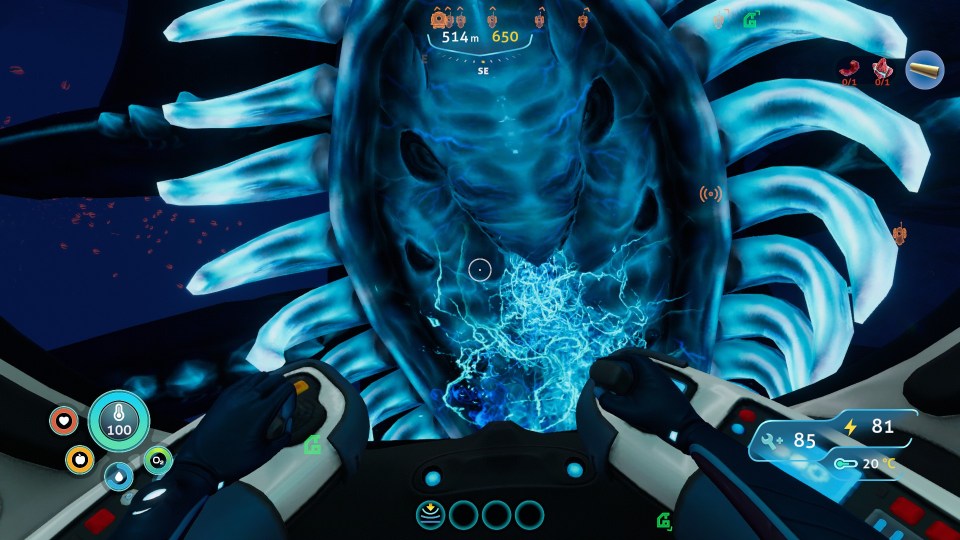
I had to double check when I started writing this that I hadn’t talked about this one already here. Shows how much time has passed, I suppose. Either way, the Subnautica spinoff/sequel came out of Early Access a couple months back. I really enjoyed the original, so I was quick to “dive back in” to this one, hurr hurr. Regardless, it didn’t disappoint, and it was a good time all around. There’s still something about these two games and their alien environments that really stand out amidst the crowd of other survival games out there.
Below Zero is a shorter affair than its predecessor, and I wrapped it up in maybe half the time. It can be described as condensed in both good and bad ways. I don’t think there’s quite as many interesting or varied biomes to explore or materials to find. However, the technology progression and story pacing is much smoother, so Below Zero just seemed to flow better in general. I enjoyed the story better overall too, so there’s that. It’s an easy recommend for anyone who finds the concept intriguing, no matter your familiarity with the first.
Path of Exile (PC)
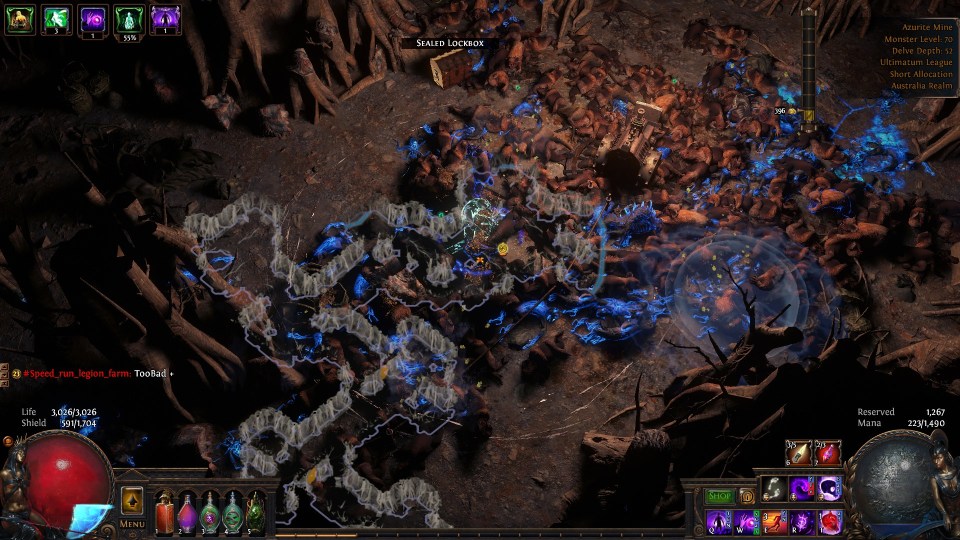
This league/season of Path of Exile (Ultimatum) was not generally considered a good one, yet it just happened to be the one that I played the largest amount of. Go figure! Either way, this was the first time that I fully cleared all the story/levelling stuff since Act 5+ was added. I ended up diving harder into the endgame stuff than I expected, and I know there’s still so much further still I could dive down. The level of content in the game really is second to none, and it’s clear to see why Path of Exile remains at the top of the ARPG food chain.
For all I’ve said though, I still had a hard time finding a build that really clicked for me. I spent most of it playing a simple Essence Drain/Contagion build, which is basically “apply a chaining pair of DoTs to packs and watch it spread like wildfire”. Safe, effective, very satisfying. But trying to branch out to any other character beyond that didn’t really net me many results, so I eventually ran out of steam and called it for the season. Still, this consumed most of my gaming hours for the better part of a couple weeks there. I just might have to pick it up again come the next league’s arrival.
Oxygen Not Included (PC)
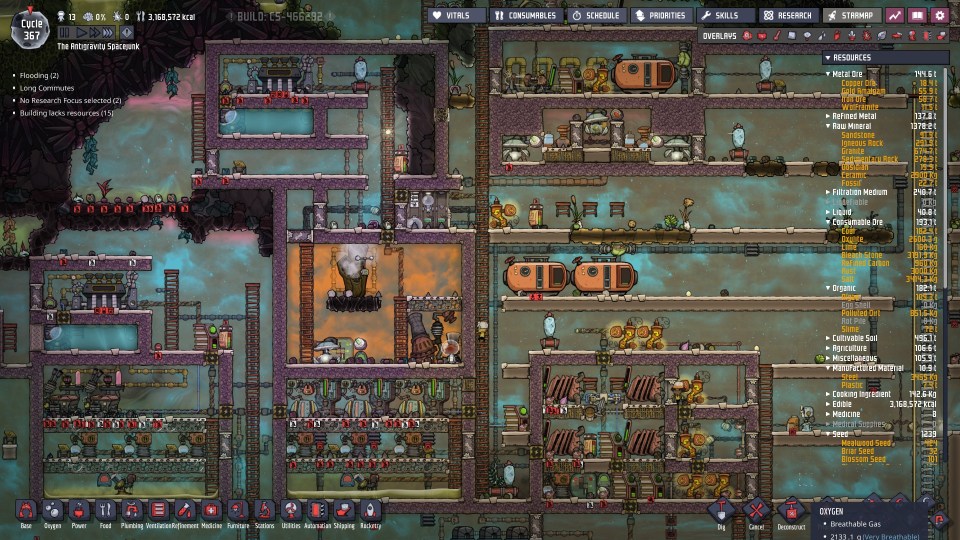
It’s insane just how in-depth a simulation is hiding under the colourful and stylised look of Oxygen Not Included. Seriously, this is one of the most intricate and complicated simulations I’ve ever played. Thanks to ONI, I’ve been unable to keep thoughts of heat exchange and thermal conductivity out of my head for a while. More crucially than the complicated nature of the simulation, though? It’s by far the most playable game of its style I’ve encountered.
This became my game of choice when watching Youtube or something on my other monitor. I’d just be passively building up and managing a colony while my attention was divided. And I did this for literally hundreds of hours until I felt satisfied with it. Even in all that time, I’ve still not fully plumbed the depths of end-game or properly conquered the space biome. I could easily go back to Oxygen Not Included and find more to do, or try out some more outlandish or optimised setups. For now though, I’ve had my fill. It really is an incredible game though, and I heartily encourage people interested in intricate city builders or management/simulation games to give it a look.
Command and Conquer: Red Alert Remastered (PC)
Back when I reviewed this last year, I ended up playing through all the Command and Conquer campaigns and missions to full completion. However, I didn’t do the same with the Red Alert sections, having only made it about halfway through both campaigns and none of the extra missions. When I was feeling in an RTS mood — and having very little to pick from given the continued dormancy of the genre — I decided to rectify that. And so I did.
It’s interesting to me how easy I find it to slip back into Command and Conquer games. Childhood nostalgia no doubt plays a big part, but I really am able to just drop back into that series at any point and have a good time replaying it. Even RTS games that I’ve adored in my life don’t get that same response (with the exception of Starcraft). The combination of cutscenes, presentation and story/worldbuilding always managed to keep me invested between missions, no matter how ridiculous. That’s more true of Command and Conquer, but this revisit proved that Red Alert is still able to evoke that.
So yes, I’ve now finished all the Red Alert campaigns, expansion packs, and bonus missions. There’s very little left for me to ever need to complete in either of the Remastered games now. Suppose I’ll go back to waiting for a remastered Tiberian Sun or something… or else start plumbing the mod scene. Anything to keep the RTS flame alive in my heart, I guess!
Adios (PC)
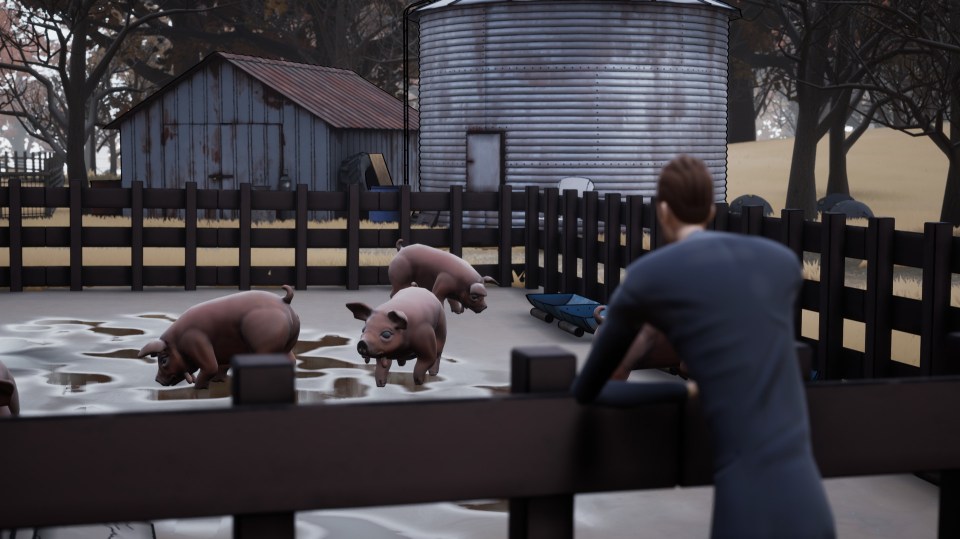
This is an interesting one to talk about, and a game that fully deserves its own full editorial/review (which I have started drafting already). To keep it simple: Adios is a short walking sim that does some really clever things with its storytelling. The writing is superb, and the story is fairly simple yet incredibly engrossing, backed up by excellent voice acting. It also exists to kind of fight back against some of the norms of the walking sim genre that have given it such a negative response among players.
There are a lot of walking sims which basically tell you a story that has absolutely nothing to do with your character or your actions. What that leads to is a game where you’re told about a far more interesting experience than the one you’re having. That sort of disconnect isn’t present at all in Adios. The story is compelling and personal to the character you are currently inhabiting and listening to speak from within. I won’t even go into the story details themselves here, but suffice to say that this was a pretty damn good game. It only took me an hour and change to finish, but it was still well worth experiencing.
Shin Megami Tensei: Nocturne Remastered (Switch)
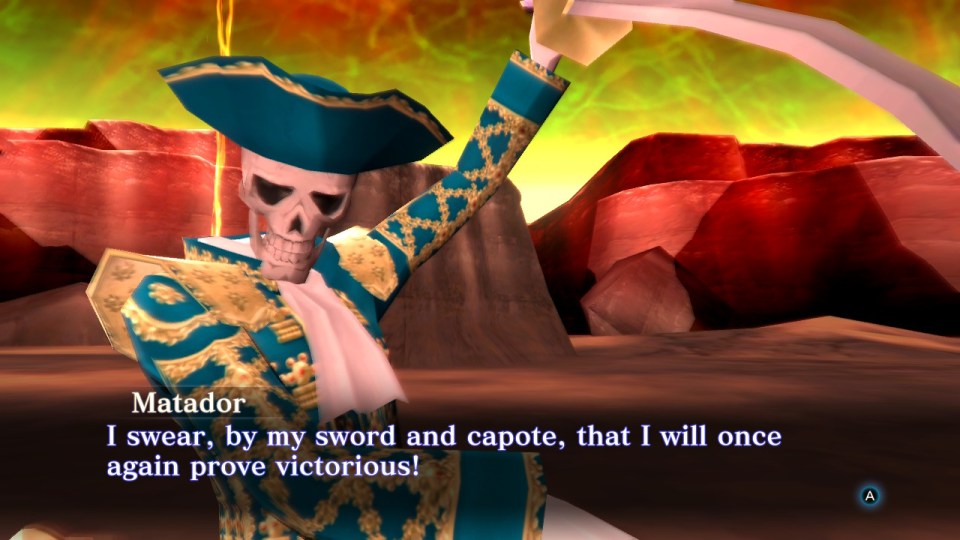
Shin Megami Tensei 3 is a fantastic game. This is not a very good remaster, however. There’s only been minimal additions and touch ups, but now the game has additional performance issues and notable slowdown that wasn’t present in the PS2 original. It’s great that more people can experience this great JRPG through it, but man I wish Atlus had put a bit more care and respect into this one. Either way, this is the first time I’ve ever managed to play SMT: Nocturne all the way to the end.
It’s been on my bucket list for more than a decade, and while I’ve always enjoyed my time with it, I never really knuckled down and saw it through. This time I did, going so far as to see the True Demon Ending (complete with an additional much harder final boss). And yeah, I love this game to bits. The combat is still the example I think of that best showcases what turn-based battle systems can be. And while the story isn’t anything fantastic, the sheer atmosphere more than makes up for it. Throw in having to weigh in on some very flawed ideologies with no real good choice, and a really awesome soundtrack tying everything together? This is definitely a great JRPG to this day and absolutely worth checking out.
Shin Megami Tensei: Devil Survivor (DS)

There’s a good reason why I listed this right after SMT3: I still wasn’t completely satisfied by the time the credits rolled. So I began Devil Survivor almost immediately after, just to continue trying to scratch my Shin Megami Tensei itch. I’ve played about halfway through this game before, but never did manage to stick with it to the end. Conversely, I powered through its sequel in no time at all, caught completely in the throes of addiction to it.
I was hoping I’d get a similar kind of response to the original by trying again here, but… no dice. It’s still a game that I kind of forget I’ve been playing and don’t immediately jump back to. Much as I want to finish it — and even though I do still like it — this one just consistently fails to sink its hooks into me. It’s also didn’t really satisfy me after the more intense atmosphere and engaging combat system of Nocturne. So we’ll see how I go with this.
Guilty Gear Strive (PC)
Here Comes Daredevil!
I’m a Sol Badguy player. If that means anything to you, then I am sincerely sorry. The 5S and 6S are really good, I get it, but that’s not why I play him specifically. It’s just part of the overall package and feel. Plus, he was the first character in the game that I gelled with, and so I basically stuck to him and refused to play anyone else after a point just to focus and practice. I’m very quick to drop off fighting games after initial love and interest (with the exception of Soul Calibur games due to extra content keeping my attention), so I wanted to really try and get into Guilty Gear Strive. Unfortunately, I realised at the time of writing that I hadn’t played it for a fortnight, despite it only feeling like a few days ago. Time is weird like that, but I’m playing to play a few more rounds when I’m done writing here.
That was a long paragraph to say not a lot for the uninitiated. So… Guilty Gear Strive is the latest in Arc System Works’ anime as fuck fighting game. The art and sound is suitably badass, the animation and graphical effects are literal sorcery, but most importantly? It’s just a fucking fun fighting game to play. The netcode is also immaculate, and I hope serves as the baseline going forward. I played long strings of matches with my US friends and we basically didn’t even notice any issues. It’s easy enough to just jump in and play the game without having to stress or struggle to find a good match, and that’s the most conducive thing to the health of the fighting game genre going forward.
I just wish I had the patience to really commit to the genre; as it stands, Guilty Gear Strive is going to end up leaving me behind despite my best efforts. Look at all the stuff I play in a given span of time, after all.
Last Epoch (PC)
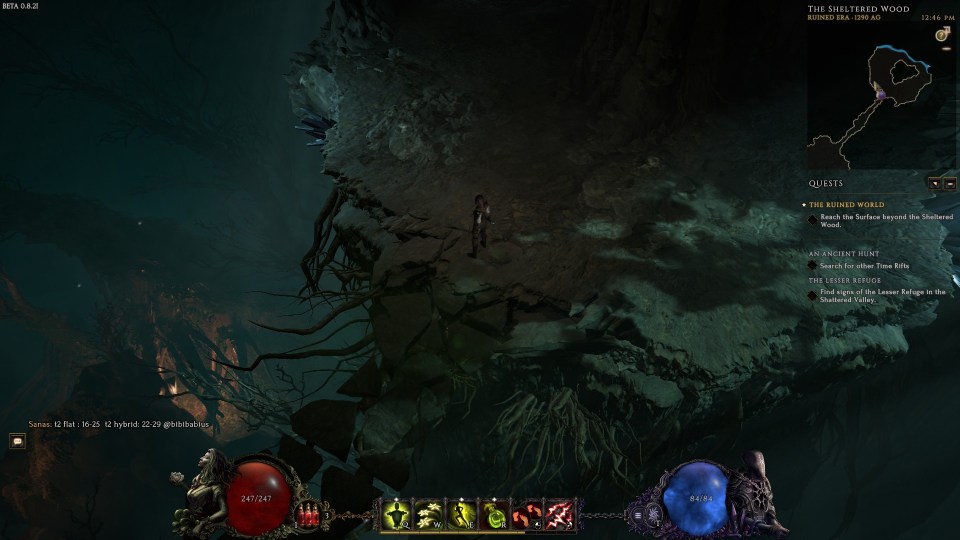
In an effort to scratch the Path of Exile itch in between seasons, I picked up Last Epoch. It’s a really solid ARPG that’s still in Early Access, but it has some really strong mechanical decisions and class customisation options. It’s more like a curated class system that you augment and specialise ala Diablo 3 (but better) as opposed to the chaotic sprawl of Path of Exile’s options. There’s a time travel aspect to the story and areas, and while I’ve yet to get far enough to fully plumb those depths, I can see the potential.
I’m not sure how much more I’ll play at present, because the Early Access nature of it means I’m wary of just hitting a content wall. Even so, there’s plenty in there to justify jumping in now if you’re curious, and I may end up doing so again at some point. Until then, one to watch.
Creeper World 4 (PC)
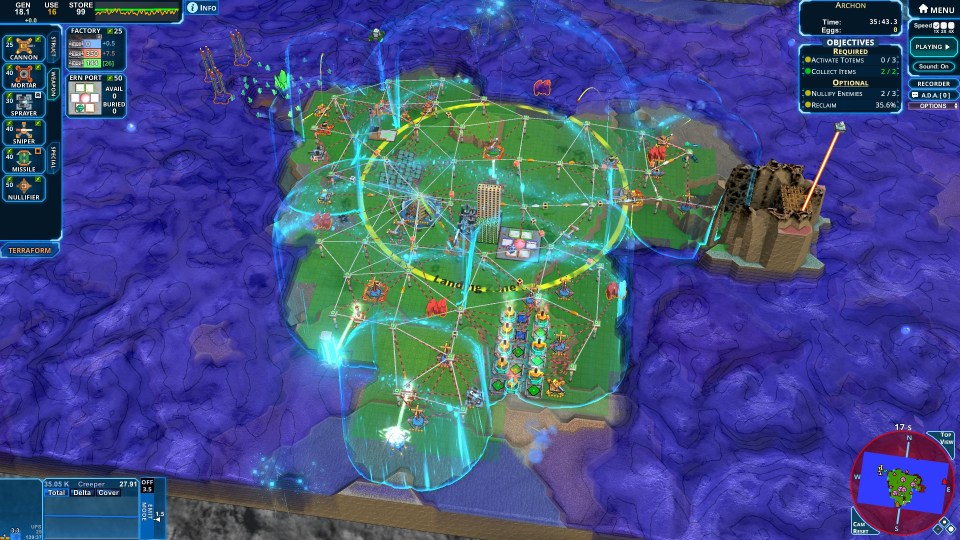
If you’ve not heard of the Creeper World series, I don’t really blame you. They’re RTS/tower defence games but with massive waves and wells of liquid as your foe, instead of specific units. You just have to manage and contain it as best as possible, and the liquid physics often mean you have to approach your defences in less conventional ways.
I played a bit of 3 in the past, and bought 4 on a whim during the recent Steam sale. I enjoyed the former, but utterly loved the latter, to the point that it basically consumed all my free hours until the campaign was done. What was the kicker? Well, 4 converted the series from top-down 2D into full 3D. The difference that makes is palpable, and the series easily survived and thrived with the transition. Being able to properly see the walls of goo surge towards your turret line really compounds the desperate struggle to contain it. I had an absolute ball with this one.
RimWorld (PC)
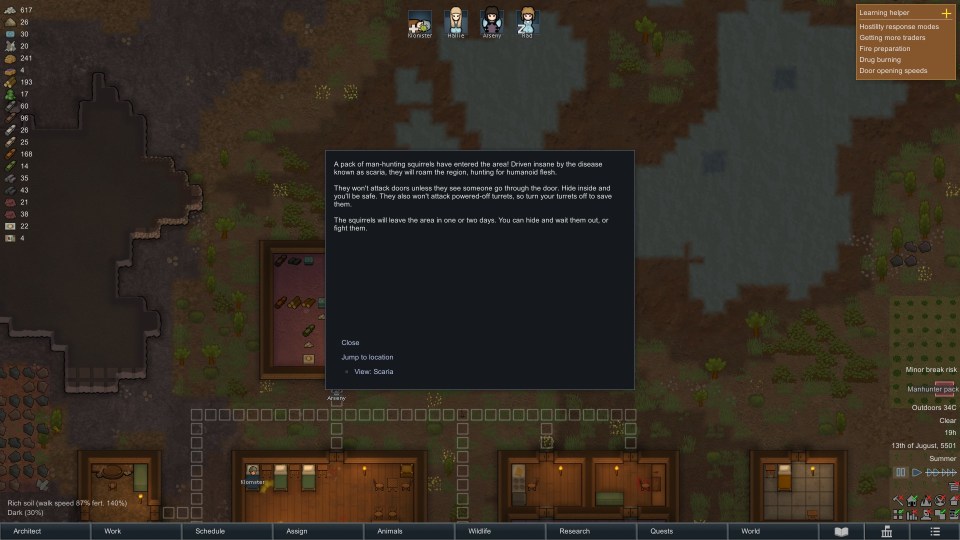
With Oxygen Not Included hitting the point of burnout, I found myself still wanting some kind of simulation/management game to play in downtime. After all, I tend to feel like I’m not being “productive” enough if I’m not clearing games at all points, so watching things on Youtube or other places (no matter how important or pertinent) just leaves me feeling weird. Plus the whole sleep deprivation thing means I tend to need constant engagement or else risk starting to get drained. In short, I needed a game to play on a second monitor during these, and with ONI feeling unsatisfying, I turned back to RimWorld.
This is still possibly one of the best “watercooler” games, and is right up there with Dwarf Fortress in the “losing is fun” mentality. It’s less about succeeding in what I do, and more about seeing the interesting ways in which things fail (and if those failures can be managed and redeemed). Whether it’s my early colony being entirely wiped out by a fat guy with a club and a Melee skill of 2 — my friends and I dubbed him Fat Geralt — to harvesting the waves of invaders for black market organs? RimWorld is quite the time.
Monster Hunter Stories 2 (Demo) (Switch)
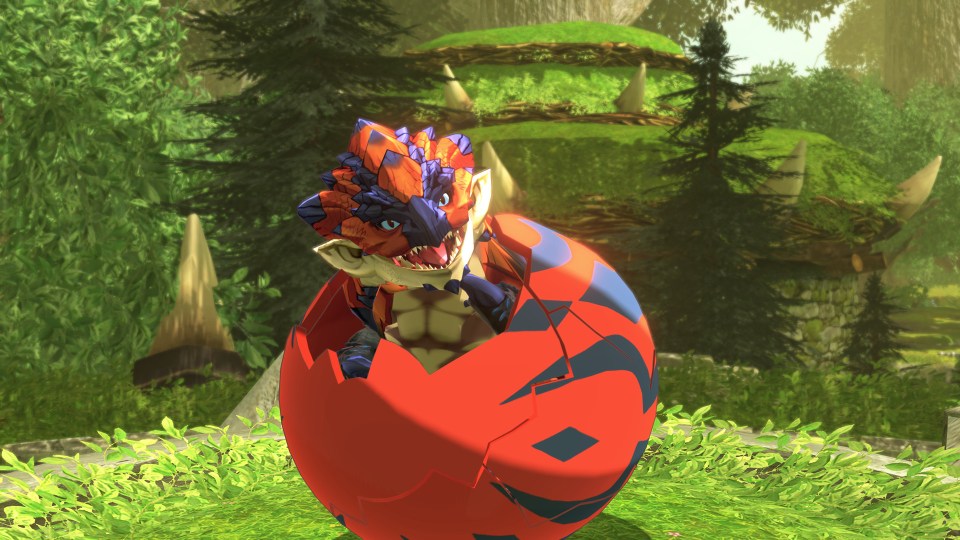
I played and enjoyed the original MonHun Stories on 3DS and had a pretty good time of it, though I didn’t end up sticking to it long enough to finish. By the looks of it, I suspect I’ll have a similar outcome for MHS2 when I do inevitably get around to it. It’s not that the game isn’t good — it is — but I do struggle these days to really get into games without a good narrative or a specific set of mechanical systems to tinker with. It took me a few sessions to chip away at just the demo, and not because it was long but just because I took it piecemeal.
As such, though the game is now fully released and people I know have already completed it, I’ve yet to pick it up. I’m still planning to at some point when the mood strikes, but we’ll see when that is. It wasn’t the demo I played this month that really won my heart; more on that later in this post. But it’s a better, more complex style of monster catching/raising/battling than the latest Pokemon games or their ilk have been. In general, Monster Hunter Stories has all the trappings and attention to detail of a full Monster Hunter title, and I’m glad people seem to be taking more notice of it this time around.
Arcanum: Of Steamworks and Magick Obscura (PC)

So I’ve been attempting to set up a long-term project of going through many of the most notable CRPGs in gaming history. This started at the beginning of last year, with my replaying Baldur’s Gate 2 and Morrowind alongside finally completing Planescape: Torment. It continued at the start of this year with playing as much Pathfinder: Kingmaker as I could stand. And now I’ve been continuing it by going back to another CRPG I played as a kid but never really stuck with. Hence Arcanum, the first of three games that the ill-fated and now defunct Troika Games would develop. You might know them as the guys who made Vampire: The Masquerade – Bloodlines.
The big gimmick and design goal of Arcanum was to have a CRPG that mixes technology and magic. This would typically get you a Steampunk setting, but Arcanum feels more like a World War I era society that just happens to include magic and fantasy races. To put it another way; Arcanum is the Shadowrun setting 200 years prior. However, technology and magic doesn’t play nicely together, so magic stops working on characters with high mechanical affinity (and vice versa).
That interplay between the two could be a really interesting exploration. Sadly, I never really felt like it was being covered really well in the writing, and it limited character build options. Arcanum feels like unrealised potential; too much of a slog to play to get to the good moments, and they aren’t strong enough moments to really warrant it. Ended up putting it down after maybe 20 hours. We’ll see if I return.
Divinity: Original Sin 2 (PC)
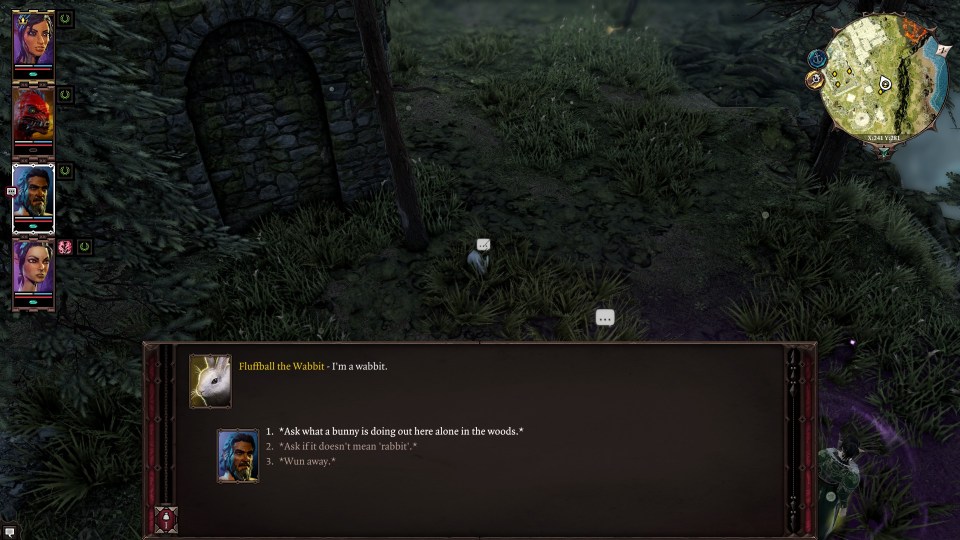
And this is what I picked up immediately after Arcanum. By most accounts, this is one of the best CRPGs made in the recent few years, if not ever. Having sunk more than 40 hours into it so far and still with a lot to go, I would say that it’s deserving of a lot of the praise it gets. That said, Divinity: Original Sin 2’s strengths are largely gameplay, mechanics, and systems oriented. There’s some very strong characters in there — particularly among the party members — but the overall story has been a bit of a mixed bag so far.
My playtime also slowed significantly after I cleared Fort Joy and the Marshes. Once the game opened up a bit, I found that there were plenty of “wrong” directions to go or quests to follow because they were far higher level. The exploration became a little more patchwork and I lost the overall flow of the game somewhat. It’s still a blast to play the encounters and interact with the systems, but the connection has been weakened to me. I took a brief break from this, but I’m already feeling the itch to return so that’s probably where I’m going next.
For the curious: I made a custom character who focuses mostly on healing and utility, then took Red Prince, Ifan, and Sebille as party members with their default kits. It’s a fairly high physical damage party, and has only become more so once I realised that diversifying your damage is not a good strategy. Normally I like to cover most of my bases on that front, but Original Sin 2 is better played if you focus on one or the other. Lucky me I guess. But yeah, more on this one to follow.
Various PC RTS Games

I’m lumping together a handful of games under this one tag, since I either didn’t play much of them or they were being played for exactly the same purpose: to scratch the RTS itch that beating Red Alert Remastered left. I played some of the campaigns for all of the following: Supreme Commander, Grey Goo, Universe at War: Earth Assault, and a Tiberian Sun mod called Twisted Insurrection.
The main reason these don’t get their own entry is that none of them really saw a lot of playtime or really clicked for me. The closest was Supreme Commander, but there were a lot of issues in how that handled its campaigns that turned me off. It was the most fun to play of them by far, though. Grey Goo just felt lacking, Universe at War’s campaigns are gimped versions of the full systems it has, and Twisted Insurrection I need to play more of to get its own write-up. It’s a very good mod for what it is, but it falls into some typical mod/fan-game traps that I’ll probably cover later.
Ye gods, I hope Age of Empires 4 is good. I’m dying for a new RTS that I can really sink my teeth into…
Divinity: Dragon Commander (PC)
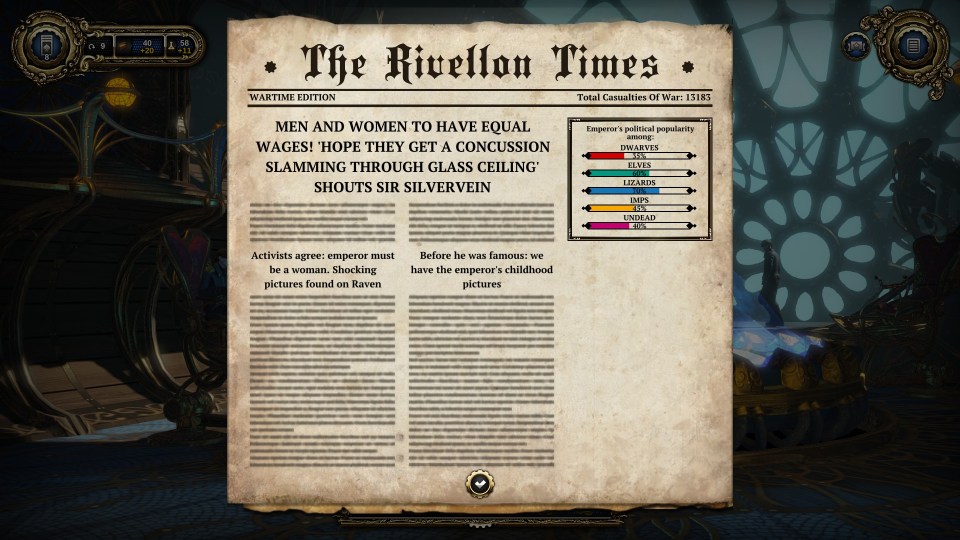
…and this one wasn’t it either, but for different reasons.
Prior to playing Divinity: Original Sin 2, I dabbled in Dragon Commander for a while. It’s honestly a pretty good game! A very steampunk RTS with a decent mix of units and counters (albeit one universal faction as far as units go). The main gimmick is that you, the Dragon Commander, can jump into the battle in dragon form yourself. It then becomes a light third-person shooter of sorts where you fly overhead, destroy enemy units, and buff/debuff the battlefield. The RTS mechanics and systems are hardly Starcraft level as a result, but the overall mashup is a pretty entertaining one.
This is supplemented by a turn-based campaign map that sees you move your units and forces around ala Risk. What’s more, you can talk to your generals, advisors, and councillors in these turns to get more story and worldbuilding. It also lets you make political decisions for your burgeoning empire, gaining approval with the different species in your lands to further bolster or hinder battles in their lands. You even marry a princess of your choosing, which leads down their own individual storylines and can further affect how the factions see you.
It’s even got pretty good writing, albeit occasionally a little heavy handed with it. Small wonder that the dwarves absolutely despised me when they’re basically just super-capitalists, no? Ultimately I got through the first two of three campaign “boards” before feeling like I’d run out of steam, having already unlocked everything by this point. It wears out its welcome at that point, but it was definitely a fun experience.
Atelier Ryza (Switch)

Over the past few years (mostly due to their re-release on Switch), I’ve come to really dig into the Atelier franchise. These games get churned out every year or two by Gust in between their other various anime-as-hell JRPGs. It’s what keeps the lights on for them as they cater to their small niche of series fans. But it wasn’t until Atelier Ryza that they seemingly got a certified big hit on their hands. I’m not entirely sure if it’s sad or telling that that hit came about almost entirely off the design of the titular Ryza herself, though… her gratuitous, thicc design. But while the physical aspect certainly got people in the door, I’d be doing a disservice to the game and the character alike if I said that was all there was going on here.
In short, Atelier Ryza is pretty good. It’s one of the better Atelier games I’ve played, in fact. The series is always fairly comfy and light-hearted, focusing more on small scale characters and worlds rather than grandiose JRPG plots (though they frequently get there nonetheless). They’re about going on adventures, gathering the materials to further your crafting, and solving problems by slapping shit together in a cauldron and calling it a day. So it’s not going to win awards for anything in that front, and Ryza hardly bucks the tradition.
Where Ryza does stand out amongst the Atelier games is the depth and general entertainment of the crafting system. Though the items tend to remain fairly similar, the way the crafting system works shifts between games, and Ryza has perhaps the most interesting I’ve encountered thus far. That alone kept me playing and experimenting even after the drive for the story ran out, as well as my general apathy towards the battle system. It adopted a real-time ATB system compared to the turn-based of old, and I can’t say it really worked for me. But it was a means to an end, and ultimately I had a good time with it. So much so that I went straight on to another!
Atelier Ryza 2 (Switch)
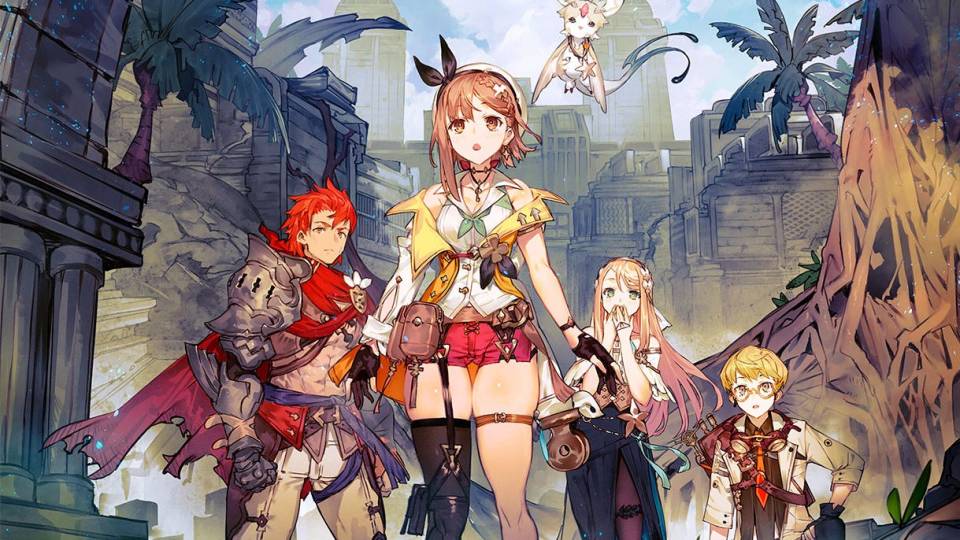
Atelier games will typically release in arcs or trilogies that have continuous settings, characters, and stories. Despite the continuation, they’ll typically have new names and lead characters. The Arland trilogy (and later quadrilogy with Atelier Lulua) of Atelier Rorona, Atelier Totori, and Atelier Meruru were their own self-contained settings different from, say, Atelier Ryza. I bring this up now, because it shows you that getting an Atelier Ryza 2 was kind of a big deal! They did that with the Atelier Iris trilogy back on PS2, yet those games weren’t actually directly linked or had the same Iris. This time around, the Ryza games are both Ryza-centric.
Gust knows they’ve got a character that people gel with in Ryza. Yes, she’s designed to be sexy, but she’s also perhaps the most good-natured and charming of the series leads that I’ve encountered. I’m genuinely glad that she got a second chance to shine, but especially because this game is so much better than the first. It’s perhaps my favourite Atelier game thus far, even.
The battle system went from being one that I was apathetic about to one with a lot of moving parts. I could really sink my teeth into Ryza 2’s battles, and they supplemented the further expansion of the crafting system. Hell, it’s been expanded so much that I feel it might have even bordered into feature creep, as there were aspects of battles and crafting that I barely ever engaged with. All this in pursuit of another charming albeit low key story. As ever, the Atelier games are a delightful little break amidst the more serious games I tend to throw myself at.
Mass Effect 3 Multiplayer (PC)
The multiplayer mode of Mass Effect 3 was much maligned at the time of release. We can probably attribute a lot of that to the notion that it sapped development time and resources away from the main single player game (and the famously awful ending). Whether this is true or not, the multiplayer mode we got for it stands out way more than many of the other slapped on modes of the era.
This is a genuinely great and varied wave defence game, featuring a ton of weapons, classes, and powers that weren’t available in the single player experience. You complete the missions to get credits, and these credits get you packs that unlock new weapons, character classes, and upgrades. It’s perhaps the first example of the lootbox that EA would then push out constantly afterwards, but… well, Mass Effect 3’s grind IS the game. Paying to get past that doesn’t get you to some perceived game, but just denies you content and playtime getting there. It’s almost badly designed from a monetisation perspective, and thus the only reason I can stomach its existence, since it’s hard to imagine anyone actually PAYING for packs.
But all of that aside, this is still a surprisingly active and entertaining multiplayer scene even a decade later. Lobbies rarely don’t get filled and there’s plenty of variety in playstyles to keep the comparatively limited mission types fresh. I’ve been playing it duo with a friend of mine during the latest wave of COVID lockdowns, and I’ve genuinely had a blast. It’s a disappointment that it wasn’t included in the Mass Effect remastered trilogy, even if I understand why. Outside of Warframe, there’s still not really anything quite like this that I’ve encountered.
Deep Rock Galactic (PC)
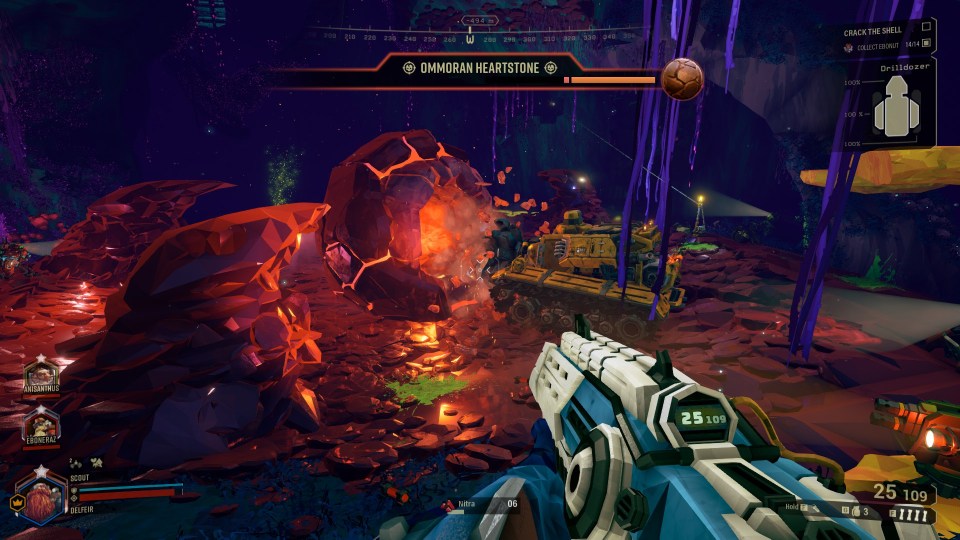
My other multiplayer game of choice during these times remains Deep Rock Galactic. It’s still just the perfect combination of “shoot bugs, explore cool caves, collect resources and get stronger” loop that it’s ever been. I still only ever play it with a couple of my friends rather than with random players online (let alone solo), so there’s still plenty I have to unlock and work on. But I never really get tired of doing so.
I did take a break from it for a while before the recent incursions, so I had yet to play the new regions or mission types that were added. They actually made an Escort Quest quite interesting, with enough shake-ups to the formula to sidestep the general issues that mission type has. On-Site Refining is also great fun, albeit pretty chaotic when it comes to defending the mess of pipes you set up. Still a fantastic game, and still deserves all the support that a well-made and clearly darling passion project like this should get.
Legend of Mana (Switch)
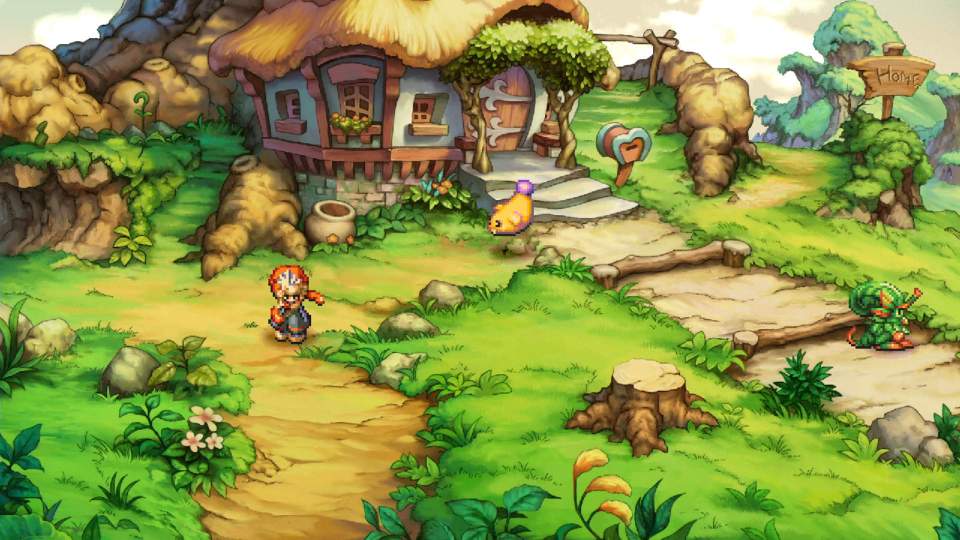
Square Enix continues their trend of rereleasing all their old games for newer systems and giving them mild touch ups. Yeah, it’s kind of low effort and really just a means of selling the same game again, but I’d prefer this approach (at more reasonable prices) than the Nintendo approach. Just make the old games available and people will be more inclined to support it rather than resort to ROMs, Nintendo! People want to give you money!
…Anyway, tangent aside, this month’s HD release model is Legend of Mana. This was perhaps the last good Mana game (excluding the Trials of Mana remake) before the series devolved into a total mess of genre slurry. It’s one I hadn’t really experienced in full previously, and it’s honestly pretty fun. The art and sound is really special even before the update, so it’s just a fun world to visit and experience. The combat’s pretty simplistic but it works well enough.
The game itself is monstrously open-ended and full of confusing systems that practically beg you to resort to a set of guides and maps to figure things out though. And that’s without going into the crafting… my god, the crafting. I think I’d need a masters degree and a year’s apprenticeship to figure out just what the hell is going on with Legend of Mana’s tempering system. This remaster could really have stood to smooth out a few features, but what we’ve got is still an enjoyable experience. Just… yeah, bring a map. No shame in it. I’m still chipping away at this one an event or two at a time.
Dungeons and Dragons (Tabletop)
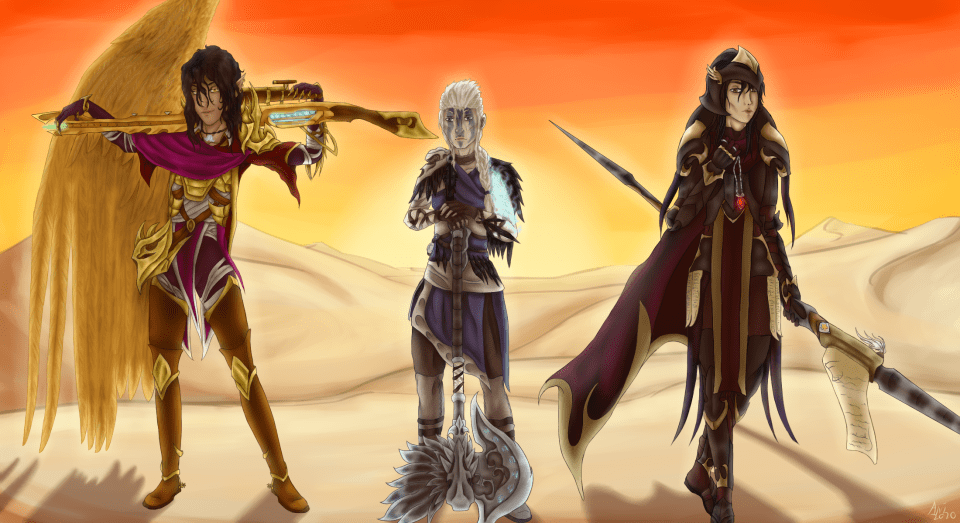
I don’t usually talk about the tabletop games I play here, but the recent campaign I’ve been involved in has stood out enough to warrant it. It’s also tangentially related to games, so hear me out.
There’s two groups I play in. The first is with my close real-life buddies. We meet up every fortnight and then play some D&D. We err more on the side of shenanigans than serious or heavy roleplaying, but it’s always a good time. Our current campaign is seeing us go through Descent into Avernus, and the sheer metal album cover energy of the later stages of that have been an absolute treat. Really enjoying that, but sadly it’s been put on hiatus due to COVID lockdowns yet again. Hoping we can continue that sometime. So instead, I have to shine a light on the online group I play with my MMO buddies.
Our DM has been working to convert the Vyn setting into D&D. Vyn is the world from the games Enderal, Nehrim, and others — all Elder Scrolls mods that build their own setting and elevate themselves well beyond their host games. And in that Vyn setting, our little three player plus DM group has been having the absolute time of our life. That’s our party up there in the image. We’ve somehow struck gold with our character and party dynamics, making for some absolutely fantastic roleplaying interactions and story progressions.
All of us have had badass or touching character moments, we’ve adopted NPCs as allies by going into fights well above our level (and winning!) due to our characters standing by their beliefs and motivations… it’s been next level. Right now that’s also on a (hopefully brief) break due to other factors, but it’s been the absolute highlight of my tabletop career in… well, arguably forever. So I wanted to give a massive shout out to that campaign, those players, and especially that DM for how much it’s continued to stick in my mind. Can’t wait to resume it.
NEO The World Ends With You (Demo) (Switch)

Of the two Switch games that I played demos for in this batch, this was the game I was most looking forward to. After I finished the demo- nope, stop, that’s inaccurate. After I inhaled the demo for NEO The World Ends With You in far too short a time, that went from looking forward to? To utterly needing it.
The original TWEWY is quite possibly the best game on the original DS, and easily the best game Square Enix made during their “we don’t do JRPGs anymore” stint. It’s a modern, expressive, and fundamentally interesting game with a story setting that begged for further exploration. The fact that it took this long to get any further sequel is a crime that I’m glad is finally being rectified.
I wasn’t sure if they’d be able to translate the original’s art, sensibilities and battle system feel to a sequel adequately. The demo washed aside all of that in a heartbeat. If it can maintain that level of quality at a consistent rate throughout the whole game, it’ll be one to remember for sure. Bring on the end of the month and the full release: I will be there with bells on.
Torment: Tides of Numenera (PC)

The spiritual successor to the legendary Planescape: Torment was a huge Kickstarter success at the time. It released back in 2017, merely a day before Horizon: Zero Dawn and three days before NieR: Automata. As a result, it was promptly obliterated from the gaming landscape’s map. I know for a fact that I played a few hours of it on the launch day, put it down for those aforementioned games, and then didn’t come back to it until now. Given how much time has forgotten it in favour of those two, if nothing else? I can’t be the only one.
What I came back to was a fantastic CRPG that, while not at the level of Planescape: Torment, absolutely deserved more notice and attention than it got. It has mixed reviews on Steam despite decently high critical acclaim at the time. So many people just seem to have completely forgotten that it was ever a thing. Discussion of the game is sparse among content creators I follow, both from the time and especially now. The wiki and guides for it are bare-bones and missing plenty of information. Even inXile’s Wasteland 3 saw much more acclaim and response to just years after.
So why is this? Why didn’t the game live up to the expectations and seemingly fade away? Was it just not very good? As I just said, I think Torment: Tides of Numenera was fantastic. I picked it up as a break from Divinity OS2 and then finished it over three to four days of seemingly non-stop playing. Why, then?
Well… the reason this is the last game on this article is both to cover the fact that I played and finished it. But it’s also to segue into the next article I’m likely to be writing and releasing here, because this question and discussion has utterly consumed me. It’s the spark that seems to have reignited the writing fire which keeps sputtering out when I struggle with my other projects. So expect that in the coming days, if all goes according to plan!

And that’s it. That’s most of what I’ve been playing for the last couple months, give or take a few recurring things like the obligatory FF14 (somethings something free trial), some Baldur’s Gate 3 shenanigans, and a few others. Some of this will be covered more in-depth later, some won’t, but I hope it was an interesting read regardless. Until next time!

 Delfeir vs. the Backlog
One thought on “Backlog Battle Report (May-July 2021)”