I originally set out to do a full review and breakdown of Gnosia in my usual fashion. As soon as I was done with the Bravely Default novels, it was next up on the hit list. That didn’t pan out as I’d hoped. There’s a disjointed, fragmented and ultimately unfinished attempt at a review draft in my files; I simply wasn’t able to write up something I was happy with in that style.
As such, this isn’t going to be a very structured piece. But I owe it to Gnosia to at least cover it and talk about it in some fashion, even if I’m mostly rambling. After all, I loved Gnosia and was genuinely surprised and impressed by it. So once again, I wish to use my platform to shine a light on something that will likely go unnoticed but really doesn’t deserve to. Go check out Gnosia if it at all sounds interesting to you by the time I’m done here.
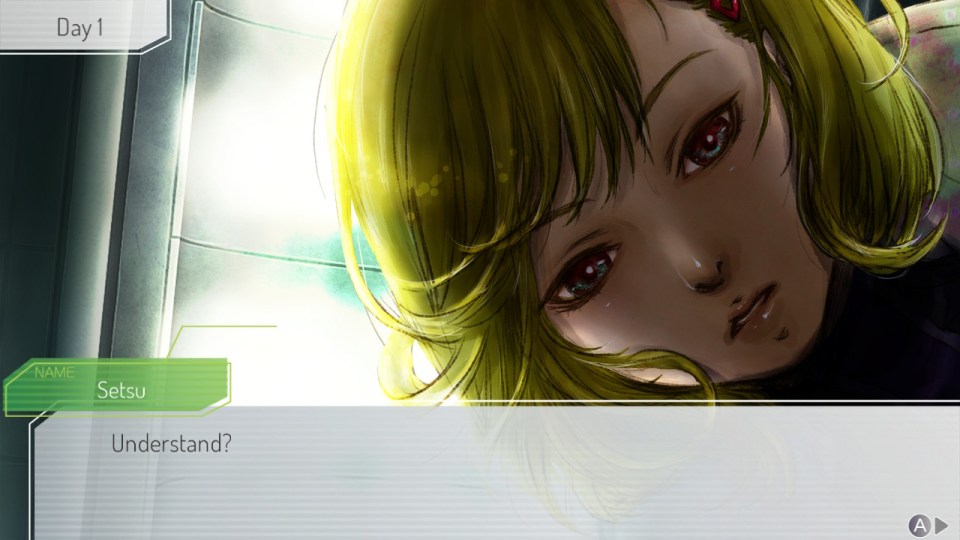
Gnosia is a social deception party game like Mafia, Werewolf, Among Us and any such spinoff or variant. The crew and passengers of a refugee spaceship have been infiltrated by the titular Gnosia, who possess and masquerade as individuals and have to be sniffed out. Every night they’ll eliminate someone, so every day the crew has to discuss and vote on who is most sus. The unlucky target gets placed in cold sleep, and the process repeats until the Gnosia are all contained or they outnumber the remaining crew and take over.
The catch? It’s a single player story-driven RPG in addition to all of those things.
You play it against a cast of distinct characters and level up between rounds in order to better manipulate the AI controlling them. The characters all have personalities that will heavily influence the kind of behaviours they’ll follow in discussions and votes. Playing through rounds and seeing various outcomes will further expand your knowledge of them, which helps you play against (or alongside) them in future games.
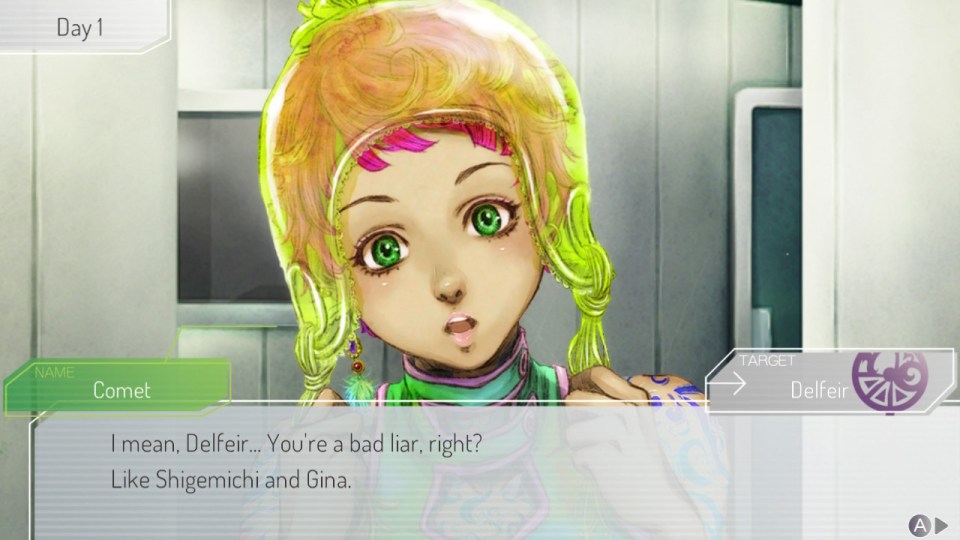
Of course, the reason that you’re able to carry that knowledge forward is because you’re stuck in a time loop. I seem to be writing about a lot of those recently, huh? But it works very well here, and trying to figure out why you’re stuck in the time loop and how to stop it is the crux of the narrative. Learning about the characters, the setting, the Gnosia, and all sorts of other concepts presented throughout the game is how you’re able to figure it all out.
Gnosia’s story succeeds because it manages to weave every aspect of character and setting into the overall narrative, up to and including the gameplay. It definitely approaches the “story that only a video game can portray” category that I adore. NieR: Automata or 13 Sentinels still trump it handily, but it’s a solid showing all the same. The experience could’ve very easily fall apart if the execution was off, but Gnosia sticks the landing.
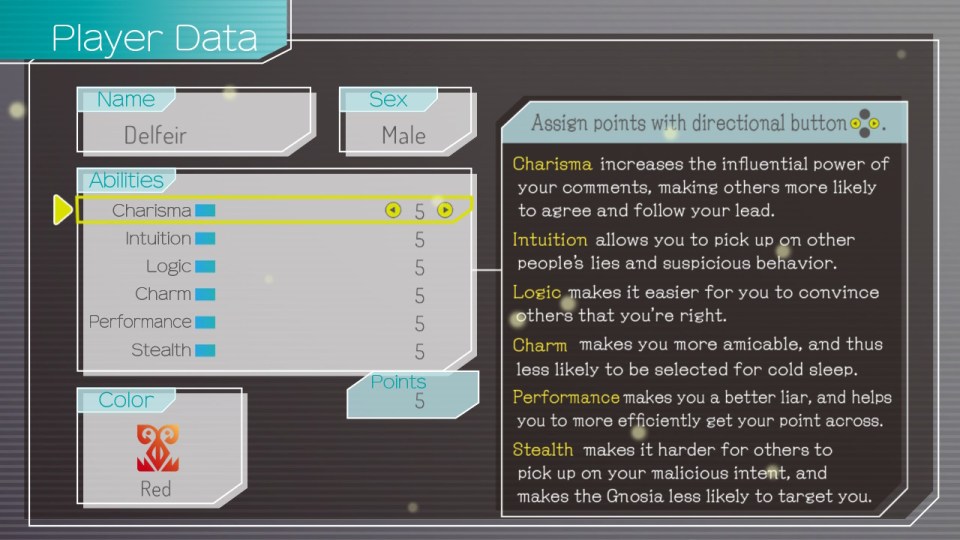
Turning a social deception game into a stat-driven RPG made a lot more sense in practice than I’d have expected. There’s six stats that determine how effective your accusations or defences are in the voting rounds, as well as give you a chance to spot liars (or lie better yourself). Reaching certain ranks of a particular stat can give you a new skill to use in appropriate moments of discussion. Any stat combination can work, whether it’s playing safe or else dominating conversations with logic and manipulation.
Of course, the AI characters won’t always be completely compliant to what seems like a clear and obvious situation. That’s largely because they have access to the same stats that you do, and so each character has a unique spread of abilities and behaviours. This creates somewhat believable responses that you can get a good read on. Some characters will make friends and stay loyal based on emotional responses, while others are impossible to read. Triggering the specific character events to advance Gnosia’s plot will see those characters getting stat boosts. Crucially though, it also gives you more knowledge of how to predict and manipulate their actions to achieve your desired results.
The first few loops of Gnosia are largely tutorials, introducing concepts and characters at a digestible pace. Once the full cast of 15 has been met, you’ll gain access to settings that let you tailor make the player counts, Gnosia count, and other roles. The full swath of Mafia abilities and jobs is here. These include the Doctor (reveals if people voted to cold sleep are Gnosia or not), Engineer (learns the role of a player each night), Bug (is the sole winner if they survive to the end, regardless of what faction normally wins) and so on. These can be switched on or off at the start of a round as you wish. Certain character events will only trigger under the right conditions; thankfully, you’ll gain an Event Search button which auto-configures a round that satisfies an event requirement.

Characters each have these unique events, and triggering them to fill out their biography is the core component of stopping the time loop. This means that you’ll be learning all about this eclectic bunch both mechanically and narratively. Gnosia would completely fall apart if these characters weren’t interesting, but for the most part they absolutely are. Even blander ones still fulfill interesting roles in fleshing out the overall worldbuilding. There’s only a handful of events for each character, but they add juuust enough to get a feel for them.
What’s fascinating, then, is the emotional connection I built to specific characters. Because I liked or disliked certain characters, I found myself behaving or favouring individuals in the actual gameplay sections.
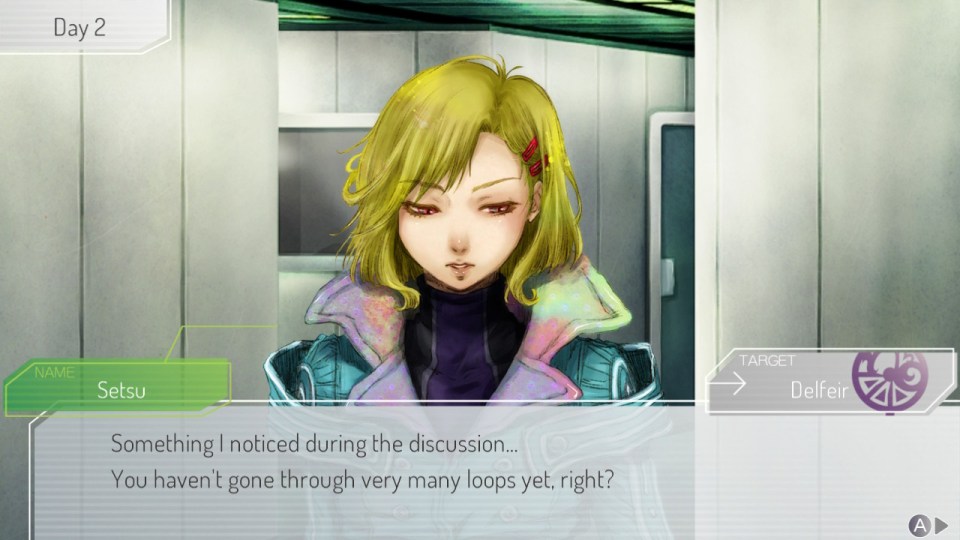
For instance, I was generally nice to Setsu, since she’s the only other person aware of the time loop. That kind of camaraderie and sharing of knowledge (even when on opposing sides for a round!) in the interest of solving the bigger picture helped me forge that bond. But every character ended up having some kind of emotional effect on me, no matter how minor.
This was further helped by how utterly weird some of the characters are. It’s a seriously eclectic cast. There’s plenty of mostly normal humans, but then you have a genetically modified beluga whale, a cyber shrine maiden, a guy who looks like a Grey, a man in the process of transitioning into a housecat… you get the idea.

Gnosia’s strength, then, is how well designed the entire experience is between both gameplay and narrative. If I didn’t have emotional responses to characters, I would probably have mechanical ones. I liked Setsu for story reasons, but I liked Comet for mechanical ones, as they’re incredibly good at spotting liars (but being a poor liar themself). SQ annoyed me as a character, but wasn’t a challenge to deal with mechanically. On the other hand, Yuriko was my go to “vote this character off ASAP if I have no other clear targets”, because her stats and abilities made her nigh impossible for other AI to beat without my influence.
Mafia games are generally good fun, so the fact that Gnosia was able to replicate that with purely fictitious characters is marvellous. That it’s then able to merge that with a narrative that encourages you to learn the world and characters makes it a step above even that. I would have played the game for a time based on the RPG aspects, but it’s the story that kept me glued to my Switch for the two days or so needed to complete it.

Gnosia isn’t perfect, though. The soundtrack is… odd, to say the least, and seems to favour being discordant more than anything. There were times when it just sounded like my Switch was blasting static at me, and I’m not sure if that’s just speaker quality or by design. Either way, it didn’t really stand out.
Likewise, Gnosia‘s art style is very pronounced and unique. This is usually a good thing, and there’s a lot of great shots and interesting looking characters. Some few designs, scenes, and overly exaggerated filters just failed to land for me is all.
Sometimes that same sentiment applies to the characters themselves, not just their art. That’s a much smaller criticism though, since the wide variety of characters means I’ll inevitably like some more than others. Most importantly, every character has their role to play in the story and worldbuilding, so I’m happy to tolerate even the ones I don’t like.
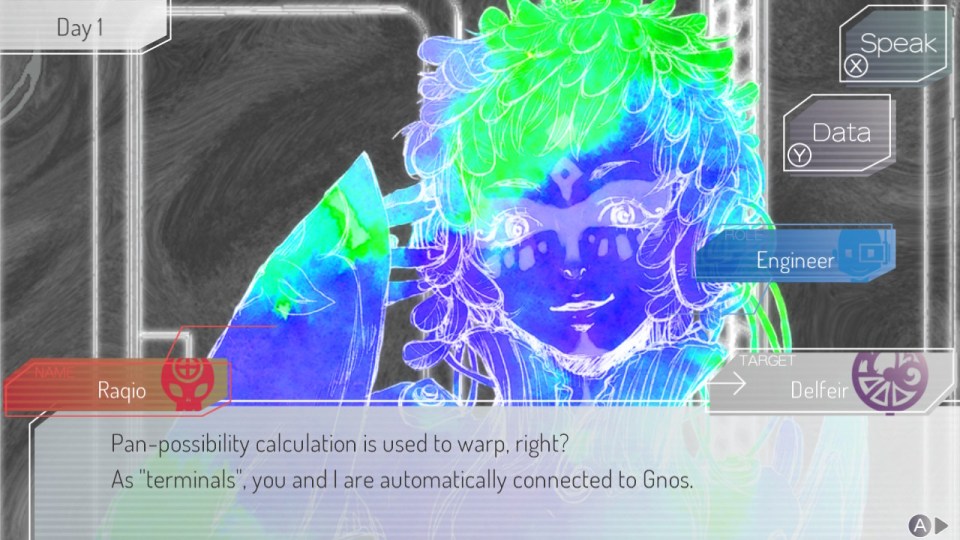
As for the gameplay itself, the core of Gnosia is fully customisable and functions well. The nature of social deception games and the manipulating of AI means things won’t always go your way, though. Some events require specific characters to survive or act in certain ways, and it might take a few attempts to get it right.
This was the biggest negative I saw mentioned in other reviews, but honestly? I enjoyed the gameplay loop enough that a “failure” didn’t really sting all that much. You still accrue experience points and levels even in runs you lose early, so there’s always some progress at least. It’s probably the only real complaint I could offer on a gameplay front otherwise.
And that’s Gnosia in a nutshell, I guess. Live, die, repeat, and find out more about the interesting bunch of characters you’re bunking with in the process. It’s short, it’s sweet, and I was more than satisfied with the time I spent playing it.
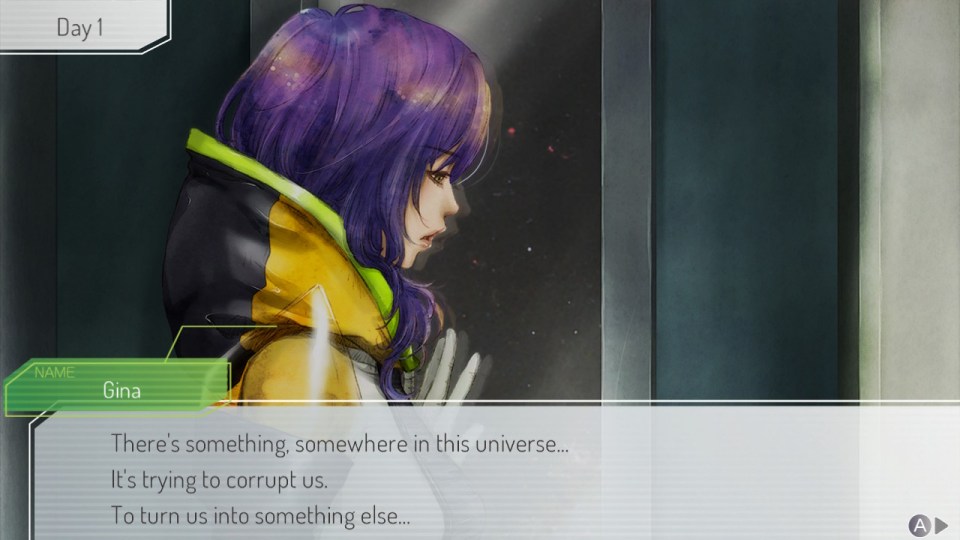
This is an indie game and Switch exclusive that I happened to find out about purely by chance. I spotted a review of it on Destructoid, didn’t recognise the name but was pulled in by it and the interesting header image, and was intrigued by the concept despite the somewhat middling score. I bought it purely on a whim, and it turned out to be a game that I absolutely loved. So, much like Bravely Default 2, I wanted to use my platform to shine a bigger light on this one.
It’s going to inevitably get less noticed than it really deserves, but I honestly did love Gnosia. As the story went on and I learned more about how all the puzzle pieces fit together, I found myself increasingly enthralled and unable to put it down. Seeing how it all wrapped up into a neat bow with all the plot aspects explored and character stories completed satisfactorily was a treat. It also had a lovely ending, albeit bittersweet… and then a true ending that turned that into pure sweetness and really warmed my heart.
There’s really nothing more I can say about this one except that I loved Gnosia, and so you should check it out if it sounds even slightly interesting. It’s a game that’s far deserving of attention and support than most other things I’ve played so far this year.
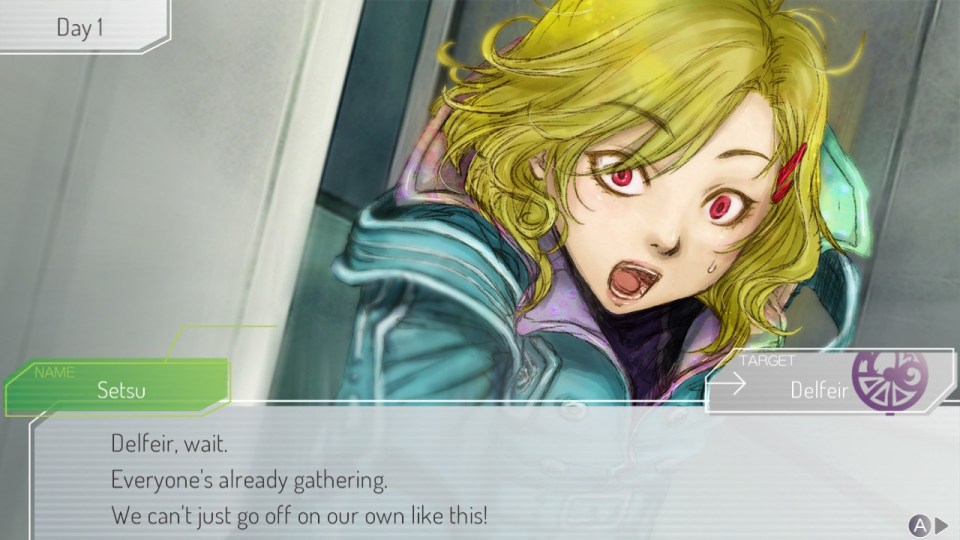
And… if you do play Gnosia? Be sure to tell Setsu I said hi. Thanks.
There. Finally. I went through a couple of draft attempts before I was able to type this one up. I’ve been working on this since the Bravely Default 2 review, and the queue of pieces I want to write has only grown in the time since. I really hate bouncing around my prepared list though, and so this kind of unfinished project can often really stall my productivity. It’s something I’m aware of and am taking steps to minimise in the future. I might’ve put this one aside entirely, but I genuinely wanted to talk about Gnosia and get the word out there more. I’m not kidding when I say that I loved this game, so I felt like I owed it enough to give it that representation.
With that said, I wasn’t completely idle in the interim. Astute readers may have noticed a few changes to the site! I’ve got a domain name now, so you can just tap in vsthebacklog.com and find yourself staring at my words as usual. I also taught myself enough basic CSS to mess around with the settings and finally solve the image alignment issues, as well as remove some of the blank space on the site. Finally, Delfeir vs the Backlog is looking like a layout I can actually be satisfied with.
That said, it was a very slapdash bunch of fixes, because I basically taught myself the CSS through brute forcing it for half a day. So if there are any issues or readability problems, let me know and I’ll see what I can do about it. Otherwise, just let me know how things look in general and if you have suggestions.
Thanks guys. Until next time!

 Delfeir vs. the Backlog
One thought on “Gnosia Review — Come For the Mafia, Stay For the Story”