Editor Delfeir here to preface this piece with a simple statement: There’s no content padding or looping in Bravely Default 2. That’s the question I’ve been asked the most by people, so let’s put that front and centre. Now on with the show!

Bravely Default 2 is pretty great. I’ve said this at the end of the original’s retrospective and hinted at it a few other times. Quantifying that statement is the best place to start this look at the newly released sequel. I think Bravely Default 2 is pretty great. I do not think it’s excellent, or groundbreaking, or exceptional. It’s also been released at a time when strong JRPGs are numerous again, unlike the original’s release window.
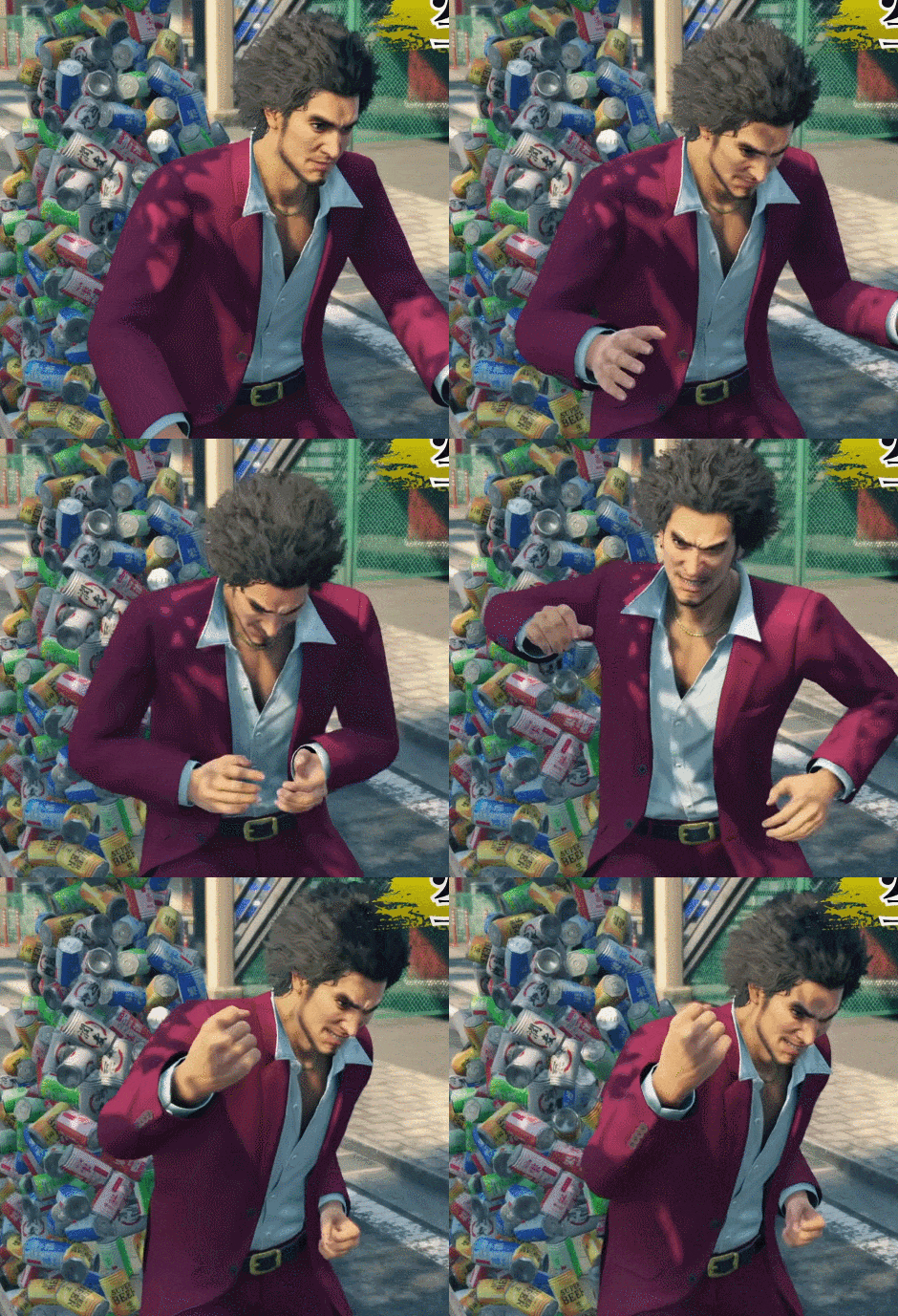
I am far less starved for my turn-based JRPG fix in 2021 than I was in 2013. Let’s not forget that in the last twelve months, Trails of Cold Steel 4 was released. That game was the exceptional culmination of nine games of consistently strong character writing and worldbuilding. Yakuza’s latest entry barged into the turn-based JRPG genre in a tremendous way. Persona 5 is still fresh in people’s hearts and minds thanks to the release of Royal and Persona 5: Strikers.
Real-time or hybrid JRPGs are likewise prevalent at this point in history, particularly within the series that inspired Bravely Default‘s existence. Final Fantasy 7 Remake brought the Final Fantasy series back in a big way; so much so that the non-MMORPG entries could now contemplate approaching the fucking pedestal of quality that Shadowbringers planted Final Fantasy 14 on.
All of the above titles are still fresh in the JRPG zeitgeist for the release of Bravely Default 2. This is the kind of competition and, dare I say, elevation of the genre that was largely absent in the PS3/360 generation. Bravely Default could get away with being a mostly strong return to form with a few creative twists. Bravely Default 2 doesn’t have that luxury.
Yes, it’s pretty great. But that’s not really the same kind of benchmark we’re used to getting anymore, and so I worry that Bravely Default 2 will largely pass unnoticed by history. It seems to have garnered a lot less discussion, has a few more middling reviews, and I only know a handful of people who are even playing it. Practically none of those people have gotten much further than the halfway point at the time of writing, even.
But I do think Bravely Default 2 is pretty great, and so I want to make sure a positive (albeit critical) spotlight is shone on it. There is something here that’s worth acknowledging at the very least. In fact, there’s a point in the game which genuinely made me grin like an idiot at the sheer audacity of what the developers pulled off in one shining creative flourish. That’s the kind of stuff I’ll be highlighting after the meat of the review. With all that in mind, let’s dig in deeper.
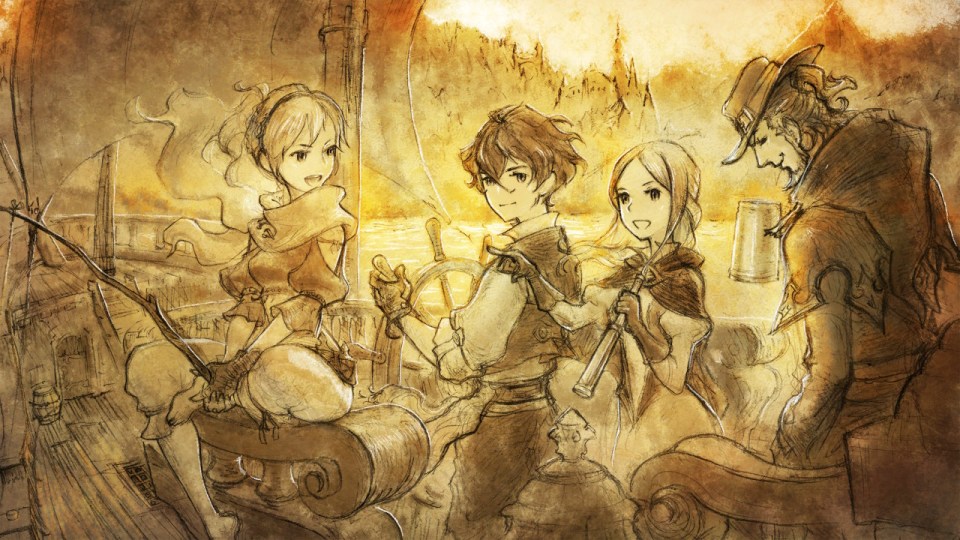
A Farmboy, Vestal, Playboy and Warrioress Walk Into a Sequel…
SPOILER WARNING: This will largely be a discussion of the story setup and game mechanics to start with. I do want to cover some specifics a bit later, at which point there’ll be a bigger warning. Until then, I’ll only mention a few details about the opening sections and some of the Asterisks.
Since I’ve danced around it in more sweeping terms, let’s lay the cards on the table. Bravely Default 2 is a very classical take on the JRPGs of Square Enix’s halcyon pre-merger days. The gameplay style and concepts of the original have been retained largely wholesale. Lessons were learned from Default and Second, allowing many of the rough edges to be smoothed out. What remains is a rock solid JRPG through and through.
There’s a catch, though. In filing off the rougher edges, many of the creative and experimental aspects of the original Bravely Default are now minimal, if not missing outright. There’s no Augmented Reality introductions, no coy messages from fairies that feel sinister in hindsight. Bravely Default 2 plays its story and presentation completely straight for almost the whole run time. Hell, you could argue that it literally does so until the credits roll! We’ll get to that.

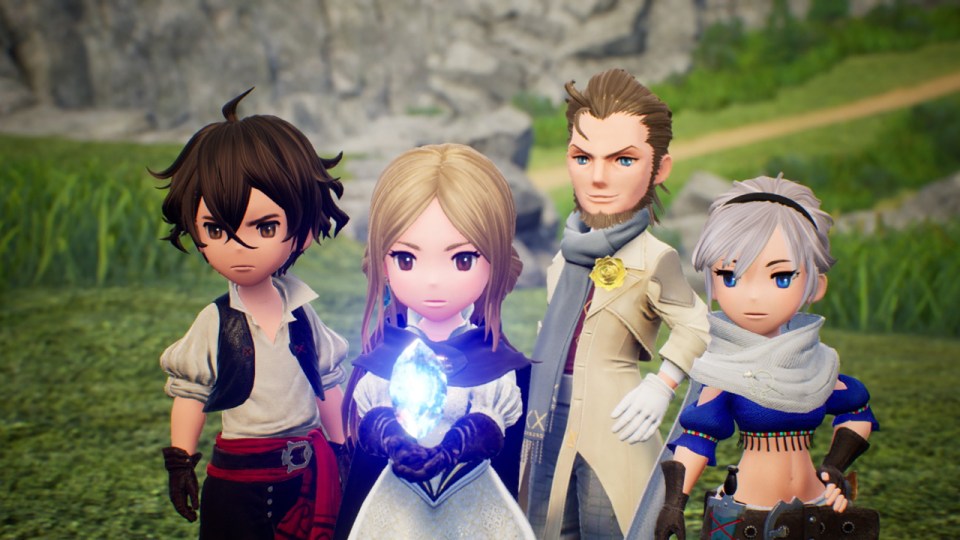
Bravely Default 2 begins with lead character Seth narrowly surviving a shipwreck. He’s saved from untimely drowning by seemingly divine intervention, and found washed up on the beach by Gloria and her retainer Sir Sloan. Gloria is on a quest to retrieve the four elemental Crystals that were stolen from her destroyed homeland Musa, of which she is the sole living royal. These are much more portable than the larger gems of the original, and Gloria already possesses the Wind Crystal.
While returning to the beach a little later in search of other survivors, Seth stumbles across an old woman beset by monsters. In stepping in to help her, two other travellers come to his assistance. Elvis is an easy-going and playful scholar with a mysterious unreadable book. He requires Asterisks — our series staple Job-granting jewels — in order to break the seal and decipher it. Accompanying him is the fiery young woman Adelle, who serves as his bodyguard while trying to find her missing sister in their travels. Combined with Gloria, this is your permanent party of four, with Sloan serving as a mentor and NPC assistance.
Those who played the original Bravely Default might find this roster quite familiar. You could tweak the appearance and accents of the four party members and produce something quite similar to Tiz, Agnes, Ringabel and Edea. Our party is once again populated with archetypical JRPG characters, and I can’t help but feel that the concept is already quite stale. Very little is done to differentiate them from the original, and they seemingly have less notable personality traits.
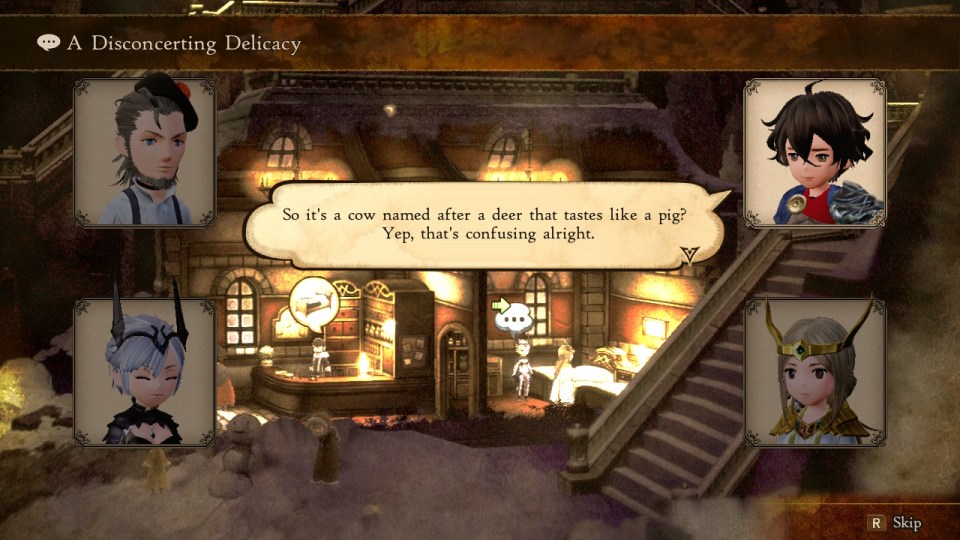
That’s not to say that the party isn’t likeable, mind you. Elvis is delightfully laid back with a penchant for drink and a habit of befriending everyone he meets. Adelle is charming and good-natured, serving as both a balance and foil to Elvis’ antics. They’re the bulk of the party’s charisma, though. Gloria is about 200% conviction for her mission and very little else, lacking the more clueless and directionless charm of Agnes. And Seth is… present.
Okay, that’s a little harsh. Seth was a sailor on the crashed ship, and many mannerisms and occasional flashes of that life are present in his banter. But whereas Tiz had uncertainty and baggage given the destruction of his hometown as the inciting incident, Seth is a lot more straightforward. The fact that he doesn’t know this land at all and is so far from home comes up maybe twice in the opening hour, then completely vanishes for about 90% of the game’s run time! Seth is pleasant, but there’s just not much to him.
I like the party overall, though. They’re nice enough characters and have good moments of banter and development together. Once again, their charm and personality in party chats does the bulk of the story’s heavy lifting, especially when it starts so simply. But it really didn’t feel like much was being done to elevate them or step past the original’s cast in a meaningful way. I still feel that way somewhat even after the true ending. Bravely Default 2’s cast serves their purpose and provides a nice group to follow, but not much more.
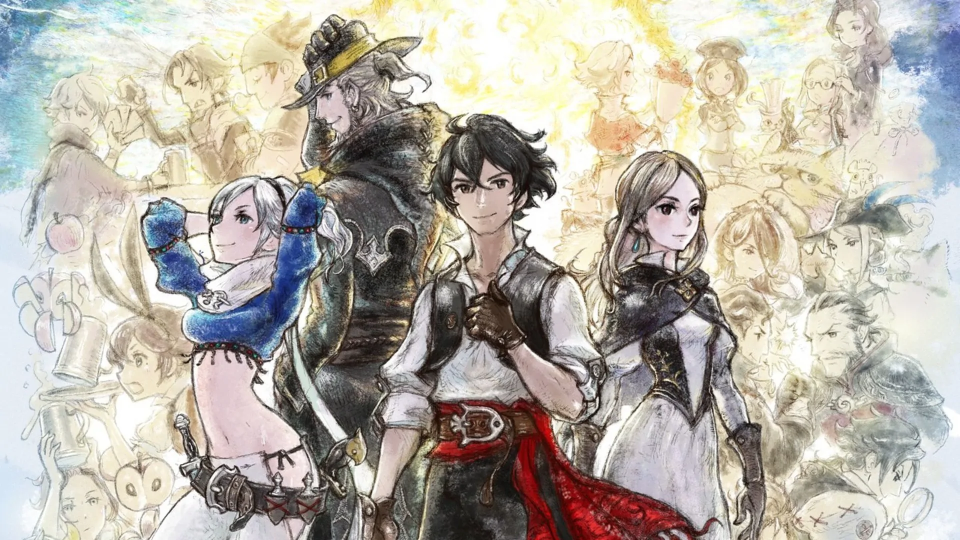
Nonetheless, they do serve the purpose in getting the plot moving quickly. Seth is along for the ride, but the other three all have personal missions that overlap with one another. Gloria is kidnapped very quickly and used to ransom the Wind Crystal from Sir Sloan’s care. Elvis and Adelle tag along with Seth and Sloan in their daring rescue. In the process, they claim the first two Asterisks from the kidnappers. But more importantly: the Wind Crystal claims Seth, choosing him as its champion and proclaiming him a Hero of Light. It was the Wind Crystal that spared him from his drowning fate for this very purpose, so now he’s committed to aiding Gloria in the recovery of the other three.
This effectively clears the tutorial. The remaining Crystals have been scattered among agents of Holograd, the antagonistic kingdom that destroyed Gloria’s homeland. Instead of their respective elements fading across the world ala the original game, the Crystals are having their powers exploited for disastrous purposes. It’s up to the gang to stop these disasters, gather the Crystals, and fight back against the push from Holograd. Most importantly; the four Crystals have to be returned to Musa, as they are the foundations of a seal keeping a terrible entity locked away. Core concept established.

Bravely Default 2 rides this story line for pretty much the entire game. There’s less uncertainty and twists going on, and far fewer attempts to humanise the cavalcade of moustache-twirling henchmen in your path. The individual kingdoms are more isolated arcs in the bigger narrative, and it never feels like I’m saving a world so much as fixing a continent.
I almost never felt like there was anything being withheld from me with Bravely Default 2. The cards are on the table about what the game is and does from the outset. Seemingly no sign of an ace up its sleeve existed until the latest stages of the plot. It’s been described as JRPG comfort food, and I can wholeheartedly agree with that. The original dabbled in risks and experimental ideas, but was inconsistent about their execution. Bravely Default 2 just plays it safe.
What you get is still a quality JRPG. It retains personality and charm, especially in the visuals and presentation. I’ve definitely presented this in a more negative light than I actually feel about the game, since it’s worth going over this stuff with a critical eye. Little about it stood out so strongly that I was blown away (and I’ll cover what parts did shortly), but neither was there a point that bored me or drove me off. It kept my attention from start to finish in the span of just two weeks. That’s more than can be said for both prior Bravely Default titles.
So, will Bravely Default 2 click for you as it did me? I can answer that question with another: do you like this kind of menu-driven, turn-based JRPG combat? If so, then good. Bravely Default 2 has plenty of it, and wrapped up with a very strong battle system indeed. Let’s go over the many mechanics you’ll be dealing with on this journey.
Asterisk of Sounding Classy…
The core of Bravely Default’s combat system is retained by the sequel. Brave and Default options are still present as the name would imply, giving you the option to store BP by guarding or expend it to gain extra turns (even into a deficit). Enemies can do these same actions, so the action economy balancing in fights is a lot more thought out than standard “mash Attack to victory” JRPGs.
As for giving you abilities with which to spend those turns? Square Enix isn’t finished with tapping into Final Fantasy 5’s Job system just yet. Jobs/Classes remains identical to how they worked in previous Bravely titles, which in turn hearkens back to the SNES classic. So here’s the quick rundown.

Most major bosses are Asterisk holders. Asterisks are jewels that hold memories and mastery of a specific Job. You pick from these jobs for each party member of those you have available. While party members will level up from Experience after each battle, their equipped class levels up from Job Points. Every level in a job unlocks a new ability for it on that character. You also get to assign a sub-class to a character which lets them use any unlocked ability for it. So that’s two full ability lists at any time, with stats and equipment preferences linked to their class.
Not all the abilities unlocked are active; you’ll also get passive skills that can be assigned to the character regardless of equipped classes. Each uses one or two slots from a total of five. The primary job also has a unique Specialty that further strengthens it, with a second more powerful Specialty unlocked once you master them at rank 12. Between all this class customisation, you have plenty of ways and opportunities to tailor make your party’s dream combos from the 24 total jobs.
Bravely Default 2 hasn’t changed much from its predecessors. Quite frankly, it didn’t need to; the system was solid in 1992, then in 2012, and still today. What few refinements have been made are adjustments to abilities and shaving off some extraneous skills. You no longer buy spell scrolls in town and just learn them with job ranks. Now nothing is stopping you from grinding in the first area and nuking everything with Firaga!
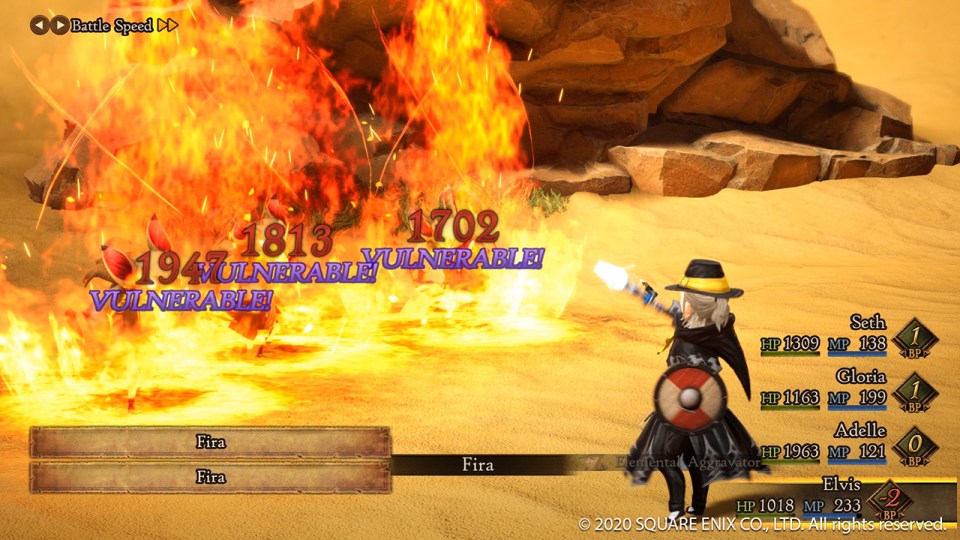
Well, aside from the prohibitive mana costs that you don’t have the levels or gear to maintain yet… but hey! Explosions!
Furthermore, there’s a lot less passive skills this time around. Most classes in Default and Second had skills that would just increase a specific stat by a percentage, but all those are absent here. Stats are just baked into the jobs outright, or else can be customised with the more robust equipment system. If you’re equipping a passive skill, it’s usually going to be more substantial than previously.
The absolute best change to the Job system has to be the curve at which Job Points are accrued, however. In previous games, the required points grew significantly after every rank, and enemies didn’t drop much JP until you reached higher levelled areas. I’d often find myself swapping out and getting multiple jobs to middling ranks rather than mastering them, simply because it took so long to actually get any kind of reward.
Bravely Default 2 doesn’t do that. Some absolute legend at Square Enix identified that it’s more fun to have a steady curve and keep the new abilities and power gain coming. As such, the above example of getting high level Black Mage spells in the first area? That’s not actually unreasonable at all! A single enemy might get you 10 JP in the opening area, but the later areas are still only seeing 20-30 per kill. You’re no longer punished for taking the time to grind or sticking with specific classes.
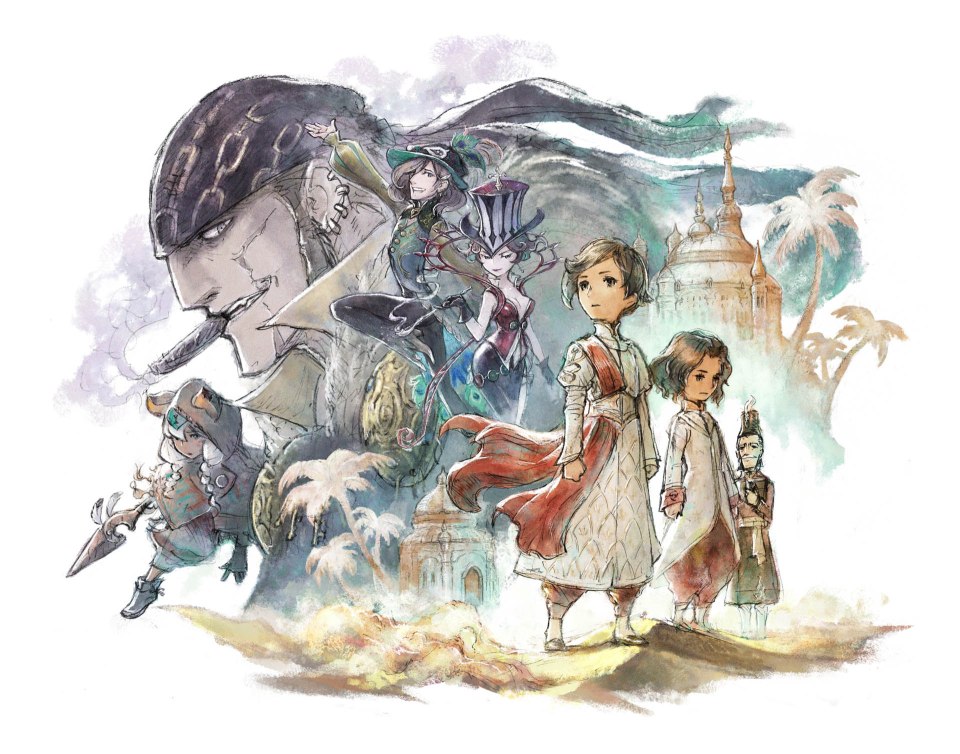
Experience and gold is still doled out exponentially, but job ranks are steady, which goes a long way to keeping the player engaged. Having just played some Bravely Second for contrast, it really is night and day between the two in how much class progress I feel like I’m making. It also means I had the incentive to dabble in other classes and try more combinations without feeling like I was holding myself back.
It’s not all clear improvements, though. The original Bravely Default received the complaint of doling out mostly effective but dull jobs for the first few Asterisks. Bravely Second addressed this, providing a handful of new and interesting jobs almost immediately. The older ones that did return were usually refined somewhat, or else just consolidated into others with more interesting playstyles.
Bravely Default 2 takes a step back on this, sadly; we start off with the basics once again. Elvis comes pre-loaded with the Black Mage, and your first few Asterisk acquisitions are Vanguard, White Mage, and Monk. Even with the above refinements and improvements to these classes, I couldn’t help but feel it was a regression. It doesn’t take too long for more interesting stuff to come your way, though, and there’s some really great stuff available as the game continues. It just means the Job system joins the story in being quite rear-loaded.

A lot of your early power is decided by your equipment. Bravely Default 2 is a lot less about hitting optimise and moving on; there’s a number of added stats that need your consideration. Every piece of gear has a Weight stat, and going over the character’s weight limit (determined through job/level) will drop all their stats significantly. Weight also directly ties into both Speed and Chance to be Targeted though. Decking out your tank in heavy armour will protect both them and the rest of your party, and allows your damage dealers to be frail but get in way more hits.
Since higher quality gear is also heavier, this means you might have to opt out of some powerful options just to keep your weight light. I thought the system would be more annoying than it actually was; instead, it just meant I was fine tuning my gear loadout to maximise the character’s role in the party. Add in the weapon proficiencies of specific classes, as well two accessory slots that can fill or supplement any build? This was actually a pretty good way of handling equipment. Having to put any thought into it aside from “auto equip the biggest number” was more welcome than I expected.
Bravely Default 2 has done away with random battles, instead showing monsters moving on the maps that you can strike for an advantage. If you out-level an area, the monsters will instinctively try to run from you. The 3DS Bravely Default titles had the ability to increase or decrease encounter rates on a whim; that option is gone from BD2, but it’s also not needed any longer with these changes.
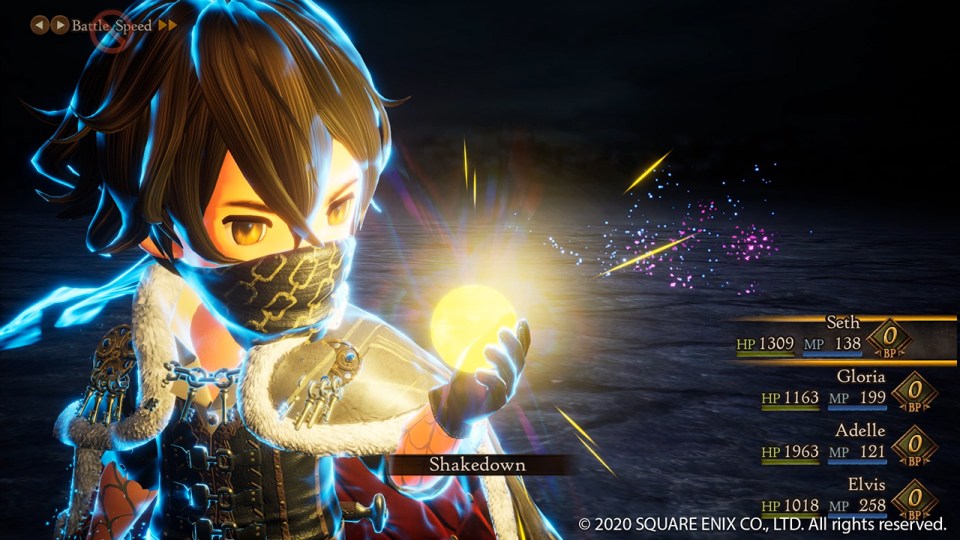
Battle chains have also been altered from previous titles as a result of this. It’s less about zerging down a battle in a single turn then hitting the prompt to immediately start another for bigger rewards. With the monsters on the map, getting two or more in closer proximity for the battle start will trigger a chain. That won’t get you significant rewards, though. Instead, there’s a selection of Food items that will lure chain battles with a specific enemy type. Pop one of those and hit the appropriate enemy, and you’ll end up chaining three to five battles.
It’s a small thing, but surprisingly more impactful than I expected. The onus to fight and grind is entirely on the player’s discretion now. It also doesn’t matter if it takes you multiple turns to win each fight; the battle chains will keep on rolling. The monsters will avoid you when you stop needing them or if they don’t challenge you, but you’ve got options if you want to seek them out and power up quickly. Enemies will drop a decent amount of permanent stat-boosting items as well. Tailor making and fine-tuning your party in Bravely Default 2 is perhaps the most approachable I’ve seen in a JRPG for some time.
You’ll need it too, because the bosses don’t pull their punches.
I replayed Bravely Second briefly to compare and refresh myself on its systems. What surprised me the most about revisiting it — aside from just how blatant the slapstick tone of the game is — was the absolute ease with which I was defeating bosses. I effortlessly steamrolled the first handful of Asterisk fights without doing anything special.
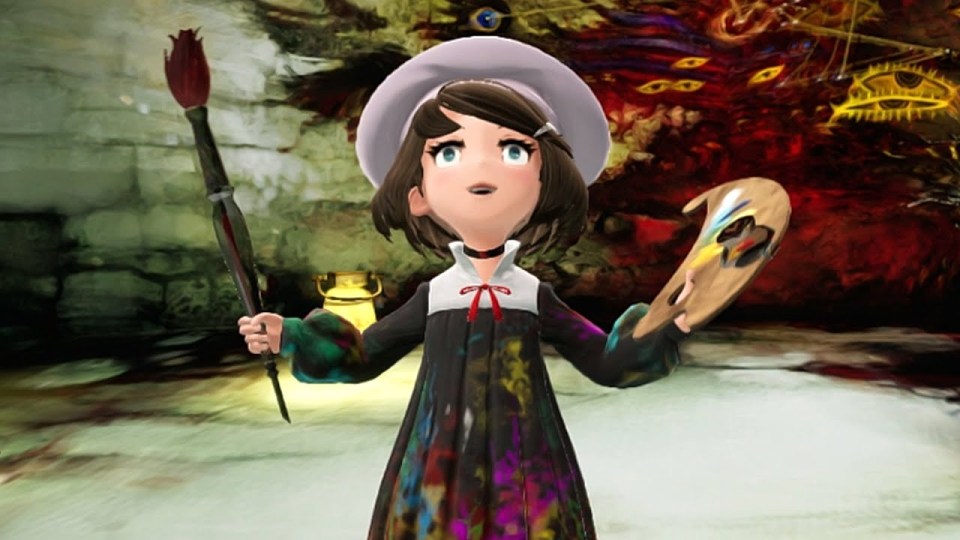
By contrast, Bravely Default 2 is much tougher. The average fights won’t trouble you unless you’re careless or reckless, but bosses demand much more from you. I lost a couple of the early Asterisk fights in the first chapter until I adjusted my strategy and party setup. The limitations imposed by the early jobs and limited equipment weight allowance contributed to that loss, certainly. But regardless, the early hours of Bravely Default 2 made me work for my progress.
This isn’t a constant through line, however. After Chapter 1, you’ll have more jobs and access to enough variety and power to overcome the upcoming challenges. You’ll still have to be smart about party composition, but I found it a lot easier as time went on. The Thief Asterisk is the gatekeeper boss; if you can get past that, you should be okay. That’ll be the point in time where you start consistently getting your own truly busted moves and abilities.
The joy of Bravely Default 2’s systems is figuring out how best to utterly break them open. It can end up robbing some of the final fights of tension, since they’re utter cakewalks if you know what you’re doing. But even then, if you don’t? Well, it can be more challenging than you might expect. Besides, some of the optional side content could still kill me in a single round even when I was fully maxed out. The difficulty might be a little too front-loaded in contrast to everything else in the game, but I still appreciated that it wasn’t a total breeze.
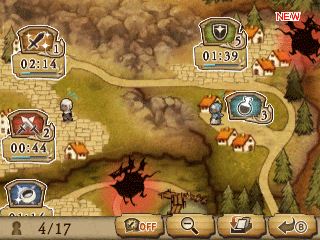
One final mechanical system to talk about before we hit up the plot, then. Bravely Default and Second featured town reconstruction systems that were linked entirely to 3DS’s social functionality. StreetPass and online connectivity were utilised, and much of this happened only when the console was in sleep mode. You could get a serious edge for yourself if you just kept the game running with the 3DS closed and check back every so often.
That’s mostly gone in Bravely Default 2 in favour of something much simpler. Early on, you’ll gain access to Explorations. You can start an exploration, and then whenever you turn the game off or put it in sleep, these will progress. The characters will go exploring random islands and bring back items or money. If you’re playing online, the islands will feature the names of friends or players for that little bit of social connectivity. The items are quite useful, typically granting stat boosts or experience/job point consumables. But that’s all there is to it.
And honestly, that’s fine by me. If you’re going to have a bigger feature like the town construction stuff of the past, I’d much rather it be a gameplay integrated thing. Let me build up my town like in Suikoden or Ni no Kuni 2. Keeping something like this simple is better than having the plethora of idle game options and padding that the previous games had.
Still, I have to bring up Explorations because they do tie into something bigger. So as we finish up with this coverage of the mechanics, let’s go back into the story stuff.
A Trip Down Memory Jewels
Now we’re getting into the bigger spoiler territories. Bravely Default 2 will play things completely straight up until practically the end of the game. This is the point in which things get revealed and some creative flourishes are added. It happens so late that it’d be easy to think the game has none of this stuff at all, and it really did surprise me. That’s the major reason why I even wanted to do this write-up and dive so hard into it. On the surface, this is just too plain a JRPG to really warrant more than a second glance.
If you’re at all interested in playing the game for yourself and haven’t done so yet, then thanks for reading so far! But it’s time for you to close this article, because I’m going to touch on some of the bigger story beats. I’ll leave some of the details, surprises, and flourishes a secret just in case. But from here on out…

By the time you’ve retrieved the four Crystals and started making your way to the ruins of Musa in Chapter 5, there’s only been a few signs that there’s more going on under the surface. I picked up on a couple of hints dropped early in the game — particularly regarding Seth as a character — but they weren’t acted on at all. I’d actually completely forgotten about them until they came up again, such was how much time passed. This is despite my being on the lookout for such a tell; I wanted to try and spot the “Airy Lies” twist ahead of time, if it existed.
A seal was placed on an ancient all-devouring entity known as the Night’s Nexus. The four Crystals powered this seal, and needed to be replenished every couple of centuries. At this point, four Heroes of Light would be chosen to fend off the Nexus and replenish the seal. This last happened 50 years ago. We only know the identity of three of the last four: Gloria’s grandfather, Elvis’ teacher Emma, and Sir Sloan.
Holograd’s actions had seen the powers of the Crystals used for other ends, all for the purpose of draining them faster. Now the seal on the Nexus is close to breaking, meaning that four new Heroes of Light are chosen to fight it back and repair the seal. The antagonist manipulating Holograd was now waiting in Musa, ready to break the seal and become the vessel of the Night’s Nexus. All fairly standard so far. But what is involved in the replenishing of the seal?

Those of you who have played Final Fantasy 10 might have seen this coming. There’s hints throughout the game but especially in these last hours about Gloria. She’s committed to doing her duty as the last of Musa’s royal line. Shortly before the final dungeon, a conversation with Seth about what she would like to do afterwards is full of thinly veiled fatalism. Sure enough, you’ll go forth to stop the antagonist. It’s too late to stop the seal from being on the verge of collapse, so Gloria does her duty: she sacrifices herself to replenish it. She gives a brief sad chat with the party before her life ends, and the credits roll. Immensely bittersweet.
It’s also a fake out. Naturally. There’s still some matters left unresolved, after all. No, this is Bravely Default 2‘s bad ending, but the path to the true ending mandates seeing it. Only now, after the credits have technically rolled, are some of the seeds planted actually start to blossom.
Should you load the clear data — something which I suspect at least a couple of reviewers didn’t do — you will witness an abbreviated version of the scenes that just played out again. Once they’re finished, the entire party is shocked to have seen this vision play out. But that’s exactly what it is: a vision granted by Elvis’ mysterious book. Left behind by a previous Hero of Light and readable only when all the Asterisks are gathered (which you still haven’t done!), the book has started to play visions and memories at key points throughout the game. That’s how the bad ending is framed, and it’s another sign of things to come.
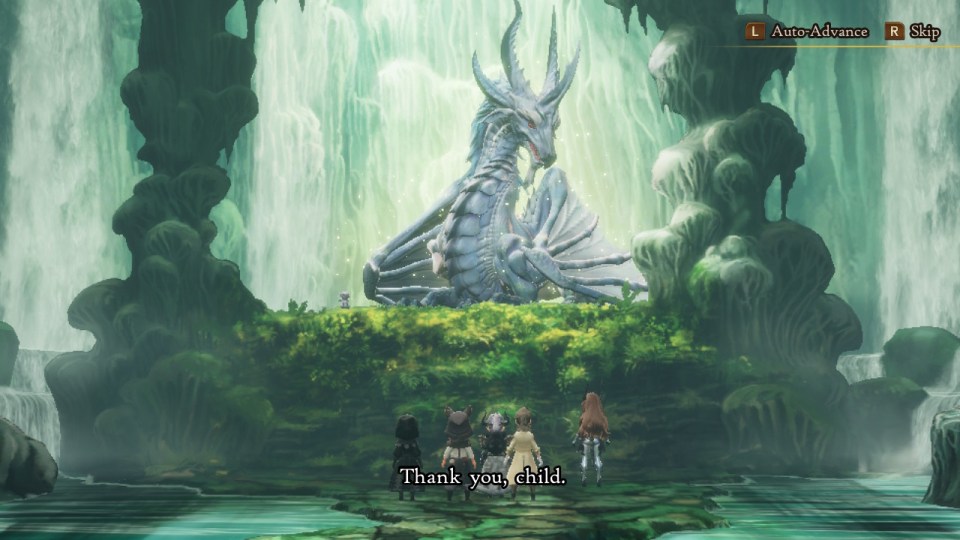
The party confronts Gloria on this, and she reluctantly admits that yes, this was her plan. Seth refuses to go along with this and insists that there has to be a better way. And so, you can either proceed along the same ending, or simply leave the room and go in search of another answer. Thus begins Chapter 6, and it’s here where the many loose threads scattered across the game coalesce.
I won’t get into the details and specifics of all of Chapter 6 here. If you’re still reading despite the spoiler warnings, this should be enough of a hint that there’s more to the game’s story than meets the eye. Last chance to go play it for yourself!
You learn more about the Night’s Nexus and the Asterisks in Chapter 6. There’s a common origin point for both: the Fount of Knowledge, which is the literal collection of the world’s memories. A new plan is hatched to fight the Nexus at the Fount, since that’ll be the first place they’re drawn to. Those teaching you more of the backstory note that you still don’t have all the Asterisks, but you’ve got enough that you might stand a chance. And so the plan is hatched, and a newly released Night’s Nexus is summoned to the Fount for a more decisive showdown.
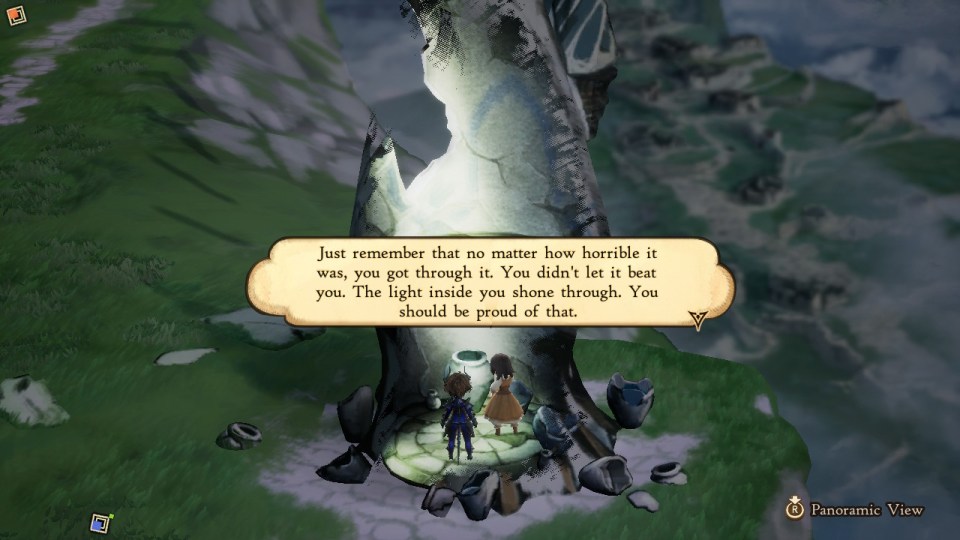
Having a bad ending and a fake out credits roll isn’t all that uncommon. Trails of Cold Steel 4 did the same thing just months ago, so I strongly suspected the moment the credits rolled that we weren’t done yet. What really caught me off guard, then, is that Bravely Default 2 had the balls and the audacity to do it twice.
The fight with the Night’s Nexus doesn’t go according to plan. You seemingly beat it in a multi-phase fight, only for it to rise again. This time, it drains the power of all your Asterisks into itself, leaving the party without a means of fighting back. With no other option left, the party is forced to flee as a last ditch emergency plan is enacted. The Fount of Knowledge is sealed from space and time, trapping the Nexus — and all your allies who inhabit it — away from the world forever.
This includes Adelle, who stays behind. There’s a touching scene between her and Elvis as she’s sealed away. Cue the credits, cue another clear save file. Cue another sense of deflation at a bittersweet ending, mixed with my amusement that this was being done a second time. We’re still not done. Of course we’re not.
The End*
As the collected memories of the world, the Fount of Knowledge dungeon has displayed images of all your notable accomplishments prior to this moment. Specifically, there are snapshots of the moment you attained each and every Asterisk. But there’s one blank image right at the end to indicate the one you’re still missing. It’s not until you’ve seen both bad endings that you can access this final Asterisk.
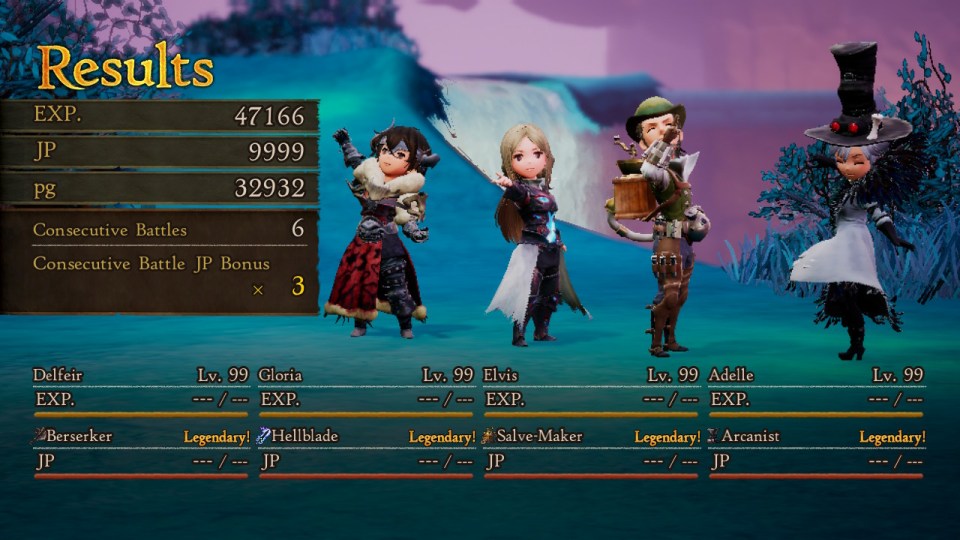
It’s also a game balance reason, because the last Asterisk is busted strong.
Loading the second clear data grants you a new vision: the fight with the Night’s Nexus from 50 years ago by the previous Heroes of Light. Here, it’s shown that Sir Sloan possessed an Asterisk, but that it was split in half during the battle. He still retained half, but the other tumbled into the void in which the Nexus is sealed. This forced them to restore the seal at the cost of Gloria’s grandfather’s life.
So, in the present day, we’re left with the question: where did that final Asterisk end up?
I especially liked this part of the game because it doesn’t directly tell you what needs to be done. Hints are provided by the party members and the scene itself, but there’s no objective marker and no direct push. In the spirit of this, I’m not going to reveal the answer either. But I will say that figuring it out leads to possibly the most challenging (and satisfying!) mandatory boss fight in the whole game. Beating this boss reveals where the Asterisk halves were… and it turns out, you had both of them the whole damn time without realising it!
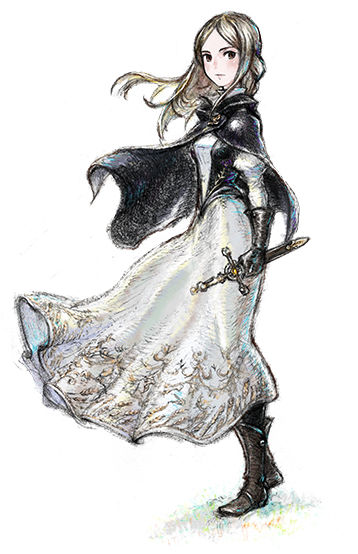
Both pieces were set up indirectly during the prologue. Both of them were pieces of information that I noted but tucked away and forgot about in the long wait to their reveal. Better yet: the method by which you’ve been carrying the lost half? Well, that’s the hint you’ll need in order to progress through Chapter 7 and tie all the remaining plot threads together, up to and including everything tied to Seth’s initial shipwreck far from home.
To even get to Chapter 7 requires another bit of deduction, though. With the last Asterisk in your possession, Elvis is finally able to read the mysterious book. As it turns out, the book is itself another Asterisk, but of a very different nature. It’s the Librarian, which was created out of an endless thirst for knowledge. That thirst ended up corrupting its host into a creature that sought only to devour all knowledge, all memory, everything.
That individual became the Night’s Nexus, and this book is effectively their memories and soul. To keep it from devouring the Fount of Knowledge and the world beyond, its guardians sealed the Librarian away. If you can destroy the book, the remaining Nexus is simply a vessel that can be defeated for good. But the book has proven seemingly indestructible to normal methods. In order to actually destroy it, you need more unconventional tactics.

Alright, so here’s the final reveal sting that actually made me grin like an idiot. Ready for this?
When you start the game of Bravely Default 2, the main menu is presented as the cover of a book. Opening that book starts the story. The in-game menu also looks like pages of a book, with each entry being a new chapter or section. A book has been subconsciously wrapped up in the presentation of the entire game. Sure sounds a lot like the Librarian book, no? Well, how do we preserve our memories of the game? And how would we destroy that?
…Tell me, have you gotten the true ending of NieR: Automata?
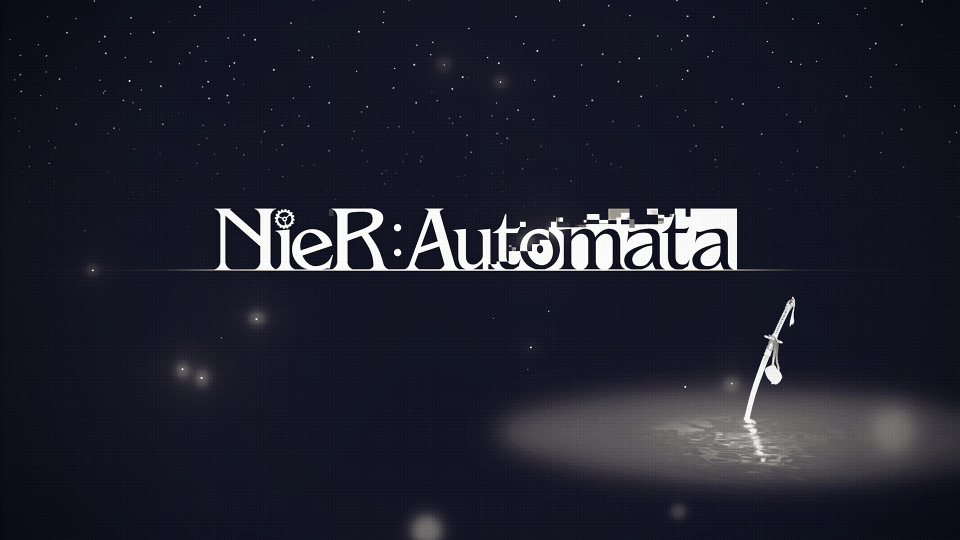
When next you go to a save point and access that menu, something has changed. The music is different, and there’s ominous sounds playing. You can usually make up to nine saves in Bravely Default 2… so why is there an oddly purple coloured 10th save all of a sudden, containing eldritch looking data?
To access Chapter 7, you just have to overwrite that 10th save, despite the usual warning message about overwriting saves appearing. The true final chapter begins instantly. As I don’t have a clip, this gif shall suffice as an accurate representation of my reaction.
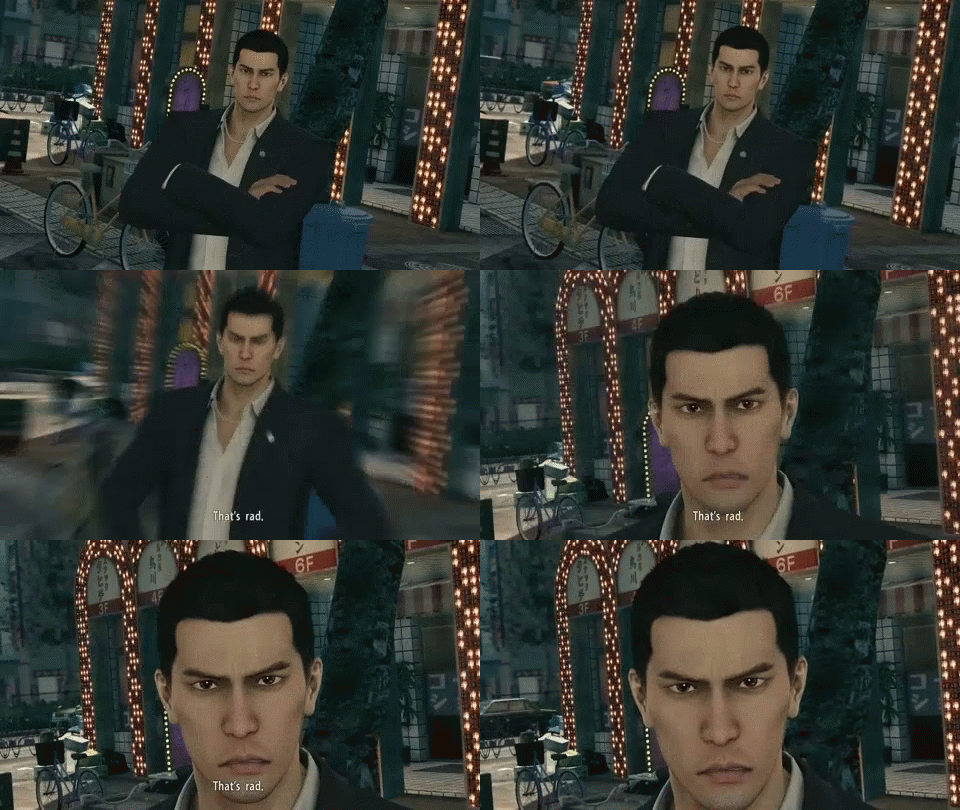
Bravely Default primarily differentiated itself from Final Fantasy in two ways: by subverting some of the genre tropes it leaned into, and by breaking the fourth wall. It aimed big, but couldn’t nail the execution fully. By contrast, Bravely Default 2 taps into those same concepts on a smaller scale. It’s a leaner, more concise attempt at switching things up. And this time around, I think they absolutely landed it. The cost for that was keeping so many of their cards close to their chest for much of the game’s duration.
I referenced NieR: Automata because it was similarly ballsy in how it handled your save data in the final ending. Bravely Default 2 doesn’t quite go that far; I was fully expecting it to ask me to delete my save file and hope for the best. But hey, most games don’t go as far as NieR: Automata does in numerous ways. That’s why it’s one of my favourite games of all time, and why I heartily endorse any attempt to evoke aspects of it. Someone in the Bravely Default 2 team was clearly looking over at Yoko Taro and taking notes, and I am totally here for it.
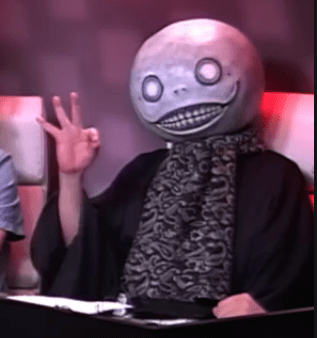
Judging by some of the reviews I read when the game first dropped, I imagine a few reviewers missed one or more of the fake outs and stopped playing early. In a way, I can’t even blame them for that; it was only due to being genre savvy that I immediately knew what was going on. The same thing happened with NieR: Automata at its release. But up until that fake out, Bravely Default 2 is a perfectly serviceable JRPG with a strong battle system. Afterwards, it finally starts getting creative within its confines and starts to make itself stand out.
Chapter 7 is the most straightforward of the bunch, but it’s not without highlights. It takes the time to fully iron out the questions around Seth’s circumstances, as well as revealing the fourth previous Hero of Light. It even ties the Exploration mechanics into the central narrative in a big way, doubling down on the series’ fourth wall breaking tendencies and using them to progress through the final dungeon.
The final boss is strongly designed, and features creative ways of using the mechanics to further tell the story in the last phase. It features a strong final boss theme that remixes all the character themes into it, much like Serpent Eating the Ground did in the original. Finally, the true ending is a satisfying one… albeit one that ends on a bittersweet tone.
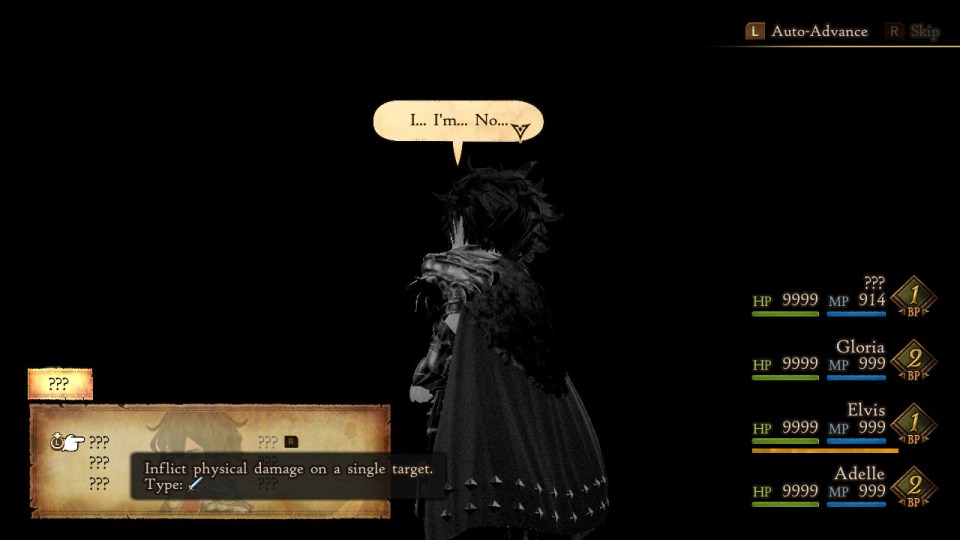
…Hah, nope, just kidding. We need a third and final fake out.
This one isn’t significant though; it just continues the trend of previous endings having an additional post-credits scene. But this time, it washes away the bittersweet notes and ends on a happy one, presenting the promise of a satisfying future for the entire Bravely Default 2 party.
Only now could I finally walk away, and I did so with a warm smile on my face. Further, there was the realisation that this was the first Bravely Default game that I actually completely finished. Not only that, but Bravely Default 2 kept me largely hooked to my Switch for more than seventy hours in the two weeks that it had been out for at the time. If that’s not the sign of an improved sequel, I don’t know what to tell you.
Bravely Into the Future
There is still more I could talk about concerning Bravely Default 2, of course. Being a Switch game has allowed a much crisper presentation, but the general art style of the originals is maintained. Honestly, I find the visuals to be fairly strong, despite early misgivings. It doesn’t have all the flair of something like Octopath Traveler, but it still does a good job of carving out an identity for itself.
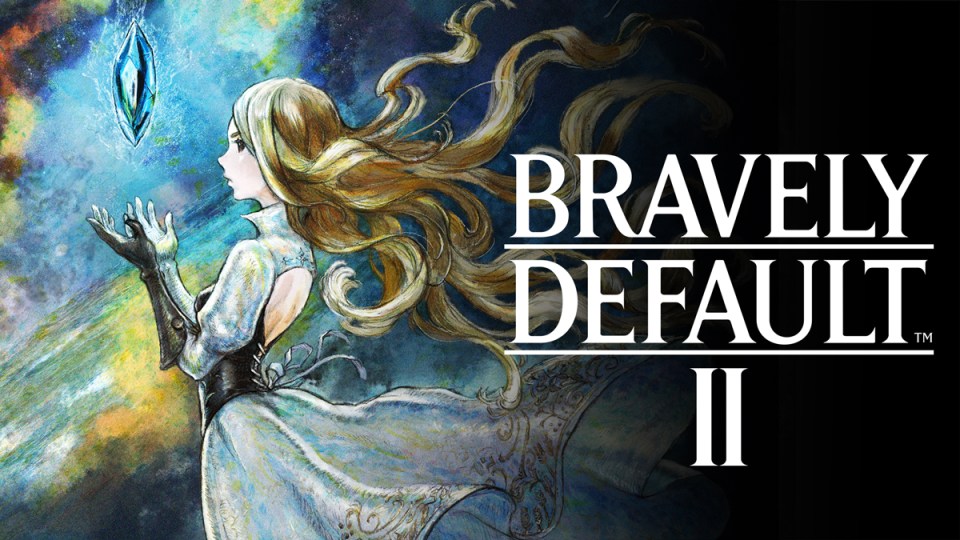
That identity is further solidified by the soundtrack. Much like the game itself, the music takes a while to get going, and many of the best tracks are reserved for later bosses and areas. Even so, Revo being the composer goes a long way to elevating the soundtrack. It’s not as good as the original, but it does have very strong moments and reuses some of the motifs in clever ways. The English voice acting was largely well delivered, adding to the charm of the party. A mix of accents — including one outrageously Australian man who was the highlight of the game — helps spice it up nicely.
But all of this is largely just window dressing compared to the mechanical and written aspects I’ve covered. Bravely Default 2 has one of the better turn-based JRPG battle systems out there. The story takes a while to stray beyond JRPG comfort food territory, but when it does so, it does so remarkably. The end result is a game that captivated me far more than I expected. We’re still early into 2021, but I think Bravely Default 2 is quite likely to make an appearance on my favourites list by the end.
Probably won’t be first, though. Endwalker is coming; in Yoshi-P I trust.
All told, I can’t help but feel that Bravely Default 2 will go largely unnoticed. That makes me sad. Nobody’s really talking about it, and I only know a few who are actually playing it. I still assert that there’s at least one reviewer out there that probably stopped after the first fake out. That’s only going to hamper anyone taking notice.
So that’s kind of why I felt that I had to write this review. I don’t kid myself that I have much of a platform at all, especially now that I’m not writing for somewhere like DualShockers. But hey, this game caught my attention and won me over against all odds, so I want to share that with people. Maybe it’ll interest others in learning more, or maybe it’s just shining a light on it. Either way, I feel like Bravely Default 2 deserved at least this from me.
With Final Fantasy so far removed from its original stylings, I think there’s absolutely a place for the classic JRPG to thrive elsewhere. Games like Bravely Default and Octopath Traveler are the sorts of JRPG comfort foods that you eat in-between the expensive and “experimental” cuisines that the juggernaut brand of Final Fantasy puts out. There is a market for both, and I do hope that the Bravely Default series can continue to fulfill that genre niche in the years to come.
Bravely Default 2 is pretty great. It might not be exceptional or excellent, but it is great. That’s still worth commending all the same.

 Delfeir vs. the Backlog
2 thoughts on “Bravely Default 2 Review — Default, But Brave About It”