Advance warning: This ran longer than I was expecting, so it’s a big read. Further, Bravely Default is a game I haven’t replayed in a while, so my memories might be a little off in places despite my best efforts. This also means that I don’t have any screenshots of my own, so there’ll be less visual breaks than ideal. I’ll try to keep it nice to look at though!

It’s the year 2003. Squaresoft and Enix merge together into the massive game development and publishing studio that is Square Enix. Previously, these two were once the most beloved and prolific JRPG developers in Japan, responsible for almost every major JRPG series that Nihon Falcom wasn’t involved with. Even so, financial losses forced them to band together in order to keep up with the global development scene. A much younger Delfeir saw this news in a gaming magazine — which alone dates the story — and thought that this was great! Surely, the two combined would be able to produce even more amazing JRPGs than they had individually!
God, I was so stupid back then. Or maybe I’m just cynical and exhausted now. Either way, it wasn’t long before young Delfeir grew up and was repeatedly proven wrong.
Fast forward to the year 2012. Square Enix has existed for almost a decade. The company has published and produced a ton of games. Many of these were honestly quite strong, especially in the formative years where projects had been in development prior to the merge. But there was a curious caveat: almost none of the games they were making bore any resemblance to the genre responsible for making the pair big names. For the entirety of the PS3/360 generation, Square Enix had apparently decided that JRPGs were stupid and that nobody wanted them, contrary to all possible evidence and customer desire.
This is hyperbole, sure, but you have to forgive me for feeling like that during that time. There were a lot of Square Enix published titles that still fit the mould, as well as numerous remakes and ports of their classic stuff. But seemingly every major game developed and released in-house was trying to distance itself from JRPGs in any way possible. Numerous spinoff games of Final Fantasy 7 and Kingdom Hearts were pushed out of mixed quality. Games like The Last Remnant and The World Ends With You experimented with less traditional JRPG setups; only The World Ends With You succeeded in doing so well.
What about the iconic Final Fantasy? That wasn’t spared this fate either. Final Fantasy 11 was an MMORPG, Final Fantasy 12 played like an MMORPG, and Final Fantasy 13 was bad — sorry, more of an action/RPG approach. A vast amount of additional money and development was being thrown into that proverbial pyre on some demented whim. Seriously, we didn’t need more than one sequel to FF13, but a second was on the way!
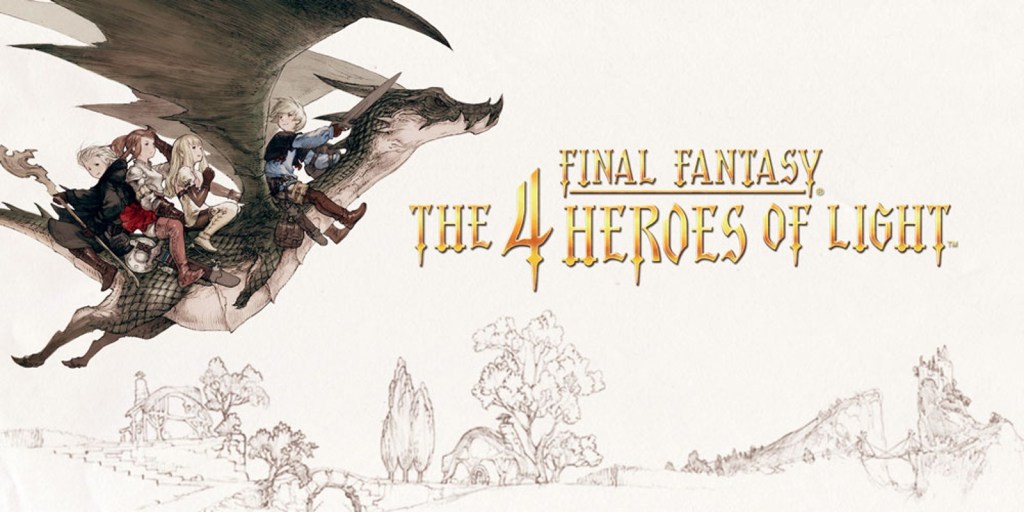
At least two more games had to be decoupled from that flop of a universe to be repurposed into Type-0 and Final Fantasy 15. Oh, and Final Fantasy 14 was still utterly trash at this point in time, with its legendarily miraculous rebirth still a year away. Still, some spinoffs were better made and received, such as Final Fantasy: The 4 Heroes of Light on the Nintendo DS in 2009 (next year in the West). So much so that the team responsible for that used what they learned in order to begin making a game on the upcoming 3DS hardware.
Even so, these instances were fewer and less noticed than the more mainstream titles released by the company. If not for Level-5 still doing their Dragon Quest thing under Square Enix’s publishing arm, the traditional JRPG could’ve been declared dead to them. Faced with growing criticism and frustration from players who still wanted JRPGs, Square Enix finally relented and threw us genre fans a bone in 2012. It must have been such a surprise to them to see a classic JRPG with modern sensibilities succeed, but hey. It’s almost they supplied a demand and people ate it up. Who knew?
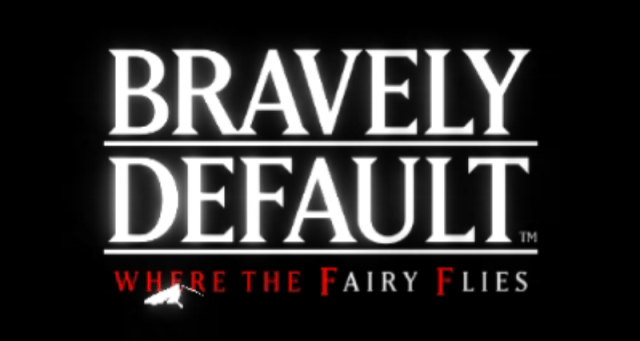
Thus did Bravely Default: Flying Fairy emerge on the burgeoning Nintendo 3DS in late 2012. We English speakers got it the following year, with an altered subtitle of Where the Fairy Flies. It did well enough to get a direct sequel in Bravely Second: End Layer a couple years later, and a series continuation in Bravely Default 2 just a couple weeks ago.
Having now finished Bravely Default 2 and having plenty to say about it, I figured it was only proper to look back at the original first. There were plenty of interesting things that the game did, even if the execution wasn’t always perfect. Playing the sequel helped put some of those factors of the original into focus, and the recent videos by Clemps further reminded me of some highlights. So let’s take a retrospective on a retro JRPG and see what we can turn up.
See This Through to the End!
SPOILER WARNING: I’ll be talking about the beginning and meat of Bravely Default: Flying Fairy with mild spoilers, then a few more specific ones at the end. There’ll be a bigger spoiler warning at that point.
Bravely Default wastes no time in being experimental, despite being a game hearkening back to genre traditions and staples. It uses the 3DS’s unique tech from the outset, presenting Augmented Reality scenes that use the handheld’s camera to produce the background while party member Agnes calls out in desperation to you as the world around her collapses. While it seems like a neat little tech demo flourish, this turned out to be plot relevant muuuch later. The AR tech is used a couple more times for a few scenes, but they’re largely optional and unimportant. Largely. Put a pin in that one.
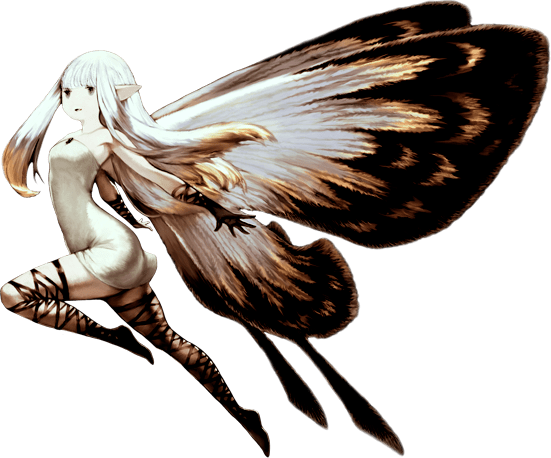
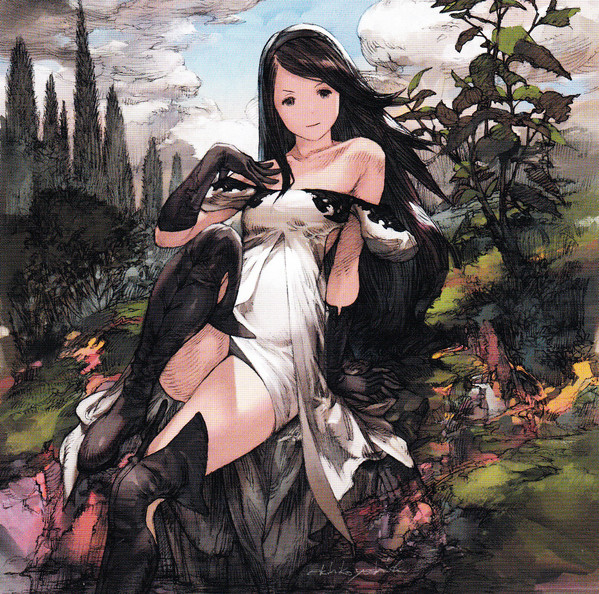
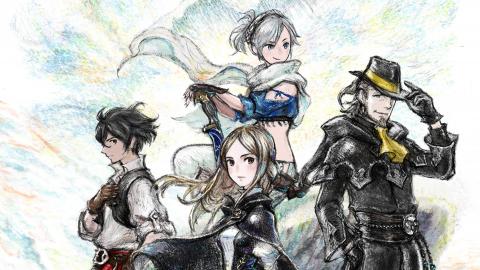
The actual opening movie starts by introducing Airy, the titular flying fairy that serves as the guide and companion to the party throughout. From there, we’re introduced to the four party members. Each is given a brief snippet of their backstory and motivation to kick start gaining control.

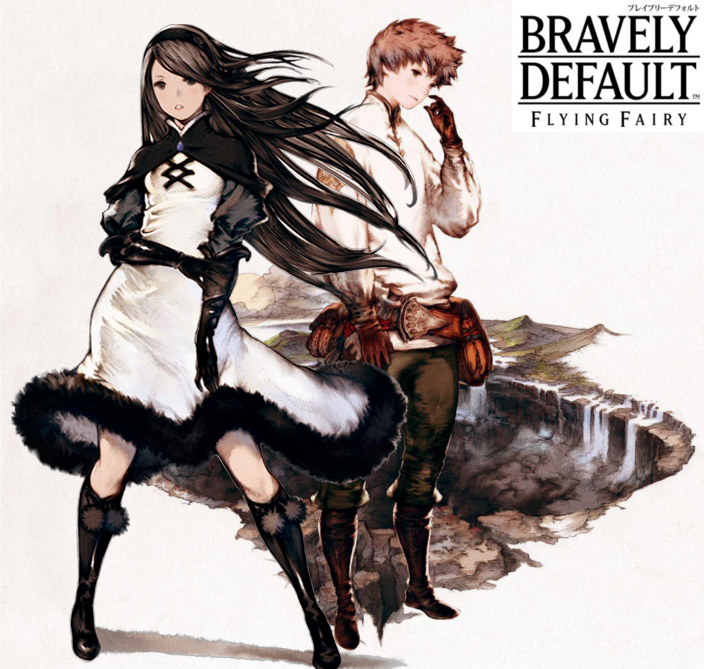
First is Agnes, the wind vestal and priestess-type who watches in horror as the crystal she serves is consumed by darkness. Next is Ringabel, amnesiac pretty boy with a book that seemingly foretells the future. Following that is Edea, on a quest to become a proven warrior… and to apprehend the wind vestal for her homeland. Finally, the PoV character Tiz is introduced. He’s a simple farmboy that gets to watch his hometown of Norende consumed in a blast of light, leaving a great chasm in the earth into which his younger sibling falls to his death.
Bravely Default is coming out swinging, evidently!
The early stages of the game begin with Tiz waking up in a nearby city after this event, only to meet Agnes and Airy. It’s not long before he’s swept up in Agnes’ quest to cleanse the four elemental Crystals. It’s the standard Wind, Water, Fire and Earth Crystals that Final Fantasy made famous. Due to their corruption, the elements of the world of Luxendarc are falling into decay. The wind has ceased blowing, the water is stagnant, the earth is rotting, and so on. Ringabel joins not long after, and Edea rounds out the squad (first as an enemy but then an ally). These four party members remain constant throughout the game, and their mix of personalities, motivations, and banter add a huge amount of charm to the presentation.
At this point, the plot will largely see you travel the world to each of the four Crystals. Each area has their own set of problems, and you’ll generally be doing good deeds and rooting out cartoonishly evil antagonists along the way. It plays out a lot like a classical, traditional JRPG both in story and gameplay for much of the run time.
When I first played the game, I joked that this Final Fantasy 5 Remake was quite excellent, but I didn’t understand why it said Bravely Default on the cover. The opening segments of the game and the overall premise do play very similarly to that game, after all. Hell, even the full title of Bravely Default: Flying Fairy was rumoured to have that subtitle so that it could still be abbreviated to include FF as a nod to its roots in both Japanese and English. Bravely Default is very akin to Final Fantasy, but I’ll say it now: it’s not Final Fantasy. Not quite.
That’s not to say that the game was immediately derivative of the classics either, because it wasn’t. Like I said, the four party members and fairy companion had lots of interesting interactions and commentary. Their personalities were straight forward, but they were charming. Similarities could be drawn to Final Fantasy 15‘s party banter, which added levity and personality to an otherwise bad game. (Yes actually, it is bad and I will die on this hill, dammit!) Bravely Default possessed a lot of life that helped it stand apart from its classic inspirations.
But the opening acts aren’t the only reason I compared it to Final Fantasy 5 specifically.
Brave By Default
Bravely Default has a kickass combat system. It’s a turn-based menu-driven JRPG, sure, and that can be hard to do in a creative fashion. In order to shake things up dramatically, Bravely Default includes two features into the otherwise standard mix. In fact, they’re so crucial to the game that they’re right there in the title.
Party members all have Brave Points in addition to the standard hit points and magic points. Every fight starts party members with 0 BP. When it’s their turn, you can use the Brave option to gain an extra turn in exchange for a BP. This could be done up to four times for four full actions, and even if you had no spare BP, you could go into negatives and miss future turns to act right now!
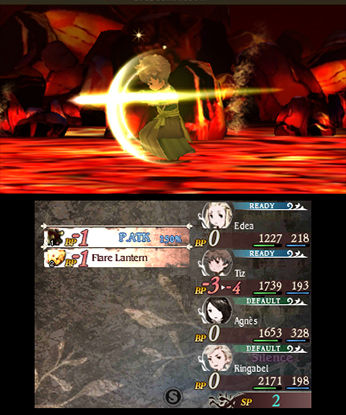
Or, you could pick Default, which reduced your incoming damage for a turn and granted the character +1 BP. You could stockpile up to 3, meaning you can burn all of them to get four turns and still not miss out next time the initiative rolls around to them.
These two little commands instantly rearrange the action economy that defines turn-based games. You can play recklessly and try to blitz an enemy down, but you might fall short and be left helpless against their reprisal. You can play safe and withstand the enemy onslaught only to counterstrike when the time is right. The dedicated party healer could still contribute buffs and damage even when they’re healing. The options for this system’s use are pretty considerable.
But here’s the kicker: your enemies also have access to Brave and Default.
Suddenly, in addition to everything a boss might typically do, they can start playing defensive before tearing through you with massive combos that you had to brace for. Or, they might try and blitz you down before giving you a period of recovery and revenge. Boss fights now can potentially be much more dynamic than a normal JRPG allows. And this, all without ever having to let them break the rules of the system you were bound to!
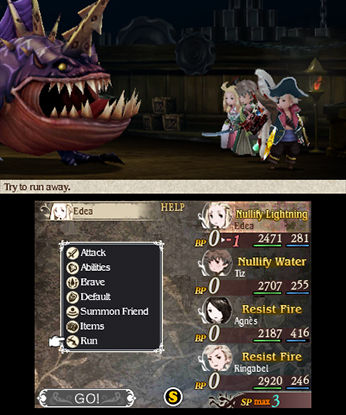
Of course, the potential for wild action economies means nothing if you don’t have the customisation and options to really let loose with it. Here’s where the other Final Fantasy 5 comparison comes in. Bravely Default lifts the iconic Final Fantasy Job system — specifically, the version from FF5 — almost beat for beat. These have their own progression ranks alongside the character’s primary level, and can be swapped freely outside of combat. Gaining new ranks unlocks a new ability for that character while using that job.
The real flexibility of the system comes from being able to assign two job skill sets at once. Assigning a secondary job to a character lets them tap into every unlocked abilities from it regardless of what they currently are. A wealth of customisation and player expression is immediately at your finger tips! Make a beefy frontliner that can also heal the party, make a monk that nukes battlefields with magic, and so on. If you want to do it, you can probably facilitate it, and you’ve got four party members to build up dream compositions with.
Jobs also have unique specialty abilities that are only enabled as the primary class. This allows each to stand out and specialise in their own way. It’s also the incentive to use them when fully ranked for tougher moments, or to reward a character for being focused instead of a jack-of-all-trades. Equipment ranks and affinities for each job also mean you’re limited in what gear each will be using. Until you factor in the passive abilities, that is!
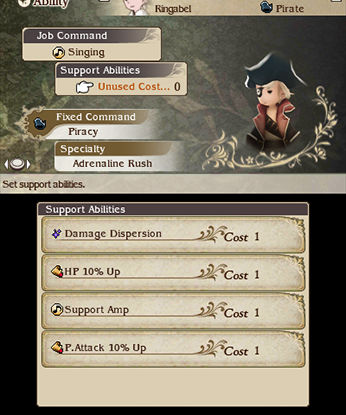
Passive/Support skills are unlocked in place of actives for some job ranks. These can be assigned to the character once unlocked, regardless of the classes in use. Skills like MP regeneration, weapon affinities, monk unarmed prowess, and all sorts of other abilities can be tapped to further specialise builds. Bravely Default has a ton of ways to approach your party composition and strategies through these varied methods. There’s both a pro and con to the way that Bravely Default doles these out compared to Final Fantasy 5, though.
See, Final Fantasy 5 would give you half a dozen jobs or so every time you reached a plot threshold — specifically, when you interacted with each Crystal. Full party customisation is unlocked the instant the system is, with a number of choices that’ll get you established until the next milestone. You’d then get the remaining handful of special side jobs individually in the late game if you sought them out.
Bravely Default approaches this differently by giving each job to you individually (or occasionally in pairs, like at the start). And this is rationalised by plot elements! Asterisks are jewels that contain the memories and powers of their specific vocation. Possession and use of an Asterisk gives you that job. Since they’re a physical object, this means you have to find them out in the world… and they’re usually being held by the antagonist of the moment. Guess how you acquire them?
You acquire them by rocking out to a killer boss track and strutting your stuff, naturally.
Brief tangent! “That Person’s Name Is”, the Asterisk boss theme, is included as a DLC song for Final Fantasy Theatrhythm: Curtain Call. I adore that game and played it to bits, so naturally I got numerous DLC songs from games I liked. This was one of them. It’s also the hardest goddamn song in that game, because the DLC pulled no punches. My wrist still instinctively aches when the 2:18 mark kicks in. Absolutely brutal, but so much fun. Square Enix, make a Theatrhythm game for Switch, please and thank you.
Where was I? Right, Bravely Default.
Many of the major classes or concepts from the Final Fantasy series are present as jobs in some form; if not here, then in the sequels. The black and white magic users still do destruction and healing respectively, while the Red Mage combines both. Summoners are included, Bravely Second features FF14’s Astrologian, and Valkyries are quite clearly Dragoon-esque (while Bravely Default 2 just flat out includes Dragoons). Even the monster ability learning Blue Mage is represented through the Vampire class.
Unfortunately, one of the biggest weaknesses of the game is actually the order in which you get these jobs. There’s a few staples available early on, but most of what you get access to is fairly standard and comparatively dull. It’s not until you’ve already got a few more under your belt that the Asterisks on offer really open up strong options. Hence, there’s pros and cons to not adopting the approach that FF5 did. Mercifully, Bravely Default’s sequels have made attempts to correct this!
Final Fantasy’s Job system has appeared in numerous iterations throughout the franchise. Final Fantasy 5 is perhaps the most iconic of the classic versions of the system. Later entries usually featured more freeform takes on character customisation; Magicite in 6, Materia in 7, Junctions in 8, and so on. Outside of the MMORPGs or Tactics spinoffs, the Job system has been largely dormant in a more pure fashion. Bravely Default, as such, is perhaps the most fleshed out and well realised version of this concept that Square Enix has output. I seriously adore it.

Even so, Bravely Default: Flying Fairy is not Final Fantasy. You’ll see.
There’s a lot of Asterisks to acquire in the game, and plenty of them require completing side quests or exploring. Even with clear hints and markers to their existence, mainlining the story will limit your options significantly. It’s encouraged that you follow the side quest markers and engage in them, both by the game and by me right now. The meat of the game is typically found in these places, which segues back into plot discussion.
Has Bravely Default Told You About…
I’ll start off light and non-specific, but if you’re intrigued by Bravely Default: Flying Fairy at this point and want to play it for yourself? Thanks for coming, and this is likely where you’ll want to see yourself out. You’ve still got time before I plot open major revelations, but still:

The lives and personalities of Agnes and her entourage are fleshed out over the course of the game through party banter, both in the main quest and outside it. Nothing about the party members are particularly unique or unheard of, but they’re solid takes on their archetypes. The game’s also not afraid to dabble in some aspects that the JRPG genre tends to skip over. For example, Tiz struggles with sleep because he keeps dreaming of Norende’s destruction and his brother’s death. Agnes mourns the death of pretty much the entire church she lived in. So on, so forth. It’s generally pretty strong, and really goes a long way to making the party much more personable than some of their genre counterparts.
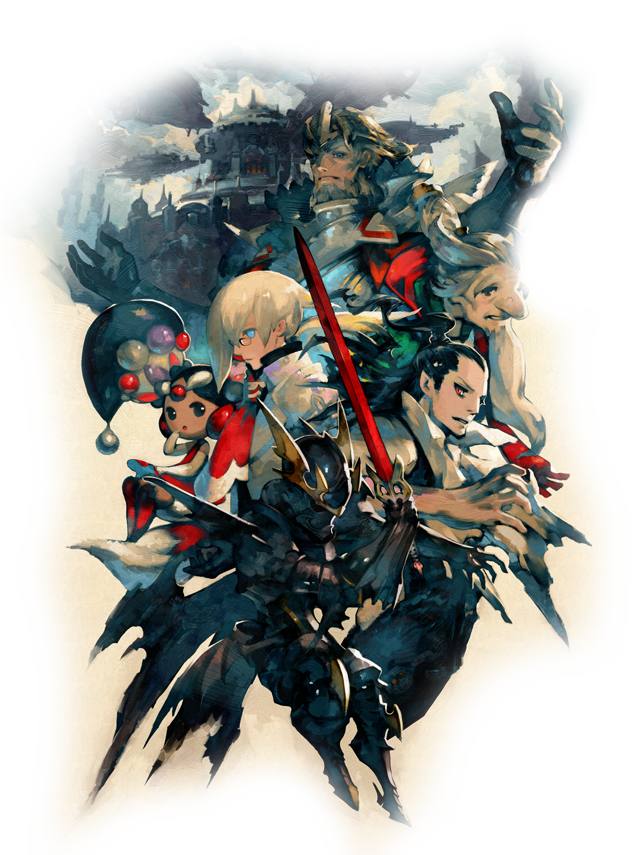
Bravely Default attempts to give this exploration of the antagonists too. However, this kind of falls flat on multiple occasions due to utterly ridiculous caricatures. With every Asterisk usually having an antagonist wielding it, they tend to embody their respective jobs in laughably exaggerated ways. There are literal mustache-twirling villains monologuing at you, and the whole trope of “Spot the JRPG character in a crowd” whenever you enter a city remains a dead giveaway.
This wouldn’t be a problem if the game just owned it. Unfortunately, there’s more than one instance where it tries to justify or humanise these characters. See, almost all of these Asterisk wielders are soldiers or agents of the Eternian forces (the country that Edea hails from). While they aren’t the force corrupting the Crystals directly, they’re the primary antagonists for much of the game. They’ll be trying to apprehend Agnes and stop the party at every possible turn across the entirety of Luxendarc.
There’s efforts to justify the Eternians as fighting for a noble cause, often with Edea helping broach the subject’s potential. The church that has surrounded the Crystals are overly conservative and have let people die in droves to uphold traditions, rather than use the Crystal’s gifts for the betterment of the world. Fine, that’s a sentiment I absolutely support the Eternians with. Down with the antiquated status quo and tradition for tradition’s sake. Surely they have a justifiable reason for this belief and stance, then?
Well, they do. Unfortunately, you don’t find that out in detail until extremely late in the game. Not just that, but you don’t find that out despite Edea — the daughter of the Grand Marshal and leader of the Eternians — begging her father for clear answers and discussion about this. During absolutely perfect situations where negotiations or dialogue should’ve happened. More than once. One of which was one-on-one with her, his goddamn daughter! Instead, he gives only the most vague half-answers imaginable. There was no reason to withhold this stuff or avoid this conversation, save to create unnecessary and contrived drama.
One of my biggest hatreds in writing is where huge issues with the plot could’ve been resolved through characters just talking to each other for a couple of minutes. And don’t give me the excuse of “there wouldn’t be a game without it”; if your plot relies on contrivance and temporary stupidity of your characters to occur, then you have a bad plot. Re-write it and do better, please.

Rant aside though? Bravely Default could be forgiven for this! The Eternians don’t have the full picture either. Revealing the details to the party was not a massive secret, and it wasn’t so revolutionary or ironclad that Agnes would instantly abandon her quest either. Hell, having a conversation about that would have been far more dramatic to begin with.
See: Final Fantasy 14‘s Shadowbringers expansion. Open discussions with the antagonists occur that amount to understanding and empathy between the sides, even if we remain opposed and stand by our convictions. Quite frankly, it’s the best that Final Fantasy has ever been, and I adore it. It’s frustrating that Bravely Default could’ve managed something like this, yet the communication didn’t happen until so late. Even so, given how little changes regardless, it’s not a deal breaker.
The deal breaker, then, is how it tries to justify these mustache-twirling clowns as being of potentially good intent. Maybe that might last a scene, only for them to literally slaughter random people in the street in another. Then it has the gall to try and provide these same genocidal lunatics with moments of sympathy and humanity. Oh, they had a troubled past, or they were experimented on and have a reduced lifespan? Great, I’m sure the dozens of people I watched you immolate to death will forgive you. You’re just having a rough day, after all! No, it’s fine, you keep on enslaving that entire town.
Yeah, no. Fuck off. If the Eternians are at all good in their intent, then they have the most inept leadership in history for signing off on the genocidal war crimes that some of their lieutenants commit. So this is an irritation sprinkled throughout much of Bravely Default’s run time. There’s a lot of good stuff, and the main four party members and fairy cohort are generally good value. But there’s always just that weird, mismatched undercurrent that the story just can’t handle very well.
Either way, this will accompany the player and party as they travel the world and cleanse the four Crystals. There’s Eternian agents and interests both overt and covert all along the way that need to be dealt with. Many issues that have arisen thanks to the Crystal’s corruption are staved off, and many Asterisks are gained and levelled. At every step of the way, Ringabel’s journal seems to adequately provide hints at what’s to come. There’s a slew of characters who seem to have some inkling more of what’s going on, like the Sage Yulyana. He pointedly gives Agnes a cryptic hint to remember: “Have the courage to disobey.”
Once this is all finally done, the Crystals are cleansed, and the Eternian ambitions against them are somewhat curtailed? A Pillar of Light emerges in the centre of the world. Taking the airship that they have acquired in true Final Fantasy adjacent fashion, they make for this giant pillar. However, there’s one final Eternian who fights them on the deck before they can make it. Alternis is the Dark Knight Asterisk holder, and a childhood friend of Edea. We’ve crossed his path before, but this is the real fight with him, as he’s utterly determined to stop us.

It’s one last ditch effort by the Eternians to stop whatever is coming that we still haven’t been fully clued in to. Alternis gives it his all, but by this point you probably have a party combination that can stomp his helmeted face in. In fact, you’ll knock his helmet off… and get greeted by Ringabel’s face! It’s only seen for a brief instant before he staggers backwards and off the airship, toppling into the Pillar of Light. All that remains is his familiar looking book…
There’s no real time to fully reflect on this just yet, not with a mission to complete. Urged on by Airy and certain of their resolve, the four party members brace themselves and step in to face whatever final challenge awaits them…
…The Definition of Insanity?
Bravely Default wastes no time in being experimental, despite being a game hearkening back to genre traditions and staples. It uses the 3DS’s unique tech from the outset, presenting Augmented Reality scenes that use the handheld’s camera to produce the background while party member Agnes calls out in desperation to you as the world around her collapses. While it seems like a neat little tech demo flourish, this turned out to be plot relevant muuuch later. The AR tech is used a couple more times for a few scenes, but they’re largely optional and unimportant. Largely. No need to pin that one, we’ve already placed one there.
The actual opening movie starts by introducing Airy, the titular flying fairy that serves as the guide and companion to the party throughout. From there, we’re introduced to the four party members. Each is given a brief snippet of their backstory and motivation to kick start gaining control-
Wait just a fucking second here.
Bravely Default resumes right where it started: Tiz waking up after the destruction of Norende. Just about everything has been reset. The Crystals are corrupted, leaving the elements damaged and unresponsive across the world, and Eternians are on the move. There’s no final challenge awaiting the party here when they gather; it’s the same old challenges they’ve already faced. Seemingly, nothing has transpired at all, yet they all still have their memories of their travels. In fact, Ringabel now has two nearly identical journals.
Astute players can probably tell the basics of what’s happening here. Whether it’s an alternate timeline, dimension, or what have you is as yet unclear, but you aren’t in the Luxendarc you know. While the party has their suspicions, they’re uncertain of exactly what has transpired. Without anything more obvious to go on, Airy encourages them to retrace their steps and cleanse the Crystals again. Perhaps something more can be gained this time around.
Fatigue is likely to set in for players at this moment. Bravely Default at this point has you go through the entire game again. You still retain all your levels and jobs, but bosses have been brought up to challenge you again. Regular fights remain a breeze for your high level party, at least. Bravely Default at least has the option to change battle speeds on the fly to blitz encounters. There’s even menu options to increase or decrease the random encounters, or even disable them entirely. Nonetheless, this is where the game feels like it’s become content padding at this point.
Your second jaunt through the game isn’t completely identical, granted. The party has new banter wondering just what the hell is going on. They’ll call out some bosses and enemies with knowledge of their plans and motivations on occasion. However, the reason I continue to call it content padding is because it’s far from consistent here. Yes, the party will change their messages and responses occasionally, but other times they’ll act as if this is the first time encountering things. Their surprise and uncertainty still occurs just enough for the player to momentarily doubt that they’re actually doing things correctly. The execution of this repeat is not done well, and it’s where Bravely Default flounders for a while.
So if you grit your teeth and bear it, you’ll repeat the process. Beat up the crucial Asterisk holders, cleanse the four Crystals, fight the Eternians, kick Alternis off your ship ala Garrosh Hellscream. You don’t have to do it in exactly the same order, and some of the fights have been rendered optional. Even so, the more challenging boss fights are entertaining, since some remix the Asterisk holders or put them together in interesting combinations. I felt inclined to seek them all out as a result, and I wasn’t always rewarded for the effort.
There’s also optional superbosses available at this point in the form of tough-as-nails elemental dragons. Beating them required some very well planned (or outright exploitative) party compositions. Plus, the last side quest before the Pillar unlocked the Vampire job, so you can go and learn the Blue Mage-esque monster abilities in the process. It’s rough, but it’s not the worst, and you get enough hints and leads about what’s going on in the process. Either way, you’ll eventually be ready to step into the Pillar of Light for a second time…
The actual opening movie starts by introducing Airy, the titular flying fairy that serves as the guide and companion to the party throughout. From there, we’re introduced to the four party mem-
Nope, fuck this.
Fuck This
The party is stuck in a loop of visiting alternate dimensions to repeat the process. If the first go around could be argued as not content padding, that stops being the case when it happens again with even fewer changes. The bosses are harder still, the unique dialogue quips and conversations are much fewer, and any visible sign that you’re making progress or getting somewhere vanishes here.
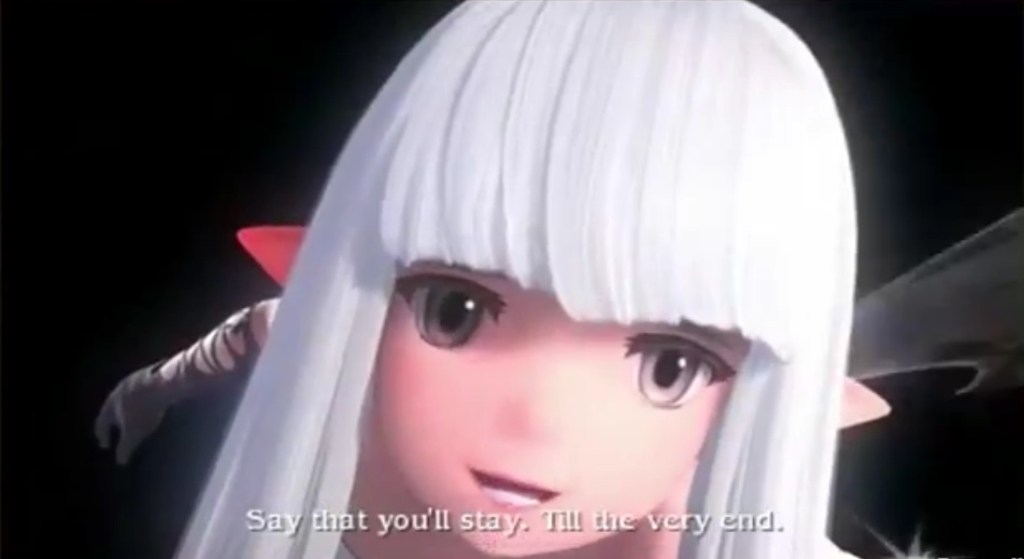
Now you realise just how much the opening movie was trolling you.
Bravely Default has definitely worn out its welcome at this point, and it was only a little into this third loop that I put the 3DS down in disgust and simply didn’t return. I’m not alone in this at all; this is about as far as most players will ever make it before dropping off. The few, the proud, the ones who stick it out to the true ending? They’re the most patient Heroes of Light of us all. Maybe I could have suffered through it, save for the information I found upon checking online: this still isn’t the last time loop. Oh no.
In order to get the game’s true ending, Bravely Default requires you to complete that first run and then loop four additional times. That’s a grand total of five times fighting the same bosses and cleansing the same Crystals with only minimal changes and constant number boosts for difficulty. There’s a reason I referenced Loop Hero in the title of this article.
This is — without a doubt — one of the worst examples of content padding in JRPG history. Grindy or padded side content is one thing, but trapping the player’s endings behind this is utterly vile. With enough dedication to providing variety and clear breadcrumbs throughout the loops to entice the player, this could be pulled off. But this is the anime version of Suzumiya Haruhi’s Endless Eight, not the light novel version. It goes on far longer than it ever should have, and I can’t condone it. (Now there’s a reference I didn’t expect to make!)
But, for all that said, there is a statement I have to make here:
The payoff for the true ending and conclusion is ALMOST worth it. Almost.
For those who made it all the way through the repeated loops — and those who watched these dedicated lunatics upload their footage to Youtube — Bravely Default has a pretty damn good conclusion. There is payoff, there is plot resolution, there is some awesome meta details that were established really early, and there’s some great boss fights. It also has not one, but two of the best final battle themes in JRPG history. Bravely Default comes together at the end to make it stand alongside Final Fantasy, even if it isn’t one.
Yet I have another caveat here! Let’s finally start unpinning some of those details.
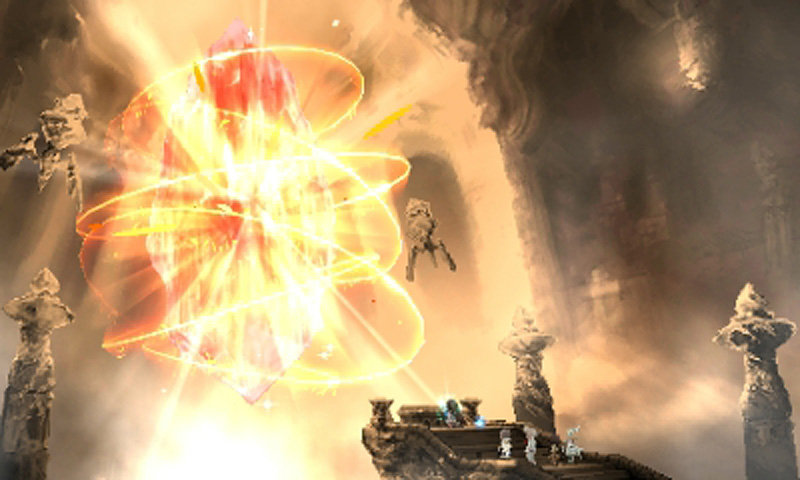
To begin: there are two endings to Bravely Default. The first and easier one is attainable quite early as the first repeat loop. Doing so is a follow of seeing all the hints presented in the base game and acting on them. Sage Yulyana told Agnes to have the courage to disobey, and by now you’ve likely seen enough signs to know who you should be disobeying.
See, the process of cleansing the Crystals has the player mashing the X button until their wrist snaps to simulate Agnes channelling her vestal energies into it. But too much energy will cause the Crystals to overload and shatter! Should you choose to disobey, this means that you have to keep going even after the corruption is cleansed and you’re told to stop. In doing so, you’ll shatter a Crystal and trigger the first ending once you complete this loop.
This is the point in which the execution of the writers completely and utterly falls apart. Every hint leads up to this! Spotting the lies and deciphering the puzzle as soon as you can should be rewarded. The astute who followed along with your story from start to finish should be appreciated. Some writers view predictability as a weakness, but it should be viewed as a sign of consistency and execution if you can trace the bread crumbs to the very beginning. The answer to a murder mystery should be something you have the clues to deduce, not a murder weapon off screen that you never encounter until the detective calls everyone a fucking idiot for missing.
So why, pray tell, is doing so in Bravely Default how you unlock the bad ending?!
Yep, that’s right. A repeated message of having the strength to disobey is prevalent in the loops of the game. There’s a clear liar and hidden antagonist that you should be able to spot by now. So… should you act on this, like the game suggests? Hahaha, no, do exactly what they tell you five fucking times and allow them to accomplish their villainous aims fully! That’s the only way you can actually face off against the final dungeon, the true final boss, and get a really awesome revelation about a bunch of plot details. Have the courage to disobey… by disobeying the order to disobey.
That’s fucking stupid. Enough said.
For those who do tough it out all the way to the true ending despite all these markers, there is a payoff. In fact, the game reveals the antagonist in an extremely clever way. I’ve even made a tribute to it in this very article to this point, and I’ll bet you didn’t even notice.
Bravely Default: Flying Fairy is not a Final Fantasy game. I have said this multiple times and been very adamant about this point, despite the direct correlations. Why? Because it isn’t Final Fantasy. So much so, that you should remove the reference to it from the title. Right now.
Seriously, take the FF out of the title completely. Literally. Go ahead. I’ll wait.
…Do you see it?
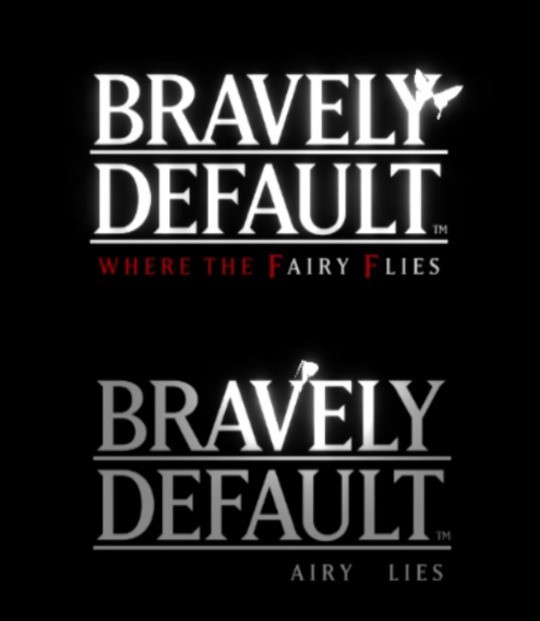
When the main screen of the game has the title of the game peel away the FF, it reveals Bravely Default: Lying Airy. This is exactly what happens when you load up the game again during later loops! IT WAS RIGHT THERE IN THE TITLE. Now THAT is the sort of foreshadowing that blows my mind when paid off correctly! I adore this stuff, and it’s a massive testament to the writers for their creativity (and localisation team, in fact, for maintaining that across languages). They absolutely had the potential to do something tremendous, and much of the game does have that. It’s just such a tragedy that Bravely Default couldn’t maintain that consistent level of execution.
Still, getting the true ending really is almost worth it, because more continues in that vein. Airy was lying to you. Completing every loop enables her sinister plan, which links all the various alternate timelines and dimensions of Luxendarc together. Every Pillar of Light in one world destroys Tiz’s hometown in another to continue the process. Link all of them together and it allows Ouroboros — the great destroyer that Airy serves — to access the Celestial Realm beyond all these worlds. This Celestial Realm has been hinted at a few times, but it only comes full circle in the actual final battle.
So let’s unpin another point. “The AR scene is used a couple more times, but they’re largely optional and unimportant. Largely.”
Numerous hints at the game suggest something strange beyond Luxendarc. The Summoner job calls forth massive creatures that seem almost like modern technology, but with bestial features. Massive bird-like jets? Horrible beasts of trains? A giant knight wielding a power pylon? Where exactly are you summoning these from? There’s even one easily missed hint about a Celestial residing within Tiz, the main character, of all things. This is all paid off in the final showdown.
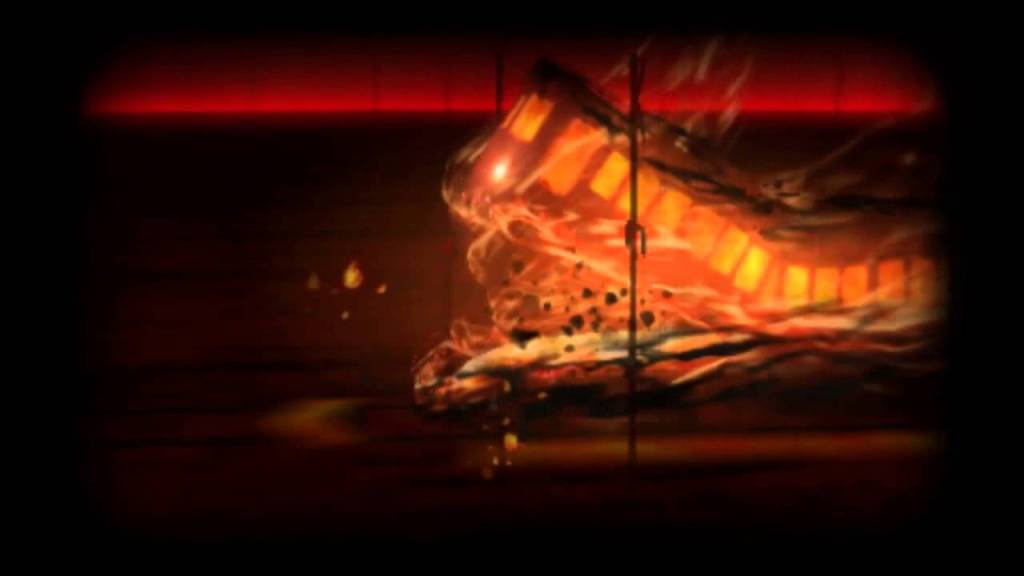
With the barrier to the Celestial Realm weakened, the giant, sinister looking skybox cracks open. You catch a glimpse of the Celestial Realm and, within, a Celestial cheering on the party and grinning like an idiot as the game comes full circle.
After all, it’s your face, drawing from the 3DS’s camera using that same AR tech played with at the very start. You’re a Celestial. The Celestial Realm is the real world; the reality that you’re reading this from. (Presumably, anyway; hello to any interdimensional readers!) That is meta as fuck and I am so here for it, holy shit. Why couldn’t the whole game have such great execution as this?
Either way… I didn’t get to see this triumphant moment for myself. Multiple people said that it was worth the pain and grind to get to, but they almost all said that they completely understood people falling off in that process. But even if the fantastic ending was all the way behind the egregious design, that doesn’t stop it being fantastic. Nor does it stop the rest of Bravely Default’s strengths and highlights from existing. For all the valleys in this game, there are soaring peaks. Above those soaring peaks floats one of the most amazing JRPG soundtracks ever, just for good measure!
I’m genuinely glad this game exists. I’m even glad that they attempted something more grandiose than they had the chops to successfully pull off. The core of this game was something of a return to form for Square Enix JRPGs, if nothing else. They’re still stumbling to this day to get their shit together, but this was a major turning point for them. And I’m glad that after some time away, the game got a sequel on the Switch that I recently played and enjoyed-
Wait. We almost forgot something.
End Layer

Bravely Second: End Layer was released on the 3DS as a direct sequel to Bravely Default. The reason that Bravely Default 2 is the third game in the series can be attributed to Final Fantasy naming conventions. The direct sequel to Final Fantasy 10 is Final Fantasy 10-2, not Final Fantasy 11. Think of it as Bravely Second being BD1-2, not BD2.
Hopefully that makes sense. If not, well… at least now we’re a step closer to understanding the sentiments of Kingdom Hearts fans?
Now before you feel the fatigue of reading set in: I’m not going to go into this game too much. This wall of text adventure that is this article is almost complete, worry not. I just wanted to acknowledge that this game exists rather than dive heavily into it. And the main reason I can’t really do much more than acknowledge it is due to Bravely Second being… well, not really all that stand out.
Bravely Default had some really strong twists and creative ideas mixed in with the well-iterated advancement of classic JRPG systems. It’s got enough that I can look back after almost a decade and appreciate it as both an interesting experiment, and a cautionary tale about the parts that went wrong. Hell, I still barely touched on some aspects of it that could be given a closer inspection, like the social aspects involved in summoning avatars of friends for special attacks.
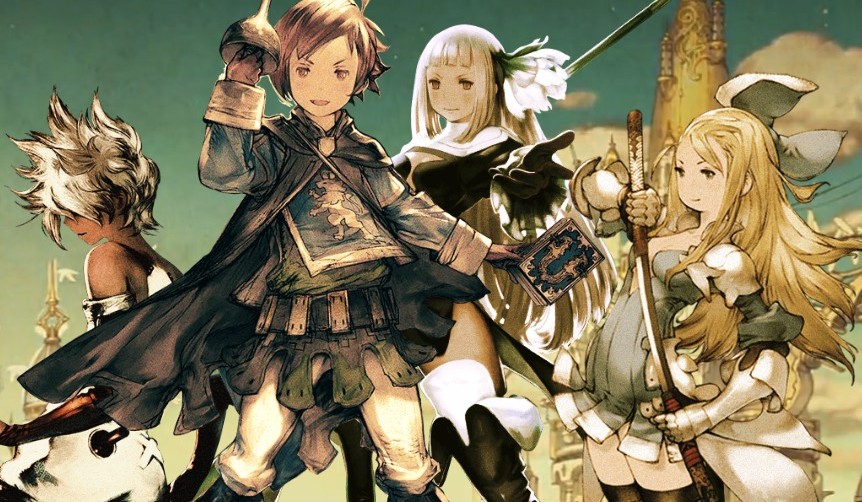
Bravely Second, by contrast, has little of that. It’s a fine game, but it’s only iterative at best. The story reads more like a comedy manga with light-hearted goofs and even more ridiculous bad guys. The worldbuilding carried over from the original is all over the place. While it’s not without the personality and charm of Bravely Default, Second really lacks in tone and execution.
Hell, I don’t even remember the name of the main character off the top of my head! Magnolia’s new, Tiz and Edea return, there’s another fairy who I don’t remember, and… Yew? I think the main character is named Yew. I’m not looking that up; let it stand as a testament to how little an impact I felt from him.
Beyond that, the battle system is largely the same, with some new Asterisks thrown into the mix for variety. It also happily throws more interesting jobs at the player immediately, compared to the somewhat stale beginning of Default. That’s the only real upgrade it has going for it, though.
Musically, the soundtrack is also a big regression, as the original composer wasn’t involved with the project. I might not have stressed this enough earlier, but I’ll put it this way: I bought Bravely Default 2 at launch purely because composer Revo returned after his hiatus from Second. Until I knew that detail, I was genuinely on the fence. Bravely Second’s soundtrack is simply not on the same level as its predecessor, nor its follow up. Even the best songs within it are holdovers from the original.

One last point, and then we’re putting this one to rest. The new heroine Magnolia is a Buster, who fights weird eldritch enemies called Ba’al. Magnolia is a Ba’al Buster.
I don’t have much to say about Bravely Second beyond this point; that’s about the extent of what you’re getting. It doesn’t even manage to free itself of all the content padding, either! So yeah. An okay game that I like, but not one I can really talk about beyond what’s written here.
Up until February 2021, this was it for Bravely Default as a franchise. Yes, there was a mobile game, but it was a gacha game that had unrecognisable characters with locked classes and movesets. That’s kind of missing the point of the Job system, no? Octopath Traveler emerged to kind of fill the classic JRPG in-between the games, but Romancing SaGa 3 did that concept better in my opinion. I really didn’t care for Octopath as much as the Bravely Default titles.
But now, at last, Bravely Default 2 is out. I’ve beaten it — actually beaten it for myself, true ending and all! — and I think it’s great. I’ll talk about it in exhaustive detail come the next article.
My sincerest and most heartfelt thanks to you who made it through the spoiler warnings and suffered through all this text. I truly do appreciate having an audience that cares even an iota about the stuff I have to say, no matter what dimension or loop you’re from. Hopefully you’ll be here for the sequel writeup. Until next time!

 Delfeir vs. the Backlog
2 thoughts on “Bravely Default Retrospective — Loop Hero(es of Light)”