The first entry on this list is somewhat special, as it immediately stretches the criteria I set up for determining my favourite games of the year. That said, had I not done so, you’d be reading either a Top 9 or instead reading about another game that I finished but didn’t consider worthy of this list. Given what I feel about that game compared to this one, that’d just be unfair, so this title gets the sole exception.
The Delfies 2017 #10: Prey
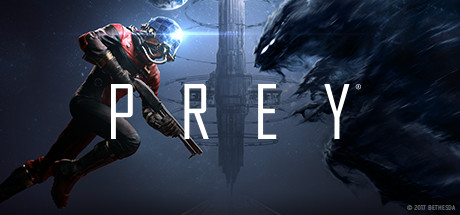
Genre: FPS/RPG
Played on: PC, also available on PS4, XB1
(Note: For future entries, I’m planning to include a launch trailer here. In Prey’s case… the launch trailer just does a disservice to the game as a whole, quite frankly, so it’s omitted.)
It wouldn’t be accurate to say that Prey 2017 completely flew under the radar, but it did seem to get less attention than it otherwise should have. Perhaps that’s because people still long for the now canceled Prey 2 cyberpunk alien bounty hunter action shown only in glorious trailers. Maybe it was following right on the heels of a string of hotly anticipated games from February to April. Whatever the reason, people are missing out.
Prey is probably the closest an action game has gotten to evoking the sense of tension and unease that made System Shock 2 one of the most memorable games in history. Most other titles that accomplish this are usually firmly in the horror genre, and they usually do so by taking away any sense of empowerment a player might have against the creeping terrors; it’s hard to maintain that same sense of fear and tension when the game puts a shotgun in your hands.
Now some might quickly interrupt me here and say that Resident Evil 7 managed to accomplish this in the same year as Prey, and you’d be correct. But I would say that Resident Evil was firmly a horror game, pitting you against tough situations that you had limited resources to overcome. Prey? Prey doesn’t limit you nearly as much.
In fact, limit you is exactly what Prey doesn’t do. In a true nod to the FPS/RPG genre classics of old, Prey gives you a versatile and robust set of skills to invest your upgrade points into that will completely change how you approach the game. Whether you decide to invest into combat abilities, resource acquisition, breaking through into closed areas or secrets, or even gaining psychic powers, the choice is definitely up to you.
But it’s not just the player powers that allow you to choose your approach, but the environments and the weapons themselves. Nearly every weapon you’re given early on aside from the trusty pistol allows you to go outside the box in your approaches. Notably, you can gain a crossbow that literally fires Nerf darts, dealing no damage but distracting enemies and even pressing switches at a distance.
Prey’s most iconic and interesting weapon is the GLOO Gun, however. Rather than firing direct ammunition, it fires a rapidly expanding adhesive that you can use to freeze enemies in place to better land a critical melee strike. More than that though, you can fire this stuff onto some surfaces and use it to create alternate pathways through areas or access secret locations. It’s incredibly versatile and more useful than any number of shotguns you might pick up.
But so far, I’ve been talking about the mechanics. These are important factors in why I thought Prey stood out, but the versatile toolset it gives you is nothing compared to the threats that you will face in your journey. Instead, let’s talk about the whole reason you’ll be needing this toolkit: the Typhon.
Perhaps the most ingenious idea for an alien species in some time, the Typhon come in many shapes and sizes throughout the game. I mean that quite literally, however, as the most basic variety of enemy you’ll encounter is the one known as the Mimic. True to its name, the Mimic is an amorphous tendril-limbed blob that can assume the shape of any inanimate object it wishes. And trust me, it wishes just about any inanimate object it can.
Picture: you’re rummaging in one of the rooms on the space station the game is located in, and you find a deceased guard. There’s a pistol lying by his hand, but when you loot the body you find a pistol still in his possession… whereupon the other pistol changes shape and launches at your face.
This is the reality you face when you start playing Prey: anything could be an enemy. You end up getting in the habit every time you enter a new room of checking for items that looks suspicious. It’s easy to imagine that while you’re playing, somebody might step into your room to watch you and question why you’re smacking all the coffee mugs in the cafeteria with a wrench, but it’s absolutely what you should be doing. Catching a Mimic off guard before it jumps on you is one of the more satisfying feelings in the game.
That said, the ever present nature of potential Mimic attacks continues throughout the game, even as the other Typhon varieties start to emerge and threaten you in far more direct approaches. Even so, all of them are the same kind of amorphous and misshapen creatures that just don’t feel right in their surroundings at all. They move strangely, make unnatural sounding noises, and seem to flicker through reality at high speeds while assailing you with psychic powers. Finding a Mimic might startle you, but finding a Phantom (let alone a Nightmare) when you least expect it is the true terror in the game.
More than just the enemies and their nature though, Prey succeeds in building an incredibly tense and unnerving experience the entire time. I always felt on edge, and even when I started to grow in power, skills and inventory, I was still never durable enough to engage some of the tougher enemies directly without some preparation. The smartest approach to that game is always to try and avoid conflict where you can. Mimics may jump you, but they’re easily dispatched unless in swarms. Anything else, you genuinely might be better served sneaking around or distracting rather than fighting directly.
Even when there aren’t any enemies around though, the tension continues to mount almost from the very beginning of the game. The opening stage is a fantastic experience that caught me completely off guard, and I dare not describe it for fear of ruining it. Still, the beginning of the game sets you with expectations of the unfurling story, only to completely dismantle it and leave you uncertain of what’s truly going on.
With every new plot detail that emerges, this sense of uncertainty continues to grow. With every answer you might get, new questions arise. You start to question the motives of the characters you’re dealing with, all the while wondering just what the Typhon themselves are doing. What’s especially clever is how it makes you question the very character you’re playing.
Yes, you’re a first-person character and can choose your gender at the game’s beginning. At the same time, you are Morgan Yu, a character that is an important part of this story… or so you think. Among the other characters you’ll interact with, there are also messages recorded by Yu (heh) in the past to the you of the present, not to mention an AI with your voice and personality guiding you along contingency plans you established.
Still, all the while I felt horribly uncertain about what was truly going on. I questioned everyone, and the more I discovered, the more questions I had of them and everything else. Between that and the alien nature of the Typhon and their actions, it was almost impossible to feel anything but this sense of dread and uneasiness throughout all my gameplay.
It’s worth noting one final character, however: the space station Talos I itself. In true System Shock fashion, the Talos I is a hugely interconnected series of areas and zones that all feed back into and through each other. The lobby area might have many areas closed off from one another to start with, but you’ll quickly find other ways into those areas in your explorations. You start to learn what area connects to what and how best to navigate it, and every destination has numerous ways to get there. Sometimes you’ll even find yourself on a spacewalk or drifting through a zero-g maintenance tunnel to get to where you want to go.
The station itself will change as the game progresses though. The Typhon continue to spread, and as you get stronger, so do they. Each visit to the Lobby will see them reset their presence, meaning Phantoms you just killed might be replaced by harder enemies… not to mention all the new Mimics hiding in the cutlery drawers.
In short, Prey is great, and I highly recommend playing it if only for the opening hour. But while it’s not a straight out horror game, it’s not for the faint of heart.
Now, with all that said… there are addendums I must add, because even the best game isn’t flawless. So far, I’ve had little negative to say about Prey, and honestly? There’s not a lot negative to say from my experiences, aside from a handful of situations where I felt like I was stuck in a corner with a tough Typhon that I couldn’t seem to bypass. But there’s an important factor that explains why this game is #10 and not higher on the list.
Simply put? I didn’t finish Prey. I included it as a Delfies recipient because the atmosphere and gameplay was unlike anything else I’d experience this year, or in gaming as a whole for quite some time. But since I did not get to the end, I cannot properly judge it.
See, I’ve heard some people complain that the game continues for many hours after you think it might be reaching the climax or conclusion. I’ve heard that the ending is somewhat sudden and abrupt. But none of this I can verify, as I haven’t experienced it for myself. Everything I’ve said to you thus far has been based on a bit more than ten hours of gameplay.
That alone is enough to have it standout amongst the heavy hitters of the year, but so much of the atmosphere and tension I felt during Prey was compounded simply because I’d yet to find out why. I didn’t know what was happening. I didn’t know which characters were telling the truth. I didn’t know what the Typhon were planning for their endgame or why they seemed to be altering the space station itself. And I don’t know why Arkane cannot seem to program an interactable NPC without killing the entire feel of the moment.
If I’m playing a game that is heavily driven by story, narrative, and atmosphere, I need to know the conclusions and the ultimate payoff of those before I can truly digest and then rank the end result. Nonetheless, Prey was enough of an experience for me to eschew that requirement and place it at #10 on my favourite games of 2017. I need to go back and play through it to be absolutely certain that it holds up, or even to see how it fails to do so.
But if nothing else, it was an experience that I was gladly happy to undertake and would suggest you do the same. That alone should speak volumes of why this deserves to be here.
Return to the full Delfies 2017 list

 Delfeir vs. the Backlog
2 thoughts on “The Delfies 2017 #10”